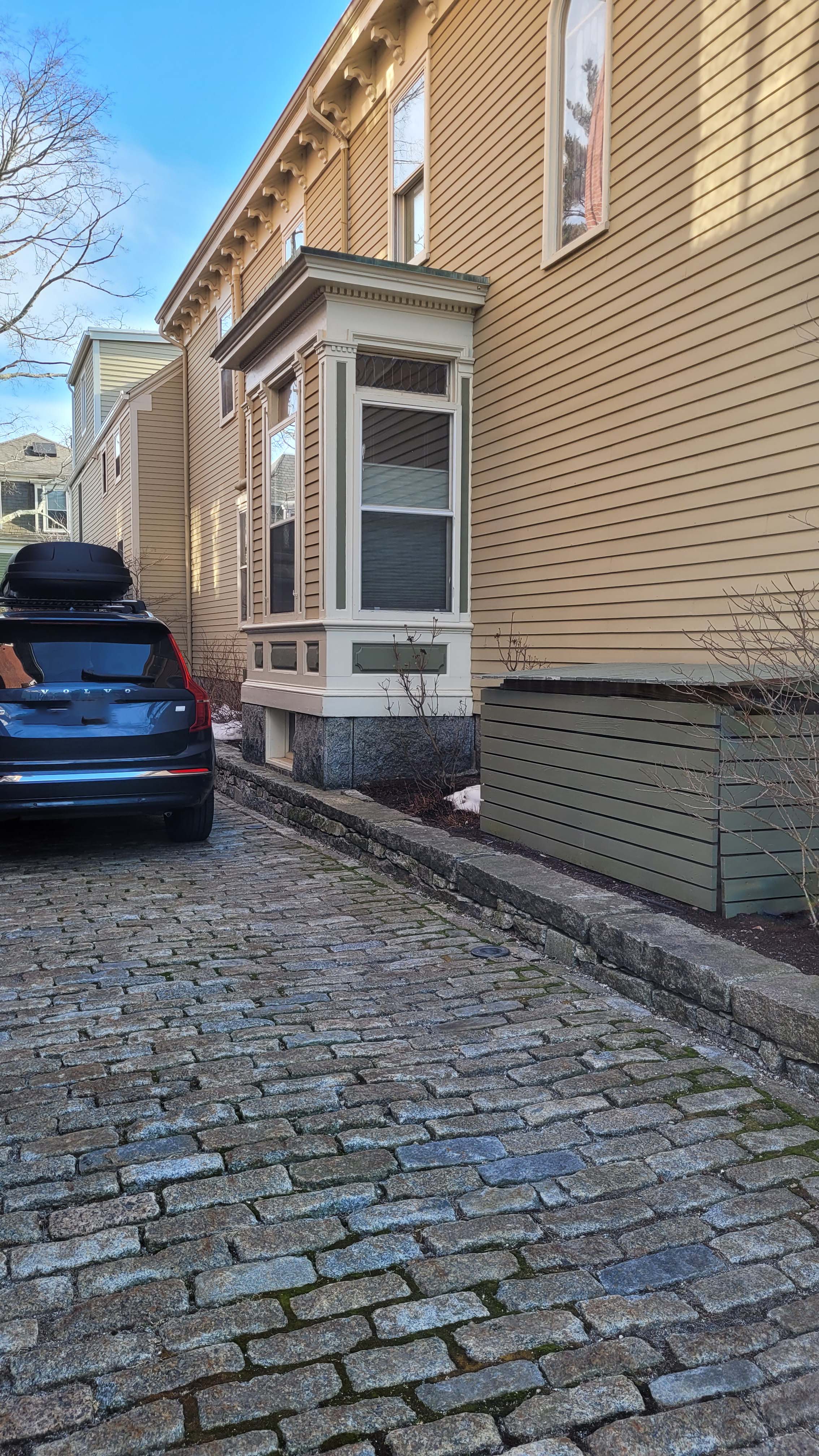
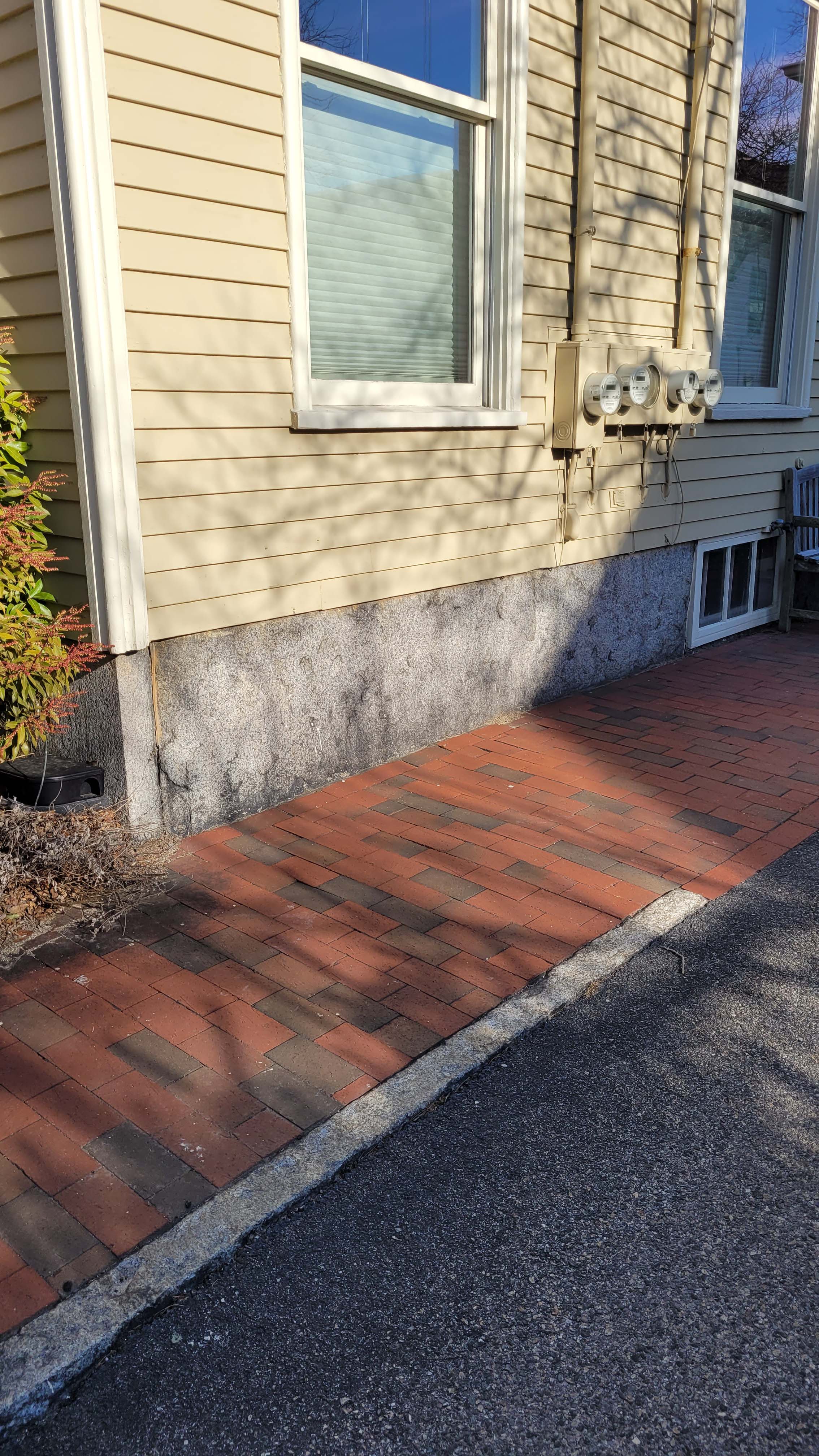
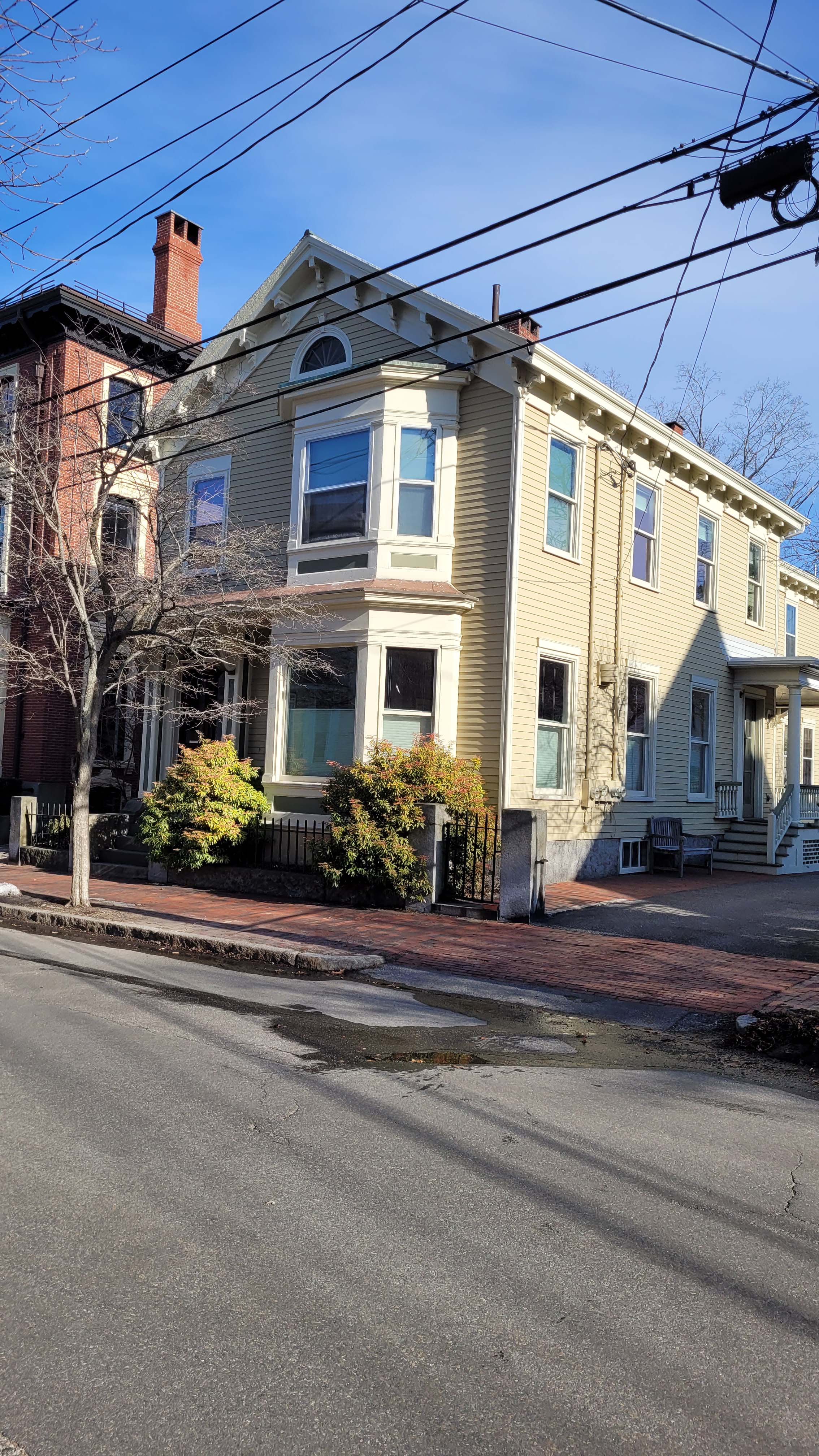
Merrick Sawyer was a stone cutter. This explains the well dressed granite slabs underpinning our subject when brick had become the predominant material for foundations in Portland. Even the bay window on the northeast side sits on these slabs. This bay will, a bit later in our story, become important in understanding the history of 296 Spring Street.
Merrick Sawyer was born in 1809. He married Elizabeth Scott in Foxcroft Maine in 1833. The first good record of them in Portland is the 1850 census when they were living on Brackett Street with their 2 sons, David & James. Beckett’s city directory confirms this. There is a transcribed birth record for David stating he was born in Portland in 1836 but I cannot confirm this through city directories. In 1851, Sawyer cut the stone for the monument to Henry Jackson, a beloved former school master, in Western Cemetery.
Findagrave.com
Elizabeth Sawyer died of consumption on December 26, 1858. She was 50 years old. In May of 1859, Merrick married Louisa Chadbourne in Portland. They had 2 children both of whom died in infancy.
Merrick Sawyer purchased the land for our subject from Elias Thomas. He paid $1494.50 for the property, all of which he financed with a mortgage from said Thomas. That note was marked as paid in 1875. Interestingly, the deed from Thomas stated that Merrick Sawyer was responsible for paying the 1856, i.e. back, taxes on the land. Sawyer also had to surround the property with “a good fence at no cost to Thomas.”
Merrick Swayer sold our subject in October of 1862. The purchaser was Elizabeth F Clark of Alfred. She paid $5300.00 and agreed to make payments on the mortgage to Thomas. In January on 1864, Clark sold the property to Benjamin Webster of Yarmouth for $6275.00. The amount of the mortgage, $1800.00, had not changed in the 15 months the Clarks owned 296 Spring Street. It would seem they made no payments. What is for certain is they did not live here as both of their deeds for the property list Alfred as their residence.
Portland Daily Press April 6, 1863. Newspapers.com
The 1864 city directory showed Merrick Sawyer at the ‘rear’ of 281 Commercial Street. This was between Center & Cross Streets. It was not a residential district and was ‘burnt over’ in the Great Fire. In a deed from late February, 1863, Sawyer sold the land at 292-294 Spring to Sewall Chase. In this deed, Sawyer noted our subject as “my late dwelling house”. So, Merrick Sawyer may well have lived here during the Clark’s ownership. In late 1864, he moved to South Thomaston where he ran a successful granite business until his death in 1894.
Benjamin Webster was born to Benjamin & Rachel Webster in Freeport in 1814. The 1857 Chace map gives us the location where he grew up as he had recently inherited it from his father. The modern name for the road it is on is “Webster Road“.
Library of Congress
Benjamin Webster went to sea as a teen. He rose to become a ship captain and owner. By the time he purchased 296 Spring Street, he had retired from life at sea and was the owner/manager of a substantial fleet of vessels. He married Eunice Pratt of Yarmouth sometime around 1840-45. They had 3 children. Along with managing a fleet of ships, Captain Benjamin Webster also was a director of 2 marine insurance companies in Portland. Eunice Webster died in 1896. Benjamin Webster died in 1902.
FindaGrave.com
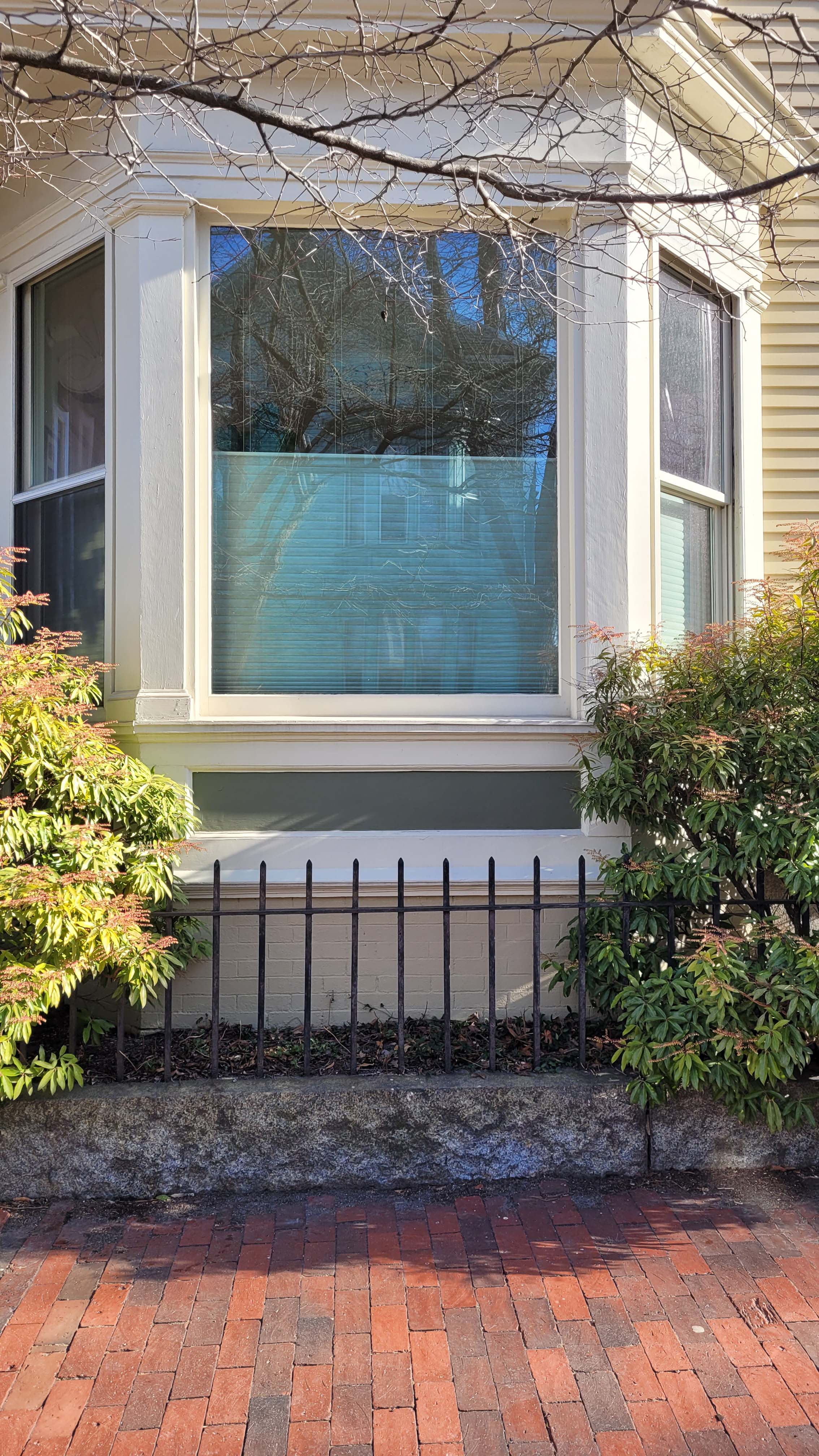
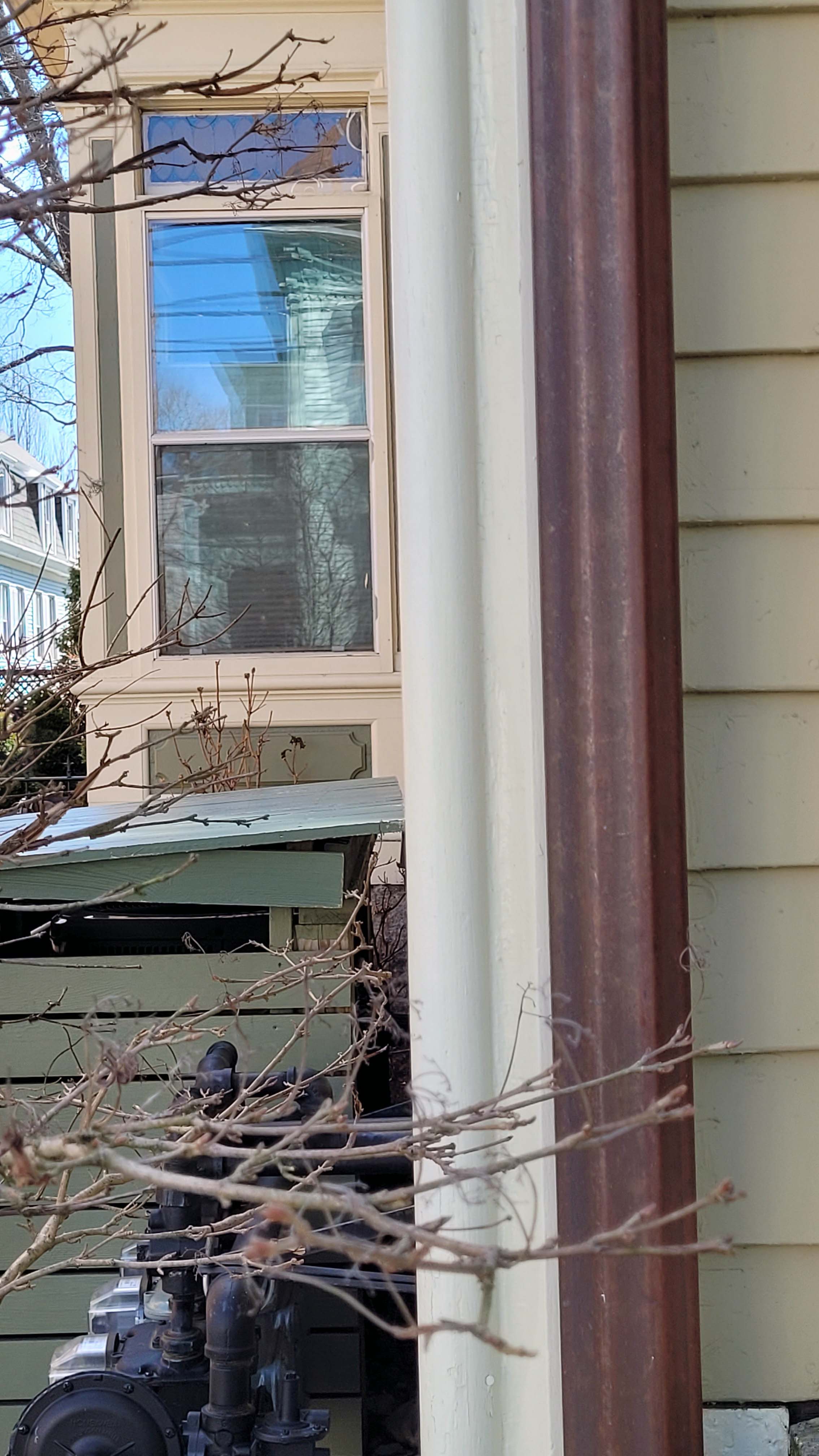
What Merrick Sawyer built and what we see today are, most likely, not the same thing. There are several items that lead me to this conclusion. First is the bay facing Spring Street. As noted, the bay on the northeast side sits on granite slabs. The bay on the front facade is on bricks. It does not make sense for Sawyer to have used granite everywhere but the front bay. The side bay also has completely different windows and trim than any other window on the house. It shows dentils on the capitals of the corner boards/pilasters and the frieze. The windows have odd transoms at the tops that make me think the originals were much taller.
Bricks under the front bay
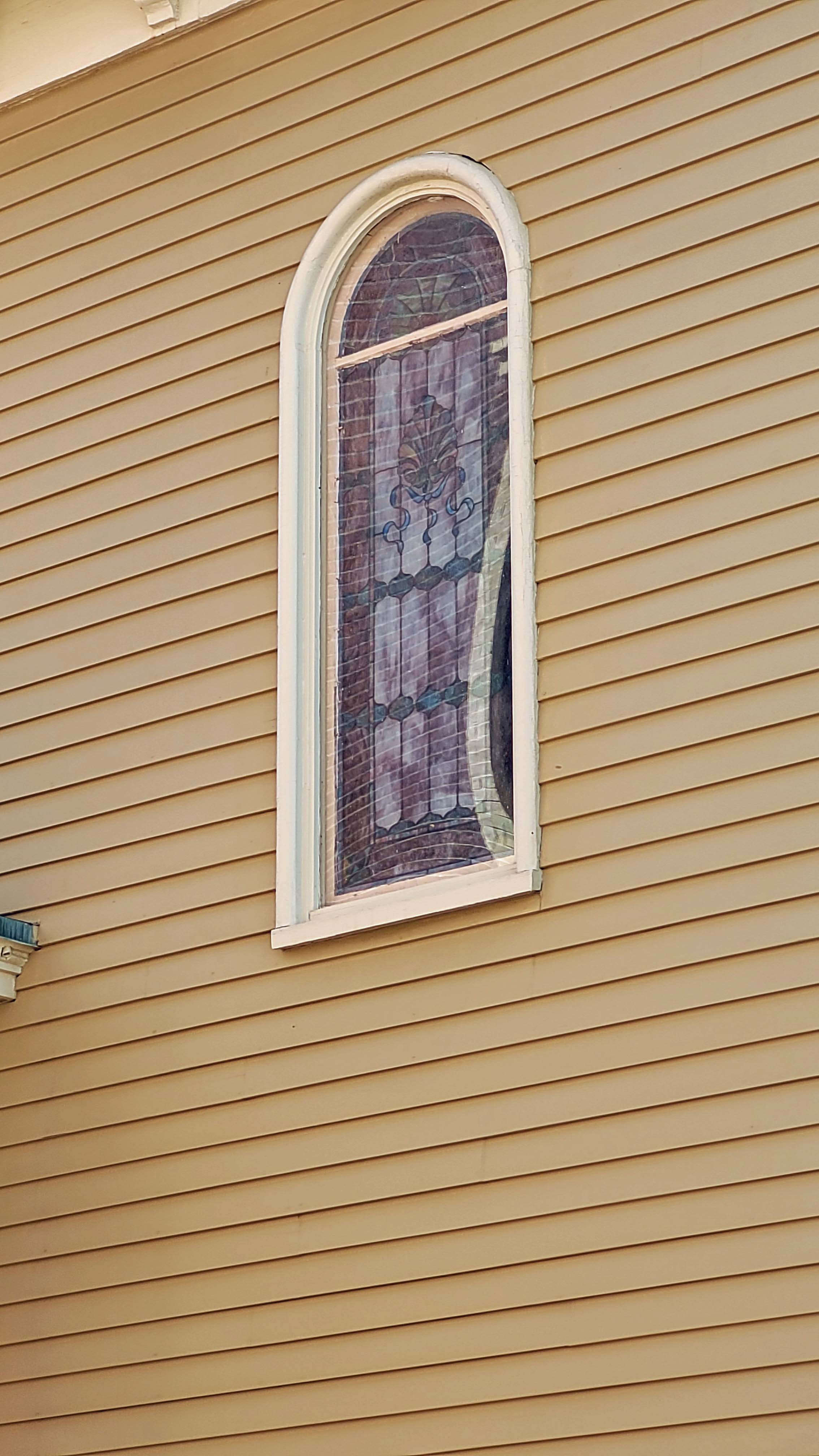
The windows are another item of interest in that they are quite plain with minimal trim and no casings. The curved top window on the northeast side really seems like a late 19th century item to me. The trim of this window does not match any other window on the house.
This is probably at the top of the stairway
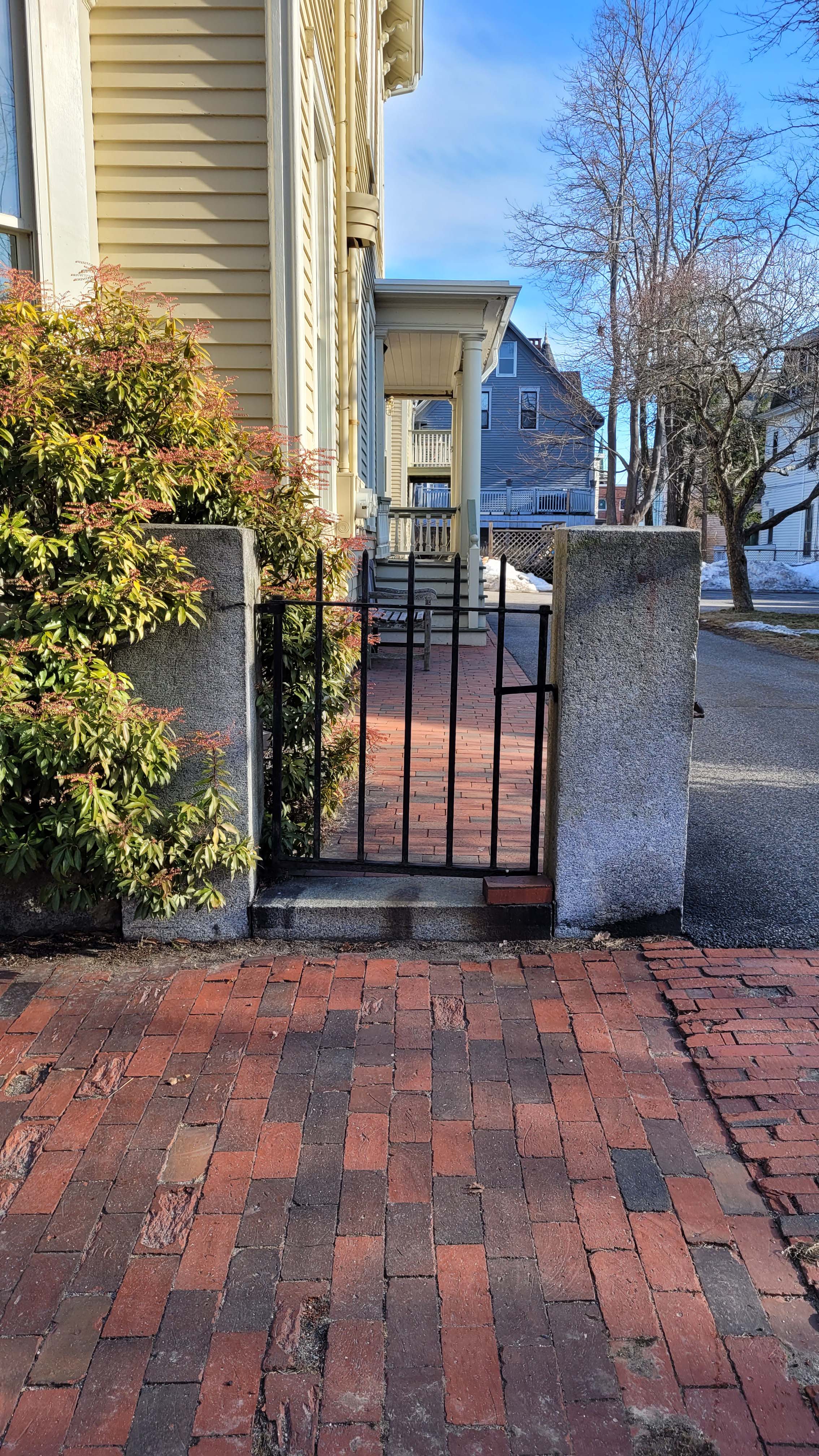
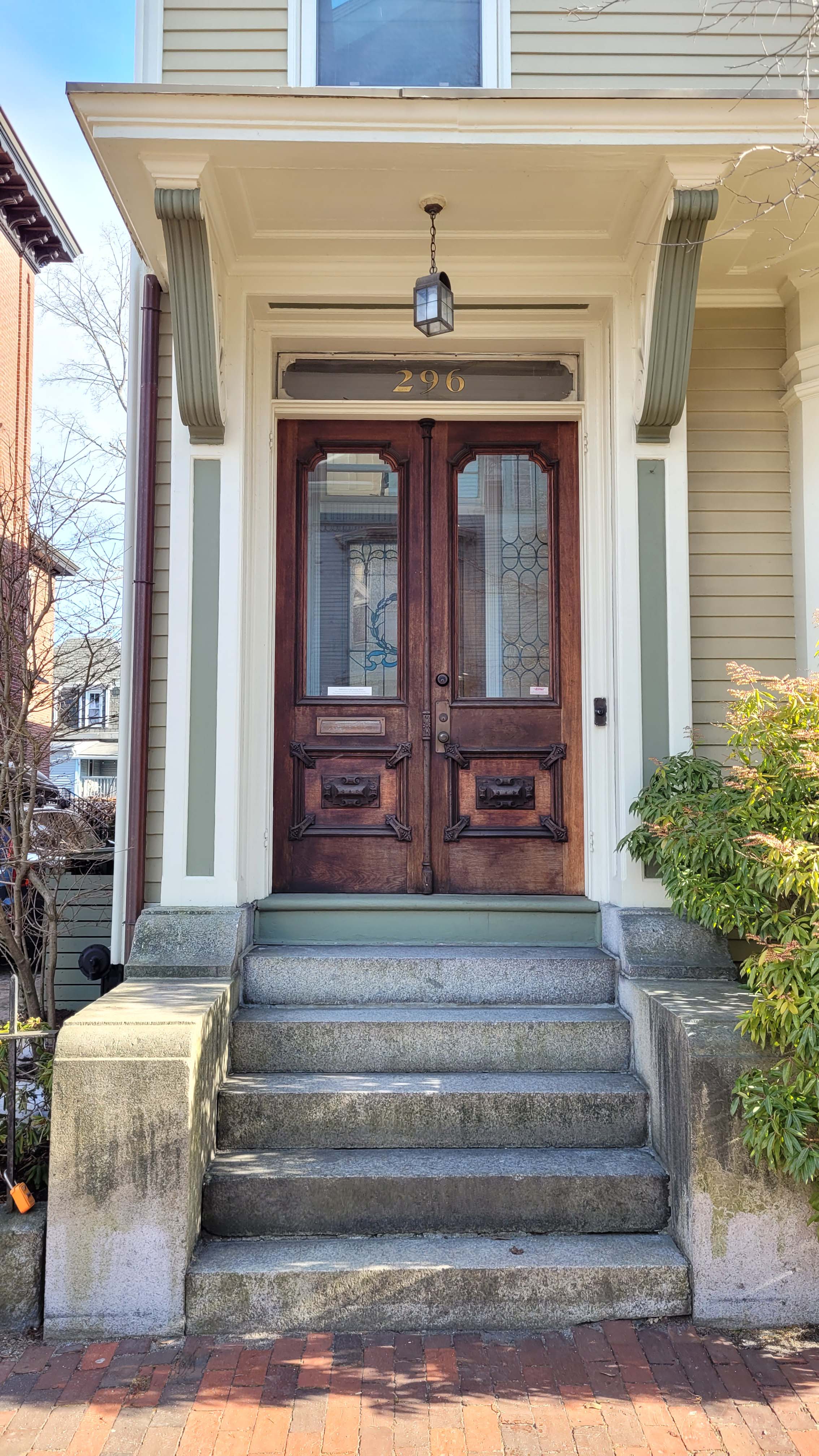
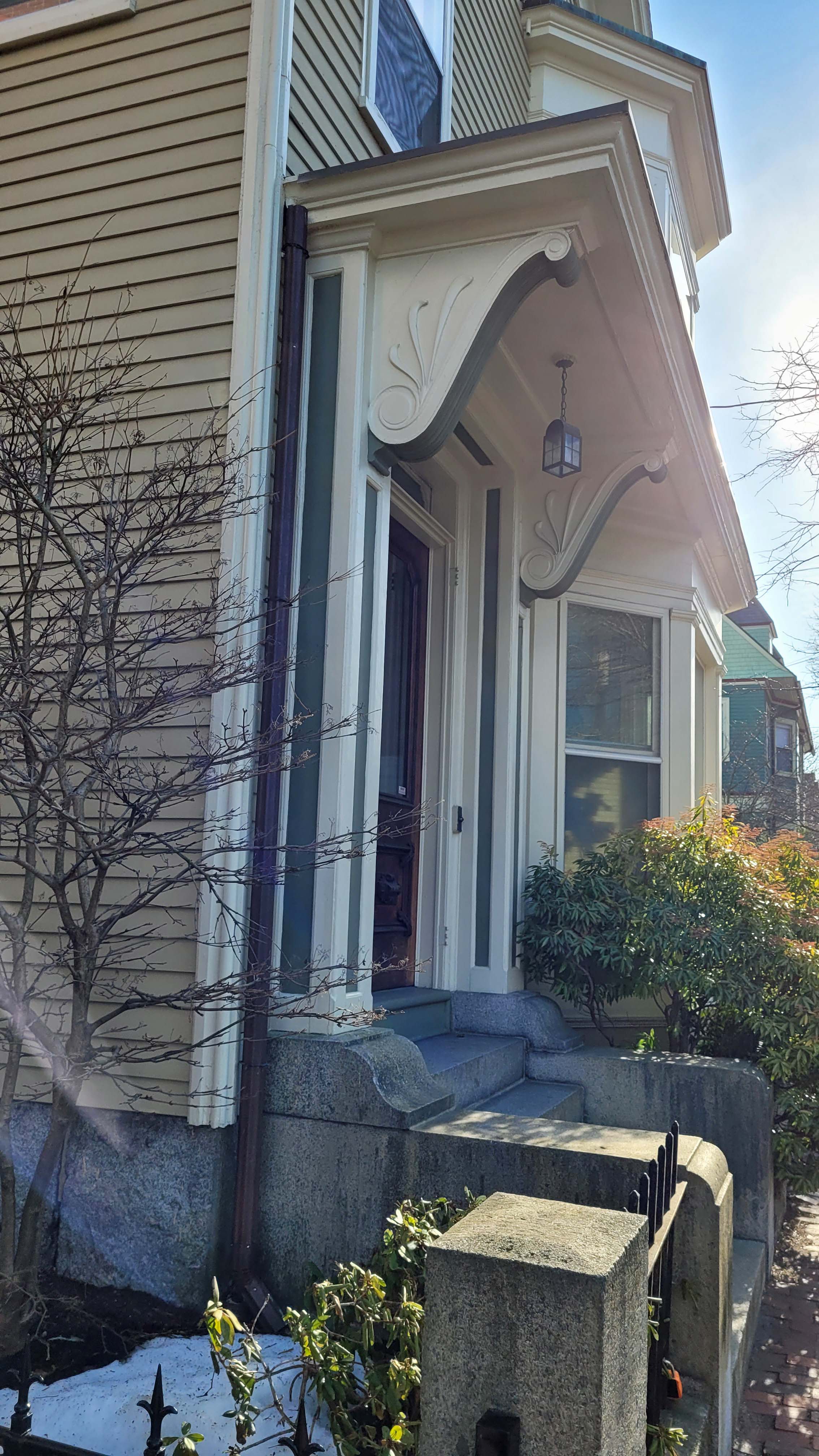
The portico, but for the steps, is not original. Given Merrick Sawyer’s profession, I have no qualms in thinking he carved those curved forms of the abutments. The portal is a wonderful piece that seems befitting of a ship captain turned successful businessman. The hood of the portal is connected to the cornice line of the bay. As I do not think the bay is original, I suspect they were all constructed at the same time. The brackets of the portal are especially nice with finely carved forms that could be floral, or dolphins or, possibly, cobras.
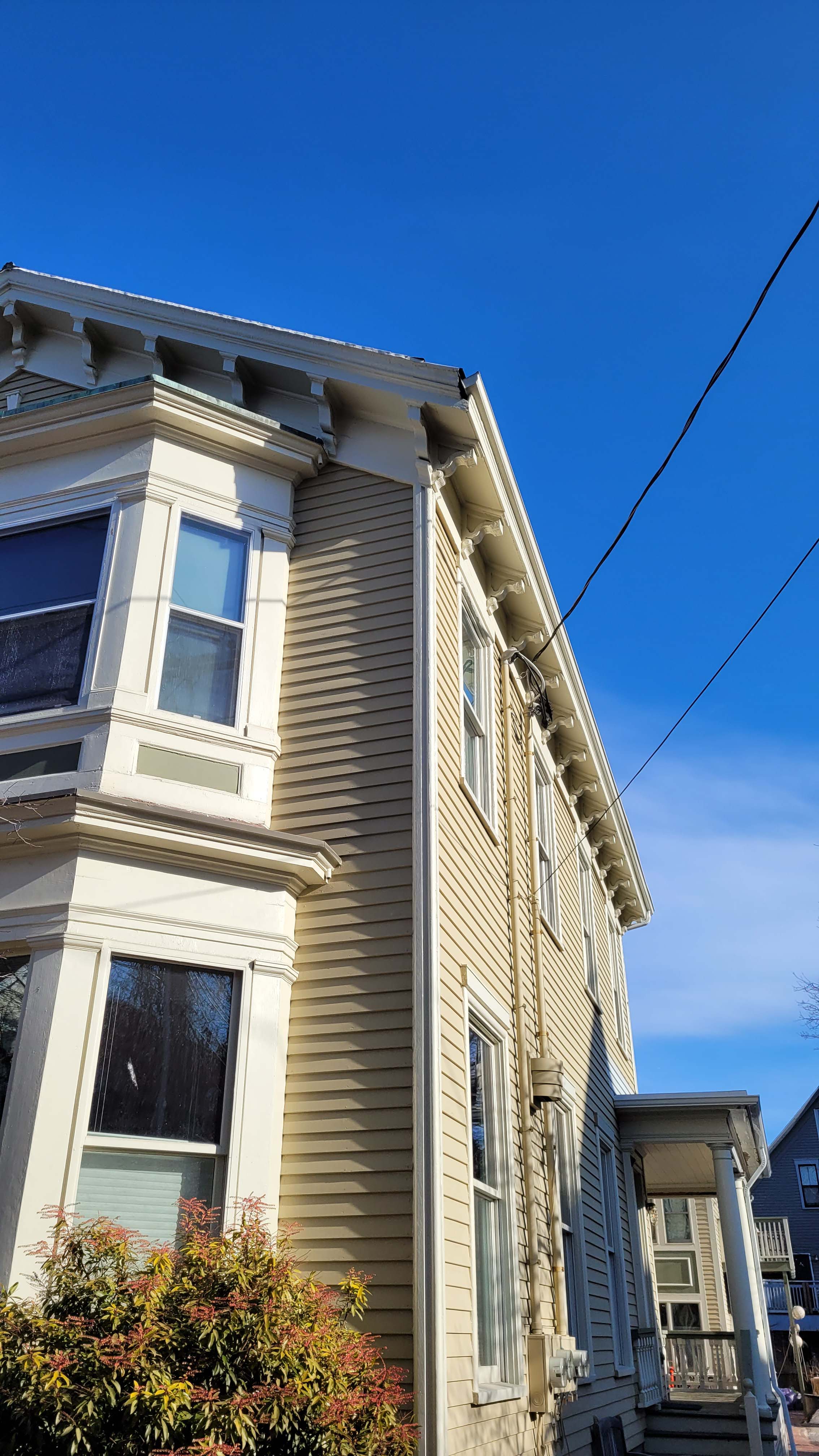
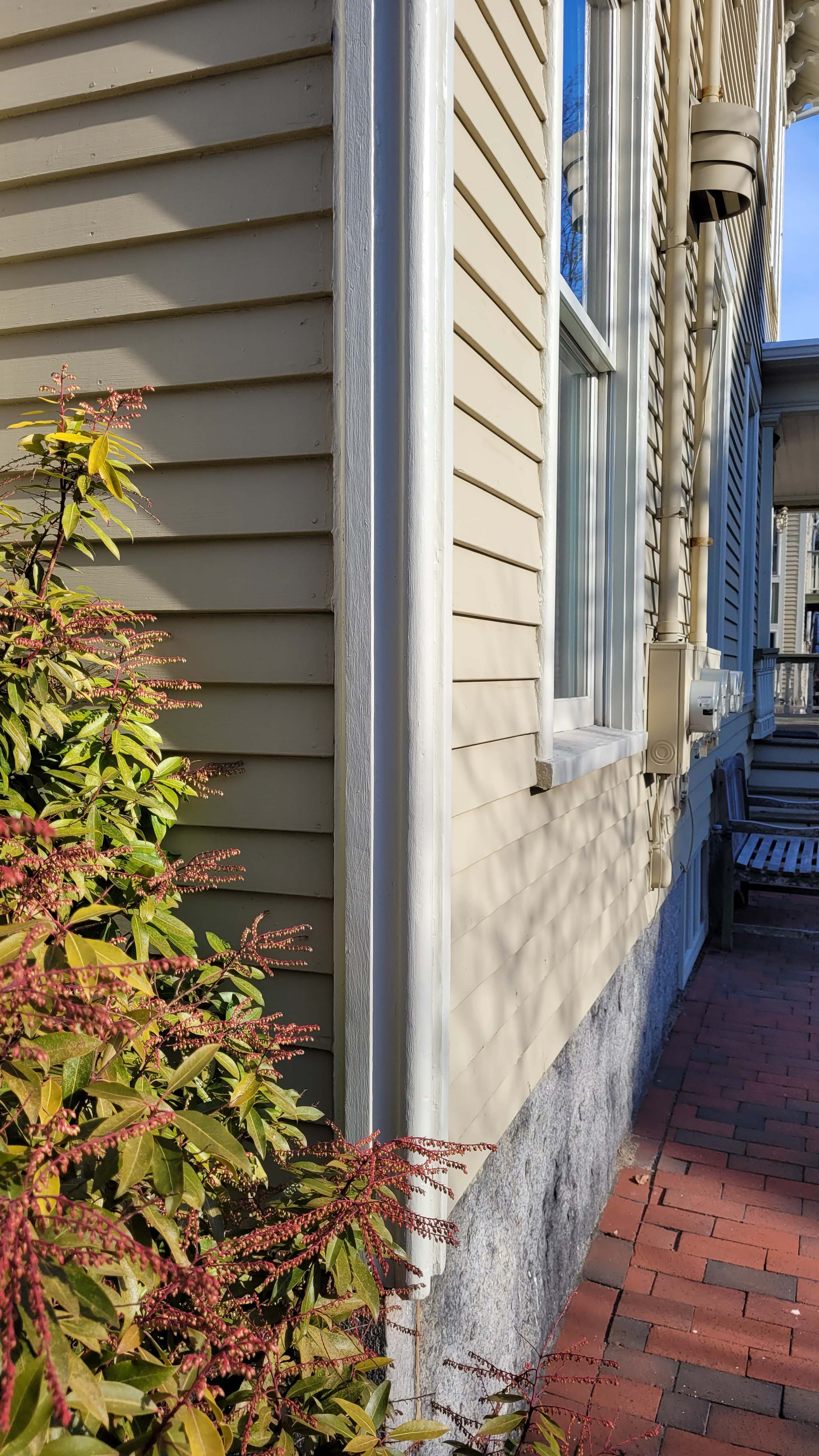
The corner boards are unique. Whereas the ‘standard’ corner would be 2 pieces of flat stock connected on the meeting edge, these show a smaller flat profile and have a round profile projecting from the intersection of the flat pieces. I have included a crude attempt at showing the different profiles below.
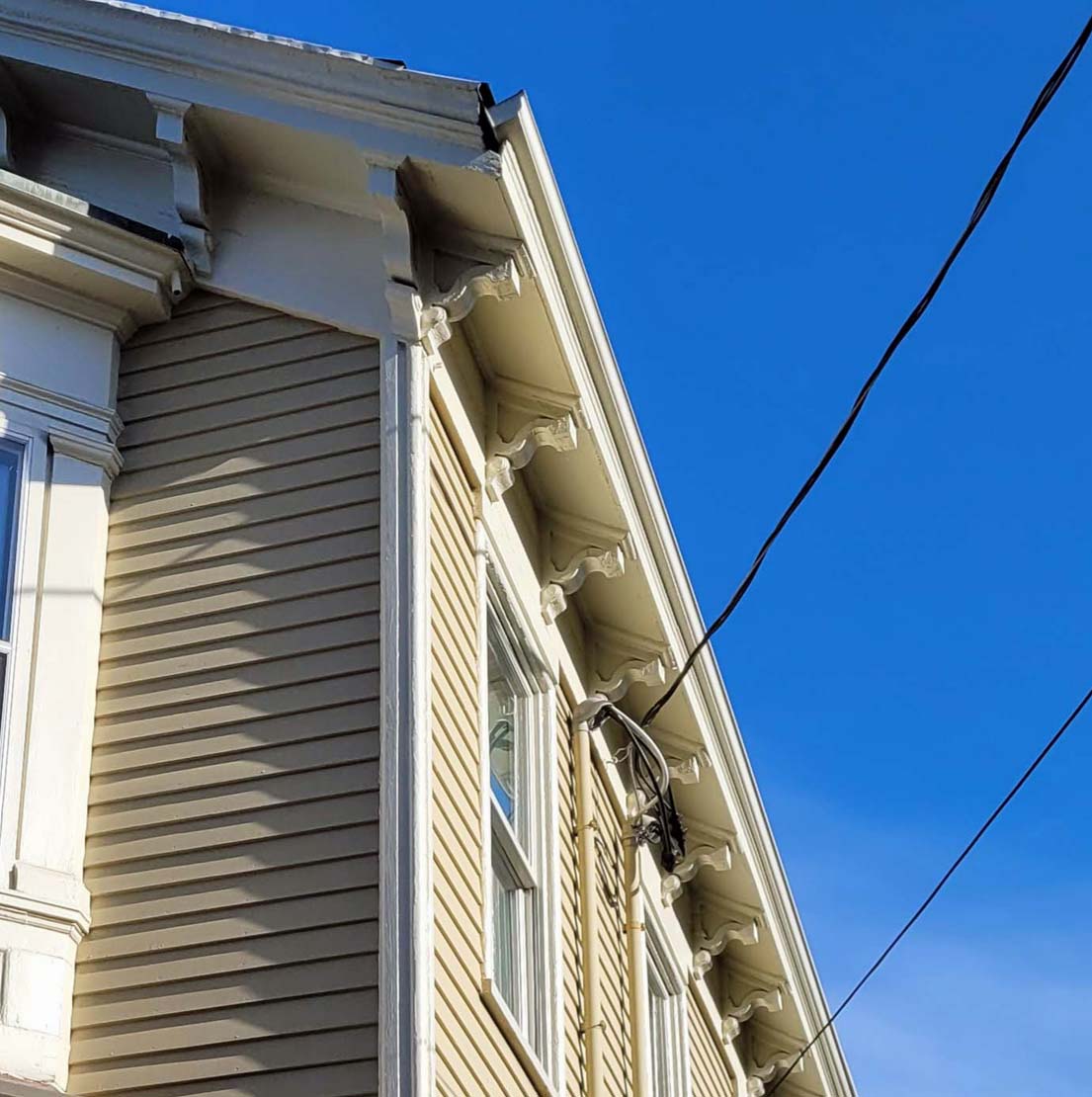
Although unique, this profile is not limited to 296 Spring Street. The Italianate house just up the street at the southeast corner of Spring and Emery Streets was built in 1858 by a lumber merchant named James Merrill. George Harding was the architect. This house as the exact same corner board profile. It also has the same half-round window in the peak of the primary gables. The brackets under the eaves are similar as well. The Merrill house has much more ornate window trim and casings as well as heavily molded architraves compared to the flat versions seen on our subject. Although I do not think Harding designed 296 Spring Street, I do believe that the builder was the same.
Detail of corner board
When Benjamin Webster died, his heirs, there were 10, sold our subject to a 46 year old coal merchant originally from Dennis Massachusetts named Peter Nickerson. Peter’s parents were Josiah & Clarissa. Josiah was a ship captain turned vessel merchant who moved to Portland in 1866 and purchased a newly built home on India Street. Peter married Ella Nash in 1878. Ella was the daughter of Daniel and Mary Nash and was born in 1853. Daniel was a shoe and fancy goods dealer who became involved in the family stove merchant business. Peter and Ell had no children. Peter died on February 19, 1908 of “Apoplexy induced by Acute indigestion. Dropped dead.“
296 Spring Street in 1882 Portland Public Library Digital Commons
Ella Nickerson stayed at 296 Spring Street after the death of her husband Peter in 1908. The 1910 census found her here along with Julia Donahue and Helen Card. Julia was a 24 year old Irish born woman working as a servant and Helen was a 34 year old Portland native who worked at home as a dress maker. Ella sold our subject to Martha Douglass in 1919. Ella took lodging in several places in the city. She died in 1935.
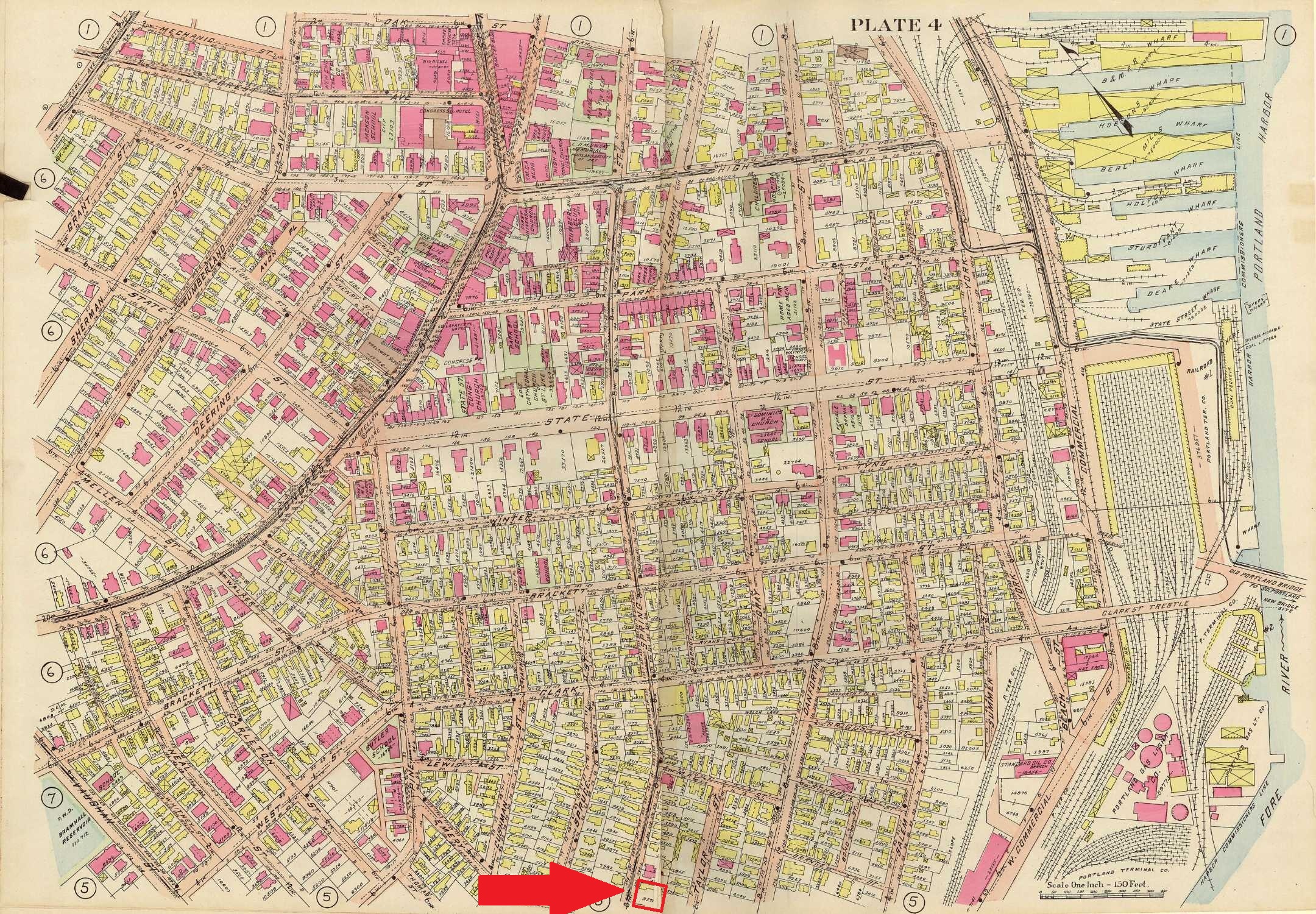
296 Spring Street on the 1914 Richards map. Portland Public Library Digital Commons
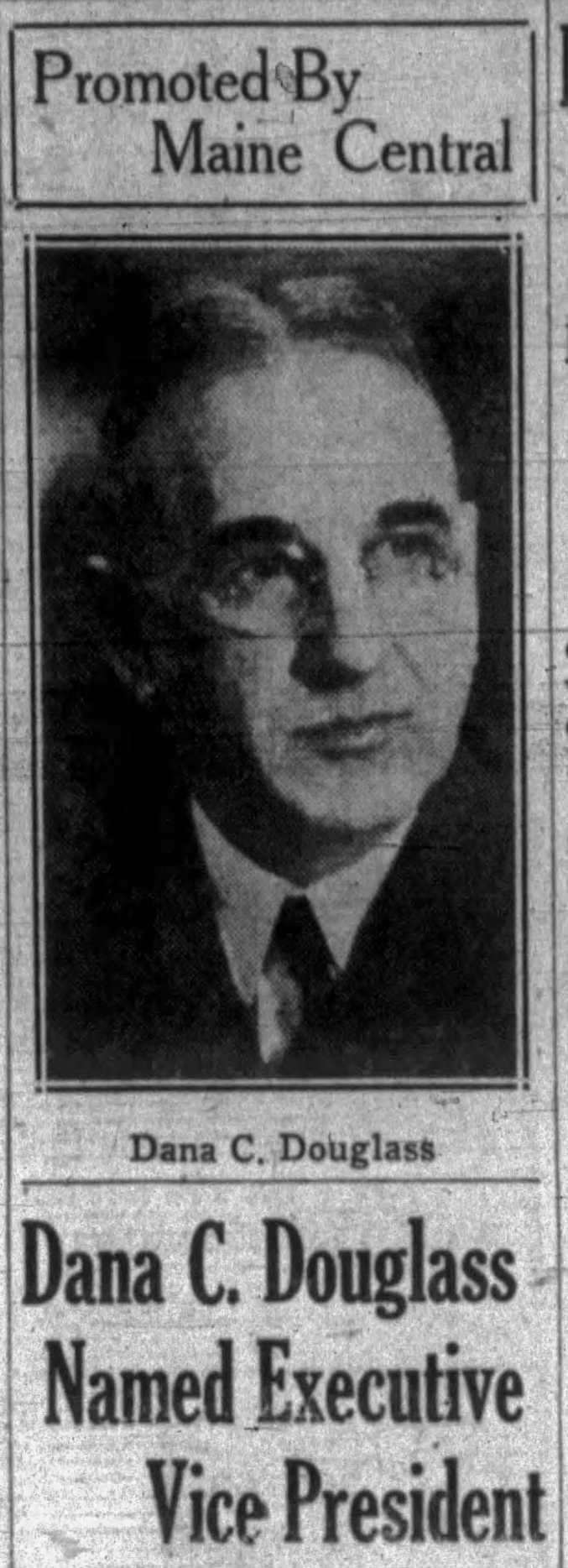
Martha Brackett & Dana Douglass married in 1900. Martha was born to George & Harriet Brackett in Portland in 1873 . Dana was born in Wales ME in 1877. His parents, George & Ella Douglass, were living in Waterville, where George was working as a carpenter, in 1880. Dana started working as a stenographer in the offices of the Maine Central Railroad and, by the time of his marriage, was the secretary to the general manager. In 1910, he became the assistant to the general manager. When Dana Douglass Jr was born in 1914, the elder Dana was the general manager and assistant to the vice-president of the railroad. He was the ‘public relations official’ for the railroad during WWI.
Dana & Martha Douglass, along with their son Dana Jr, shared 296 Spring Street with Martha’s sister Edna and the Wescott brothers, Edward & Rupert, in 1920. Edna was 38 and listed no employment. Edward & Rupert were 21 & 17 respectively and worked as clerks for the railroad. 1930 found much the same group of people here but Rupert Wescott had moved on and Eleanor Brackett, Martha’s 22 year old niece, had moved in.
296 Spring Street in 1924. Maine Memory Network
Portland Press Herald. March 15, 1933. Newspapers.Com
The ‘Great Depression’ did little to slow Dana Douglass’ rise at the Maine Central Railroad. He was named executive vice president in 1933 and saw the railroad through the depression. The 1940 census found Dana, Martha, Dana Jr here at 296 Spring Street along with Martha’s father, and George & Florence Shaffer. The Shaffers were from Connecticut and worked as the family’s private chauffer and housekeeper. Dana Douglass retired in 1947 which was the same year that he and Martha sold out subject to Annie Foley.
Annie Conley was born in Portland to Martin & Bridgett in 1898. Martin was an Irish immigrant while Bridgett was born in Portland to Irish immigrant parents. Martin worked as a laborer and the family lived on York Street. Annie married Phillip Foley in November of 1920. Philip was born in Ireland in 1891. When he came to the US is not clear. He worked as a laborer. The Foleys had 7 children. In 1963, Annie passed ownership of 296 Spring Street to a son, John. He in turn owned it until 1984. The Captain Benjamin Webster Condominiums were created in 1985.
296 Spring Street is listed as a 3 unit condominium. The condition is very good.
By Me a Coffee!
Bricks under the front bayPortland Daily Press April 6, 1863. Newspapers.com296 Spring Street on the 1914 Richards map. Portland Public Library Digital CommonsPortland Public Library Digital CommonsPortland Press Herald. March 15, 1933. Newspapers.Com














 Portland House Stories