
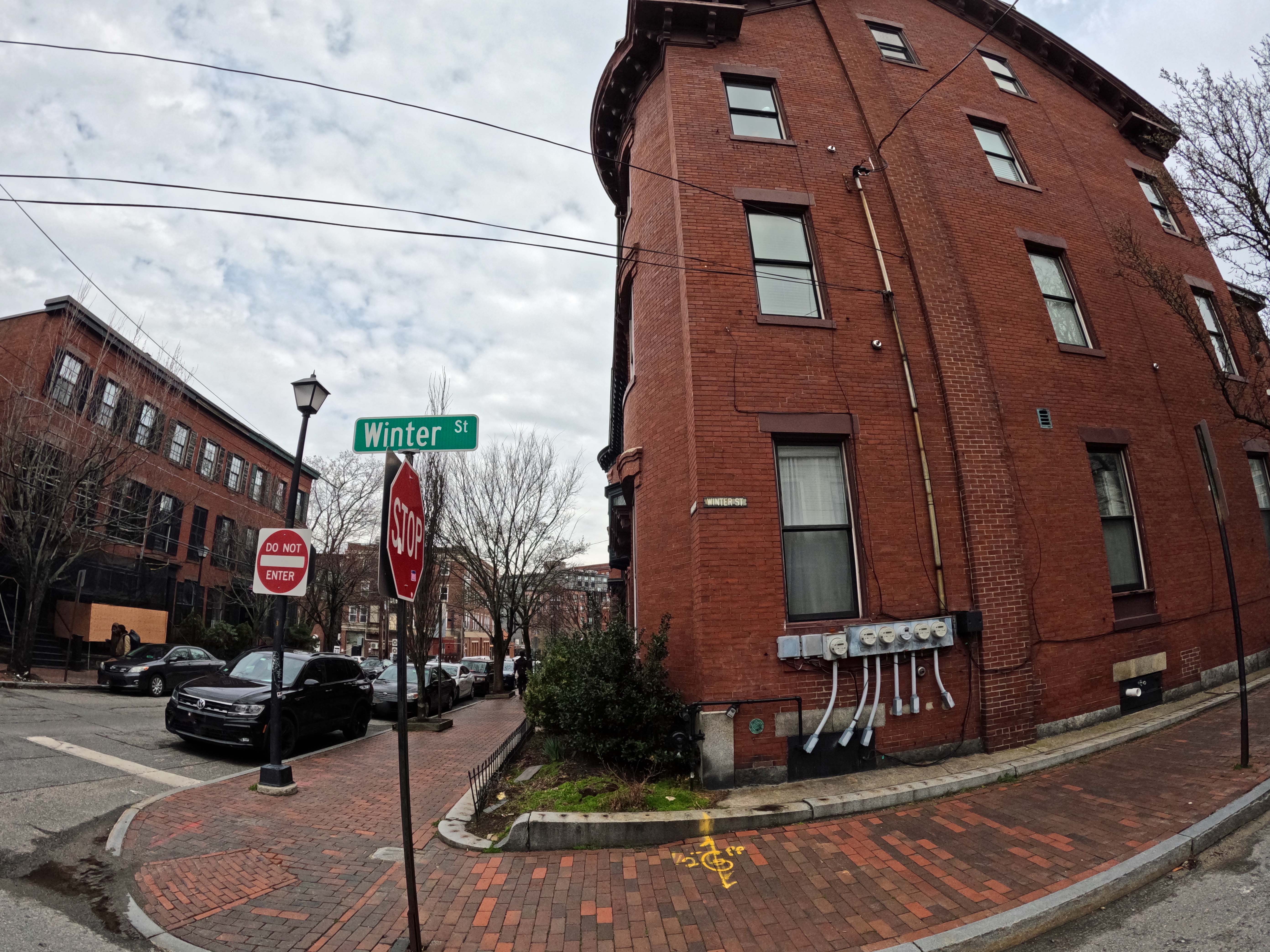
Built on spec in 1856 by the Granville & Sewall Chase. Design by Charles A Alexander
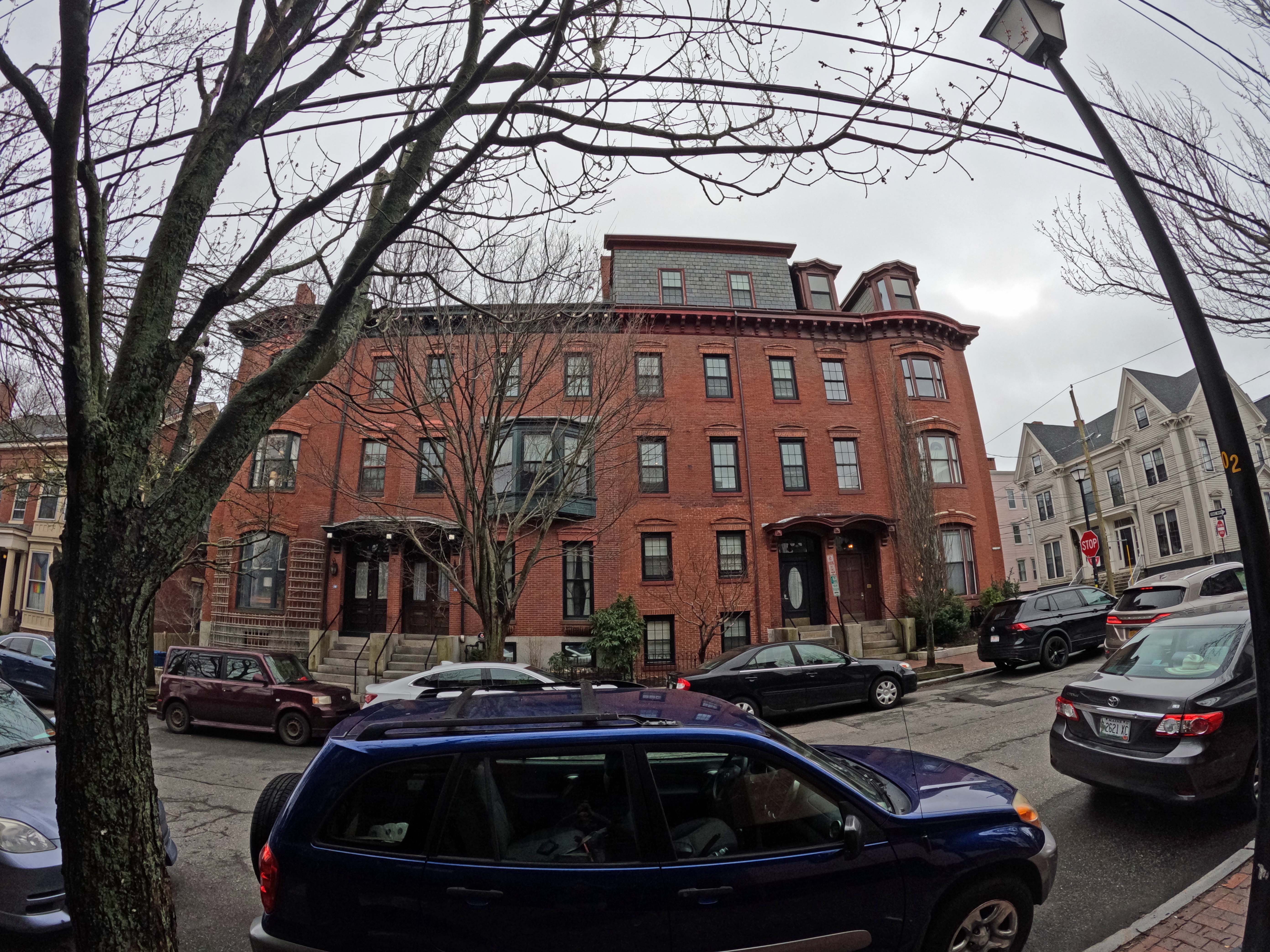
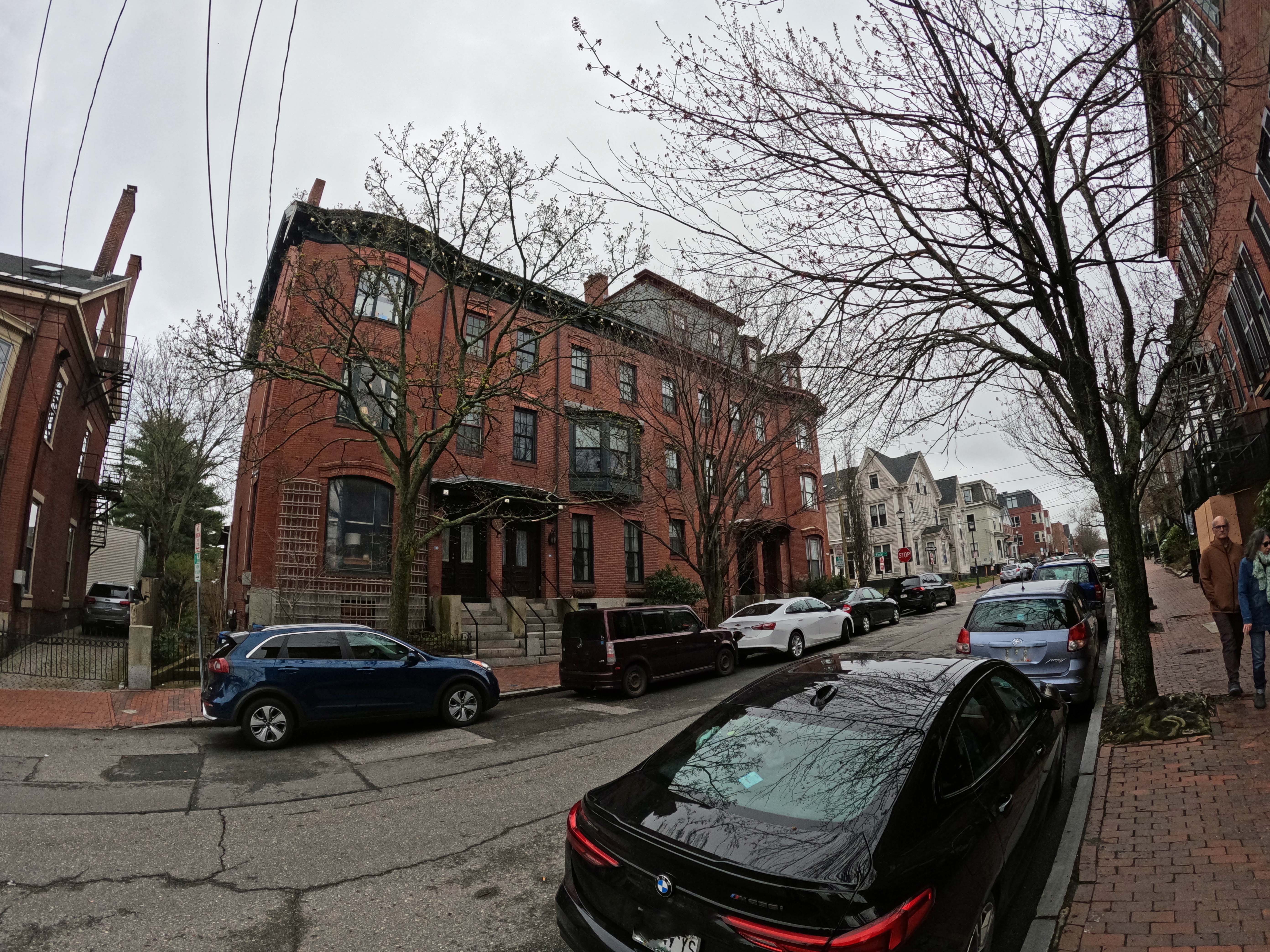
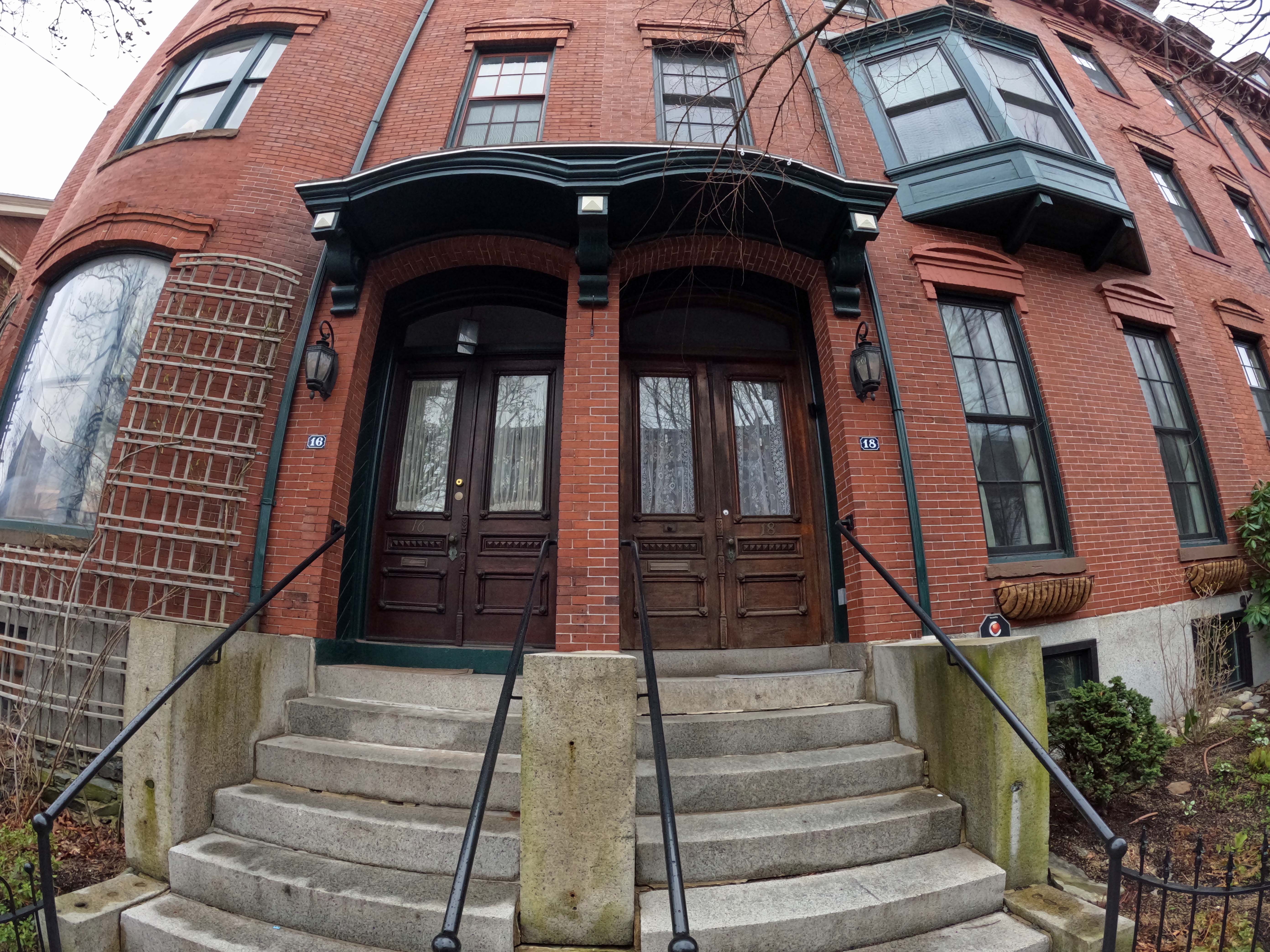
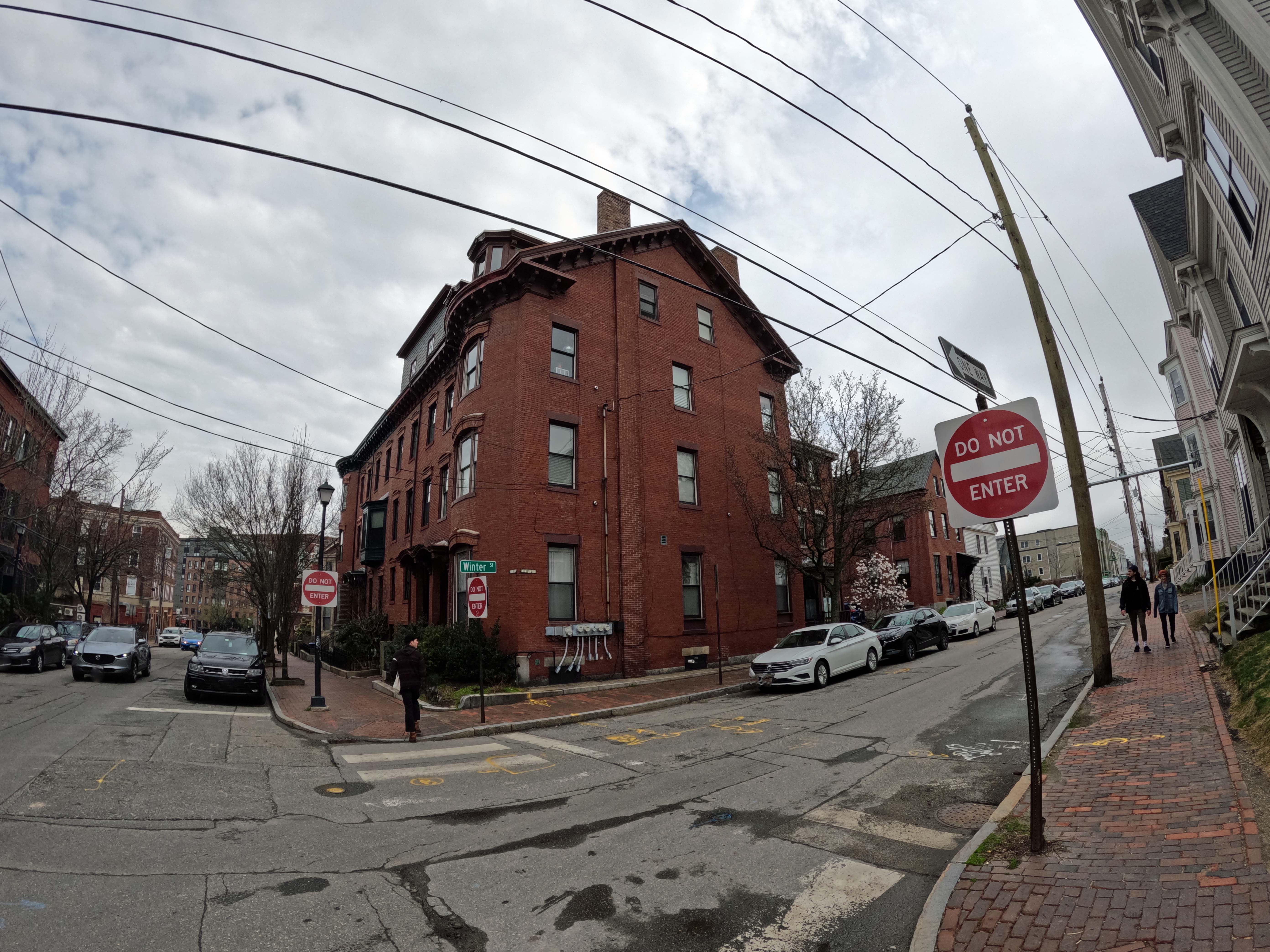
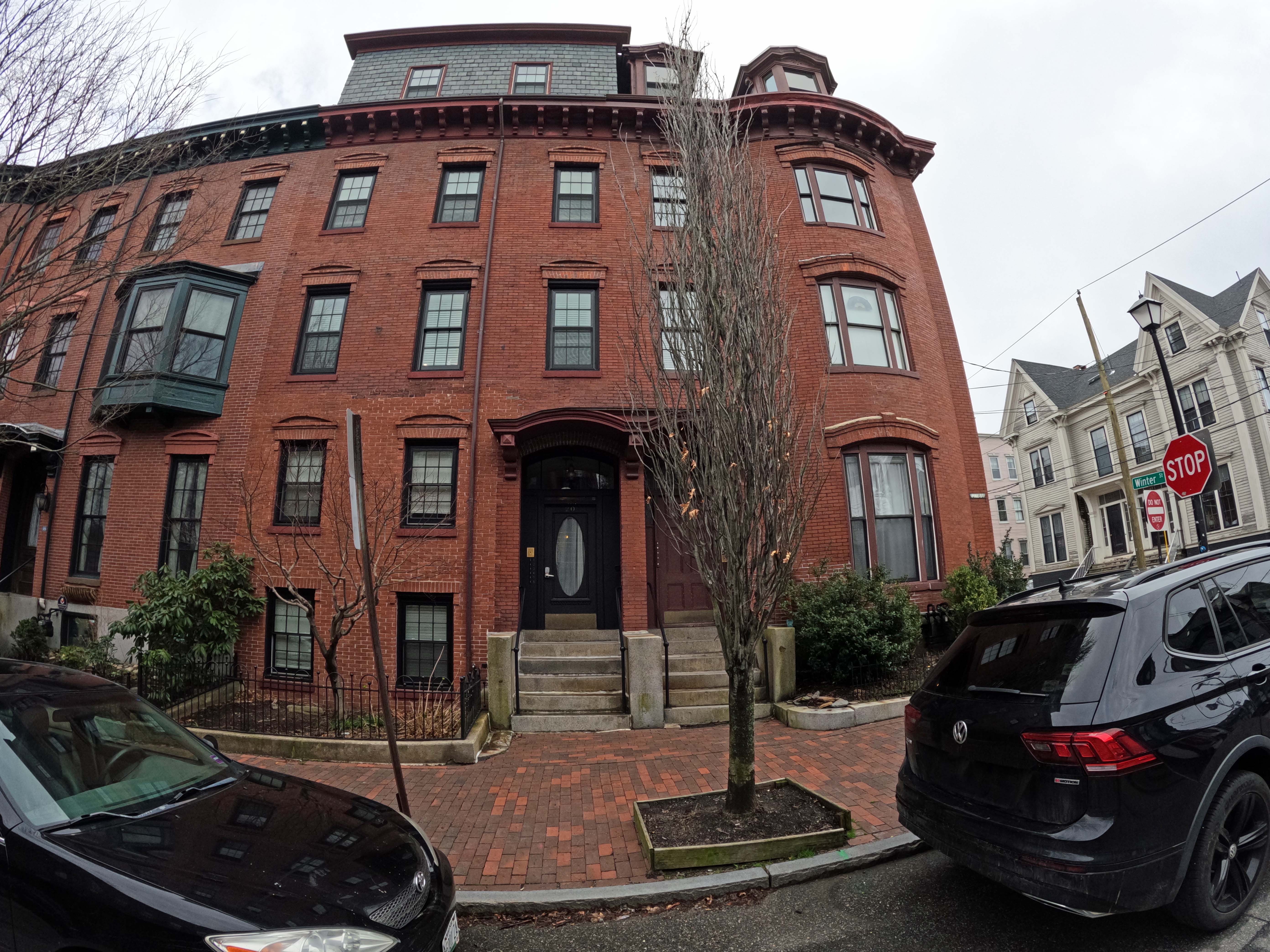
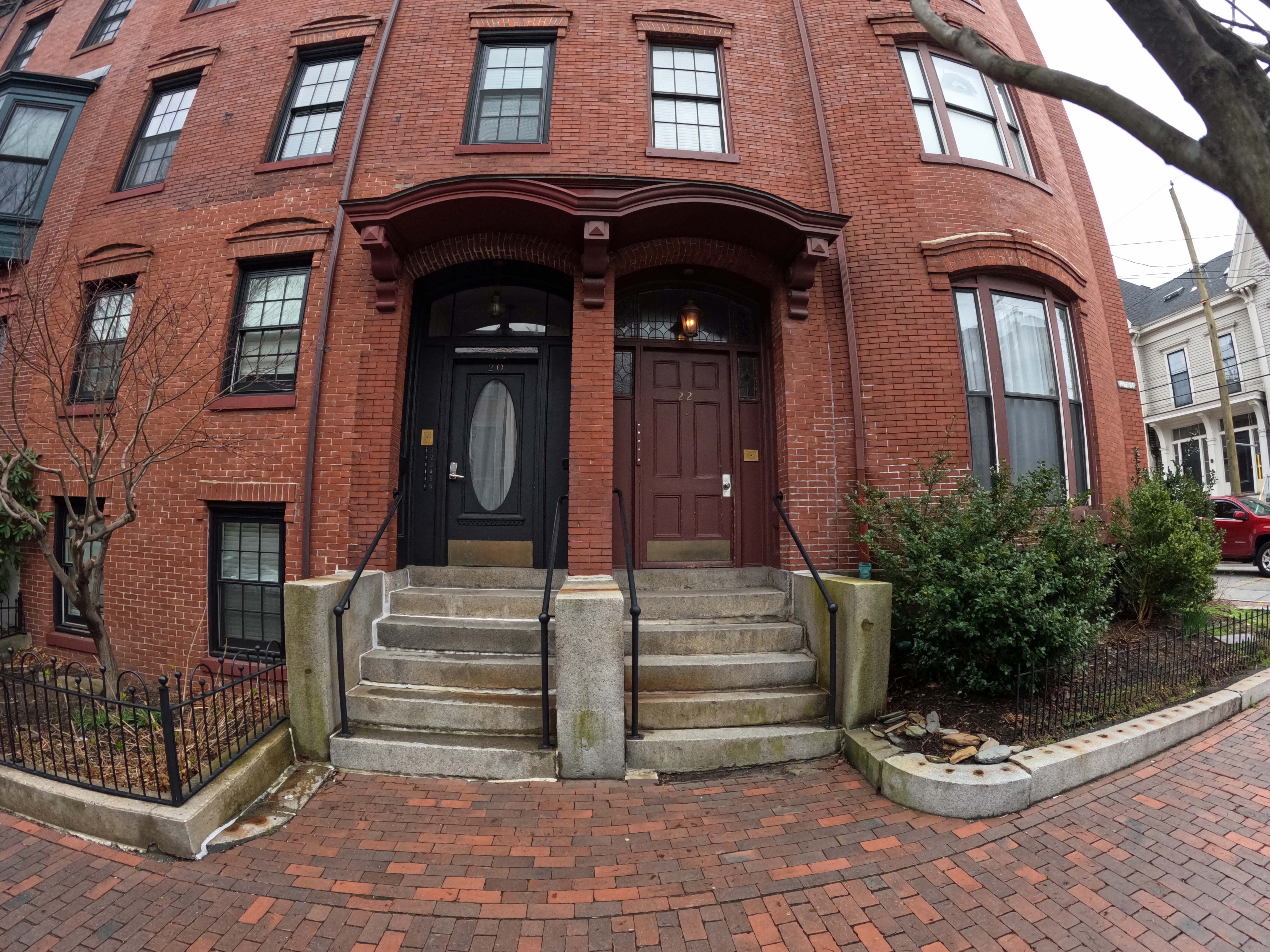
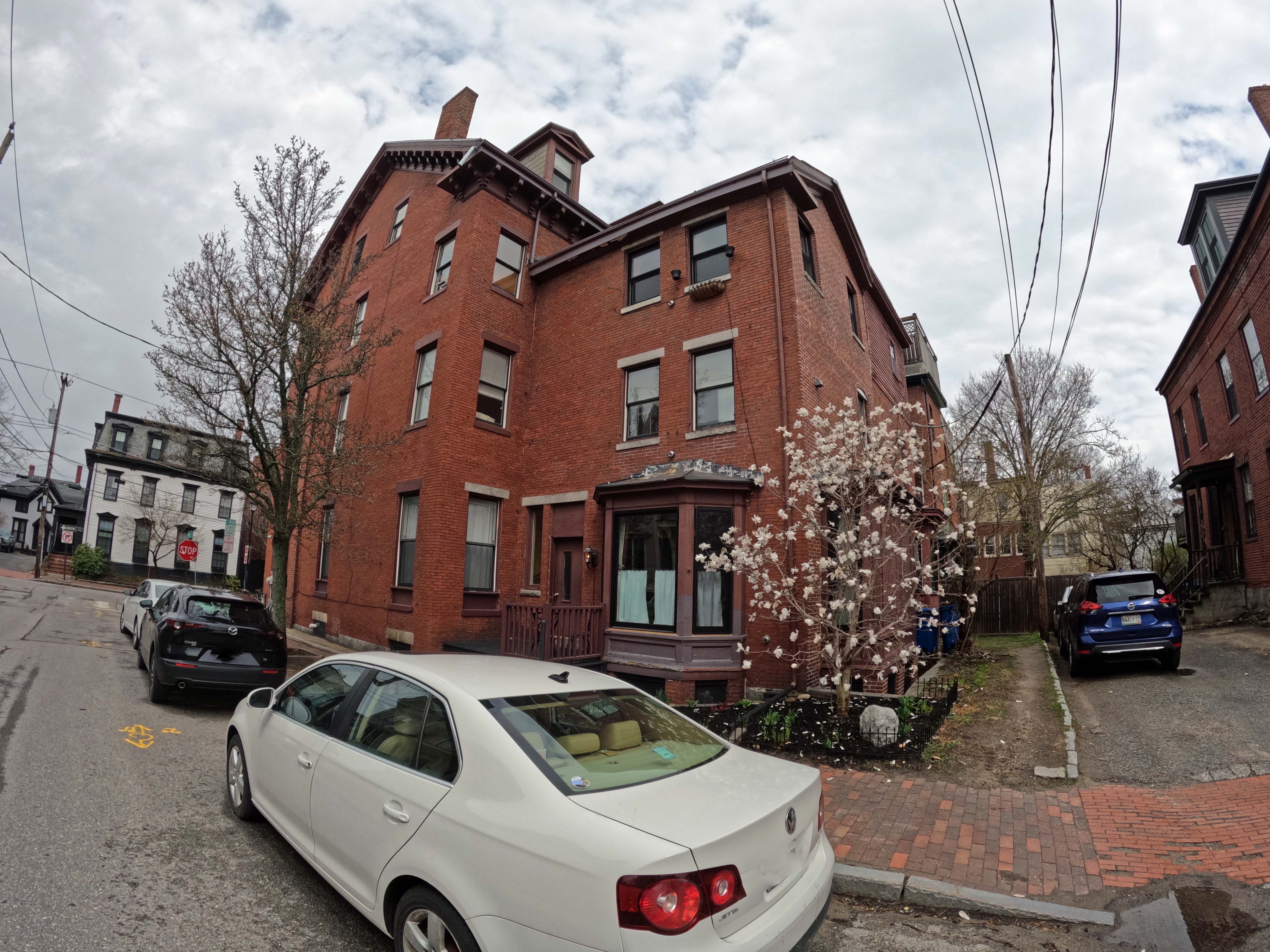
A quartet of substantial Italianate townhouses in the Longfellow Square neighborhood
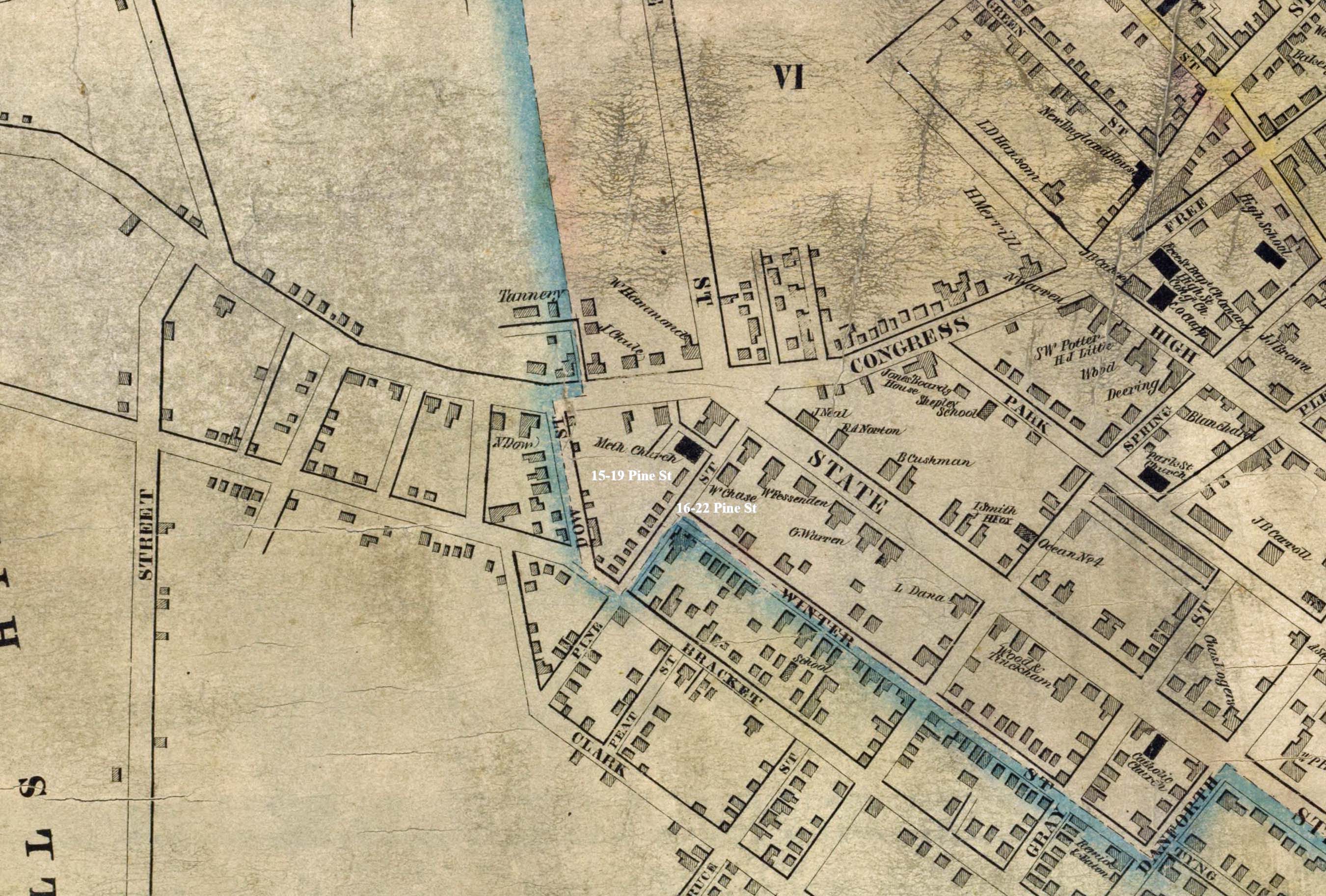
The section of Pine Street from Winter to State Streets could, from a residential view, rightly be called “Chase Brothers Street”. As we have already seen, numbers 10 & 12, were built by Granville in the late 1840’s. This was the same period when Granville & Sewall built the 3 units across the street at numbers 15, 17, & 19 in the still popular Greek Revival style. The earlier date can be confirmed by their presence on the ‘Walling‘ map of 1851.
The attribution to Charles Alexander is not confirmed by any documents that I have found. It is completely mine and is based on the period and details.

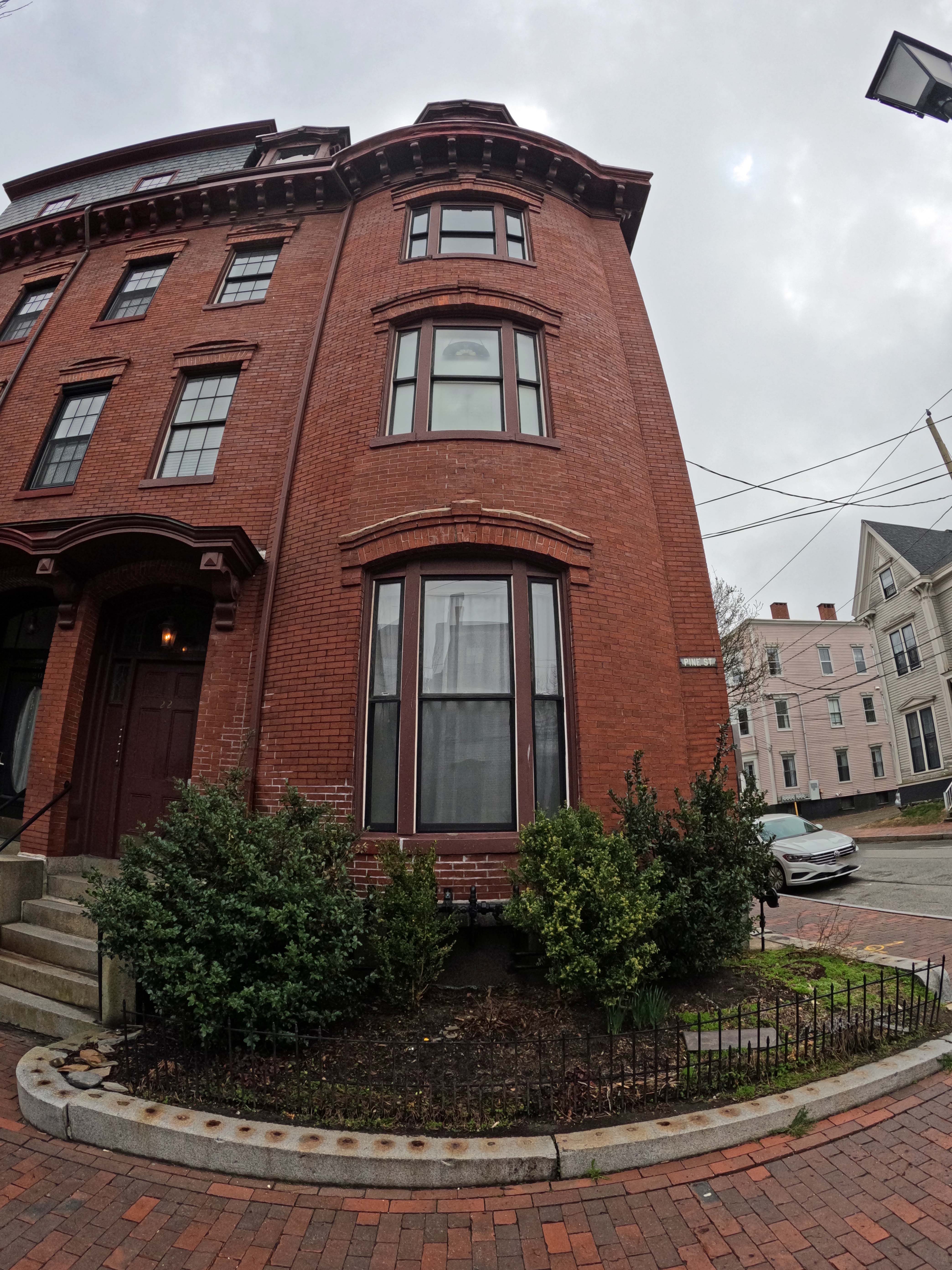
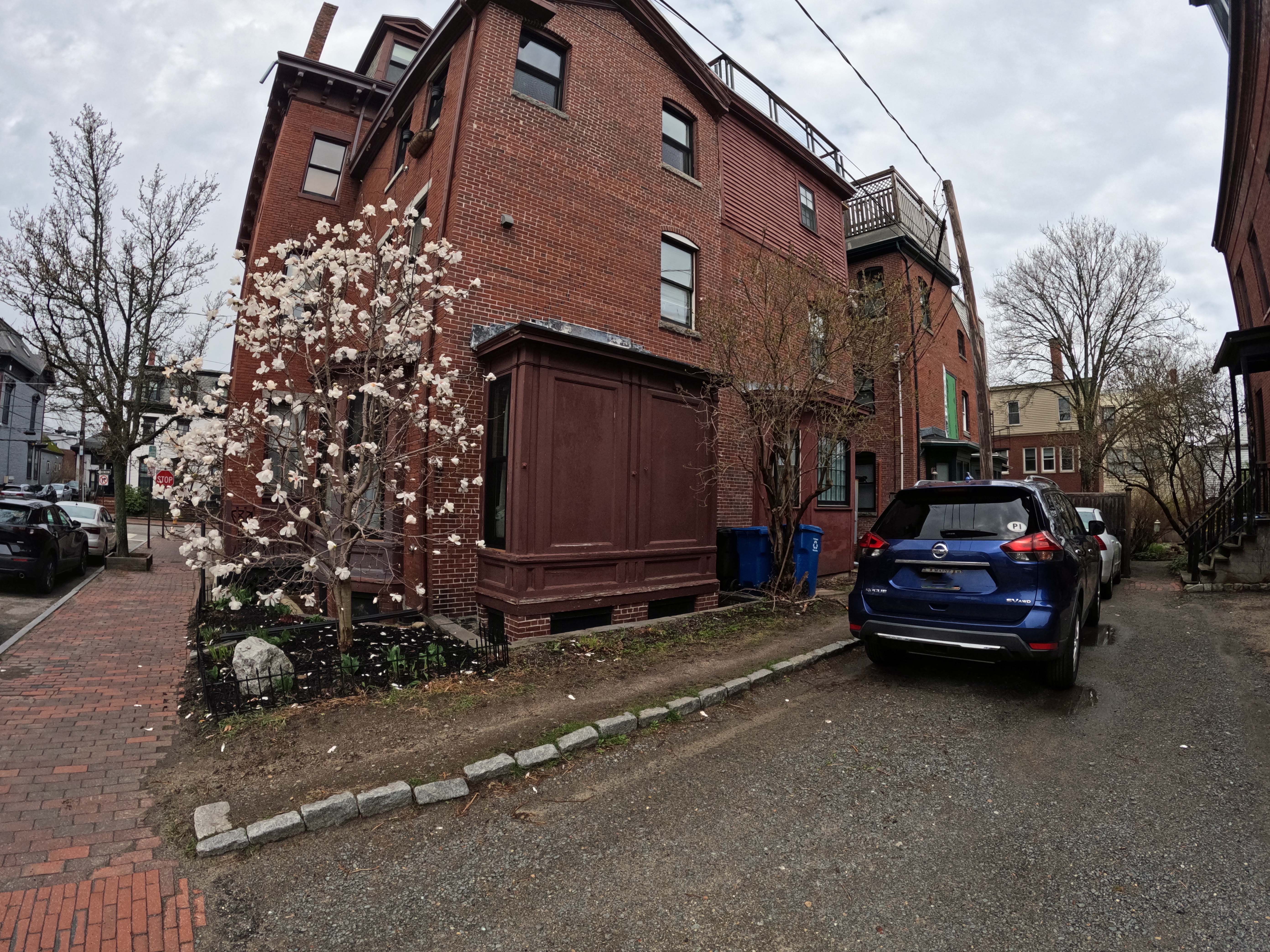
The image above is the best stylistic argument I can make for the Alexander attribution. The subtle curve of the bay was seen on his double house, now removed, for the Libby brothers at the corner of Congress and High Streets and the extant Safford House at the corner High and Spring Streets. The oversized windows that decrease in size with each story, under compressed arches with stylized keystones to be found in many of Alexander’s works. No one else was doing this style of work in Portland in the period.

Sewall & Edward Chase purchased the land for 16-22 Pine Street from the O’Brion family who lived in the newly built Greek Revival house, know a funeral home, on State Street just around the corner from Pine, in September of 1848. As this was the same time the Chase brothers were building across and down Pine, it is understandable that they did not build on our subject lot for some time. In June of 1857, Edward sold his interest in the lot to Granville. Edward had, by this time, moved to Bethel and taken up farming. Edward’s deed makes no mention of buildings in any form, but 2 weeks later, Sewall and Granville sold #18 Pine Street to Cornelia Jackson with the “buildings thereon.” Obviously, our subjects had already been built or were under construction. That they were included in the Chace map, published in 1857, leads me to the build date of 1856.

Charles Alexander was ascendant in Portland in the mid to late 1850s. He was the ‘starchitect‘ of the day for the city. That he would be commissioned to design an upmarket development, which this was, is completely believable to my mind.

Sales of the units at 16-22 Pine Street were slow. The aforementioned sale of #18 to Cornelia Jackson in 1857 was the first. The editor/publisher of the weekly newspaper, The Journal & Inquirer, Benjamin Peck, purchased #20 in June of 1859. It wasn’t until October of 1862 when a cooper named Joshua Jacobs purchased #22 and #16 sold to a livery stable owner named George Babcock in February of 1863.

The Portland Daily Press noted that the minister for St Luke’s Church, Alexander Burgess was living at #16 Pine Street when George Babcock purchased it in 1863. I am not sure if Babcock ever resided here. He sold it to a druggist named Benjamin Perkins in 1866. Perkins was born in Weld Maine in 1827. He married Augusta Bellows in Bangor in 1849.The following year, Augusta gave birth to a son, Charles. She died that same year at the age of 22. Benjamin married Sarah Beals in Portland in 1860. Sarah was born in Wiscasset in 1833. She gave birth to a son, Willis, in 1862. Sarah died in 1890. Benjamin Perkins sold 16 Pine Street in 1902. The next 12 years saw 5 different owners before Emma Porter purchased it in 1915. She passed it to her daughter Beatrice on her death in 1932. Beatrice Porter Lane lived here until she sold it in 1968.
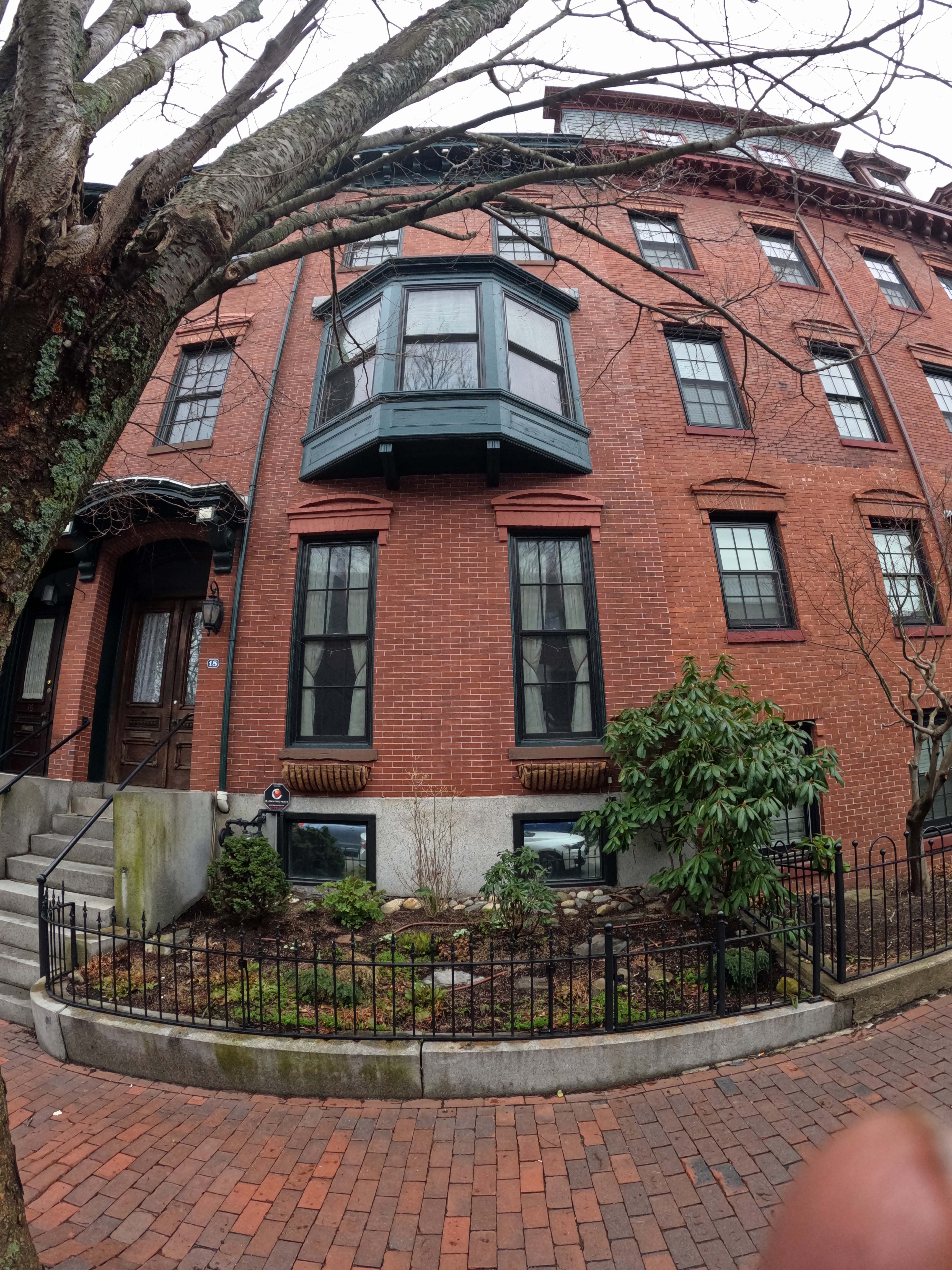
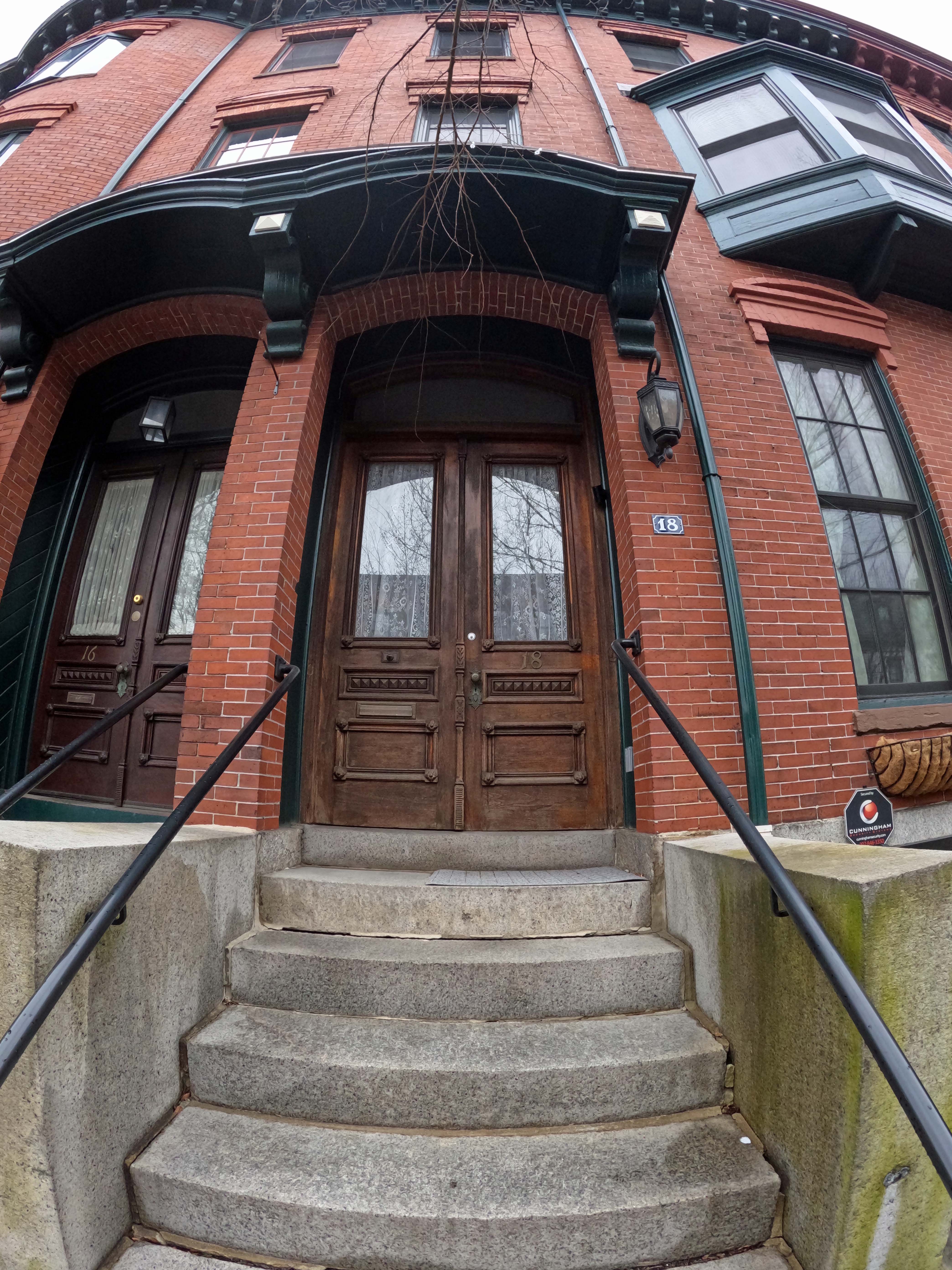
Cornelia Jackson was 37, married for 7 years, and the mother of a 2 year old and a newborn daughters when she purchased 18 Pine Street in June of 1857. She was born in Portland to Reverend Petrus & Lucretia Ten Broek. Petrus was from New York and was the minister of St Pauls Church. He was descended from the Van Rensselaer’s and Peter Stuyvesant. Lucretia was the daughter of Levi and Lucretia Cutter. Levi was mayor of Portland from 1834 to 1838. Cornelia’s husband, George Bartol Jackson, was a lawyer and a Portland native whose father was a beloved teacher in Portland for many years. The bay window on the second floor is not original but was likely added during the Jackson’s tenure. The Jackson family lived at 18 Pine Street through the 1930s.
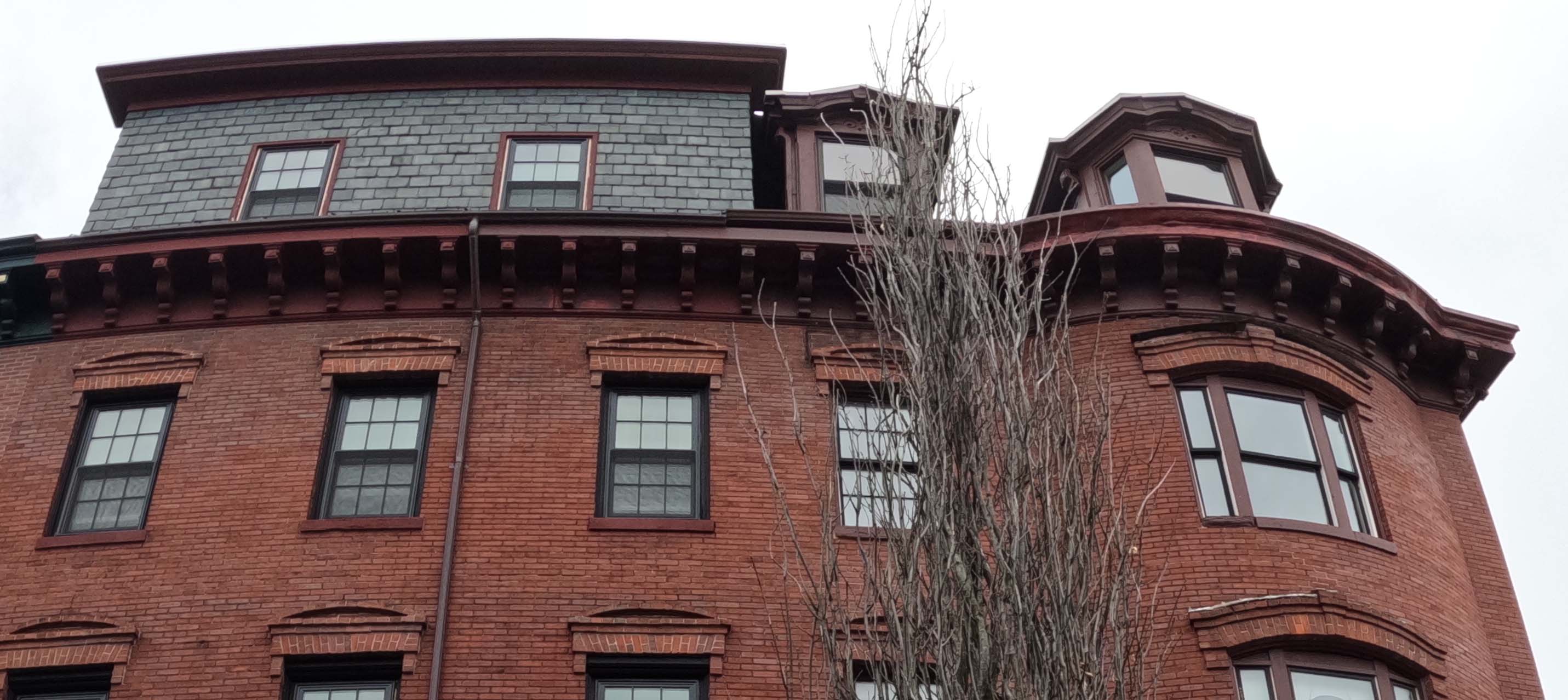
About those dormers. It is painfully obvious that the ‘dustpan’ on the #20 is not original. I am willing to bet that it was not from any architect either. I suspect it was added in the 70s or 80s. It needs no description and is truly worthy of the ‘remuddling’ badge.
As for the pair of dormers on #22, they may be nearly original. There are some details that match the house. Those being the shape of the arch above the window and the ends to the small brackets on the sides of the dormer match the ends to the brackets below. That being said, the windows are too plain. As is the trim around those windows and along the eaves. It is not easy to tell with the tree where it is but the right hand unit does not totally align with the windows below. Lastly, it does not seem likely that the original design would have had dormers over one unit only. As 22 Pine Street was the penultimate unit to sell, maybe the Chase brothers decided to add the dormers to make them a more desirable. If so, they were probably not from the office of Charles Alexander. I am inclined to believe they were added by the residents during the last part of the 1800s.

Neal Dow purchased 20 Pine Street from Benjamin Peck about 6 months after Peck had bought it from the Chase brothers. Although Dow and his son Frederick owned the property from 1859 to 1874, neither ever lived here. A fact born out from city directories and other sources placing the pair at the family home on Congress Street during the era.
In 1874, Fred Dow sold our subject to Julia A Gerrish. Julia was 54 years old when she purchased the townhouse in 1874. Born Julia Scott around 1820, she married Edward Gerrish in 1844. Gerrish was a Portland native, also born in 1820, who worked as a railroad ticket agent, then clerked at his father’s newspaper before becoming a clerk for the Casco Bank. He moved up to cashier/manager in 1849 & became president of the bank in 1869. Edward died after what seems to have been a series of strokes in November of 1871 at the age of 52. Julia died of ‘dropsy‘ in 1907. Their daughter Mary inherited the property. She sold it to a Russian immigrant named Ida Webber in 1923.


22 Pine Street was purchased in October of 1862 by a 40 year old cooper named Joshua Jacobs. In 1854, Joshua married Frances Bryant in Portland. They had 2 children before Joshua died of consumption in November of 1863. At that point the property was sold to the Ocean Insurance Company which held it until 1870 when it was sold to Rachel Symonds. Rachel was born in Portland in 1827. She was a school teacher. She never married and lived with her parents through their deaths in 1871 and 1883. She lived here with her parents and 3 siblings along with various borders. When Rachel died in 1908, 22 Pine Street passed to her brother Joseph and then, after his death, to his son Stuart. He lost the property to foreclosure in 1934.

#16 Pine Street is currently listed as a rooming house
#18 Pine Street is currently listed as a single family residence
# 20 Pine Street is currently listed as a 5-10 family apartment building
#22 Pine Street is currently listed as a 5 unit condominium.
The condition of all the units is very good.




 Portland House Stories