
1812 – 1882

Bas-relief sculpture of Sylvester B. Beckett. Benjamin Paul Akers. ca: 1851 Maine Memory Network
Poet, author & editor. Beckett compiled the Portland City Directory for 20+ years.
He was born on the cusp of the second war of American Independence. His father, William, may have been American but some sources said he was British. Grace Beckett, was English born. They married sometime around 1799. William first appears in the registry of deeds in 1800 which is the same year of his first appearance in the local news. The note in the news was for his partnership with Daniel Kent being dissolved. William was a tailor by trade who died in 1814.
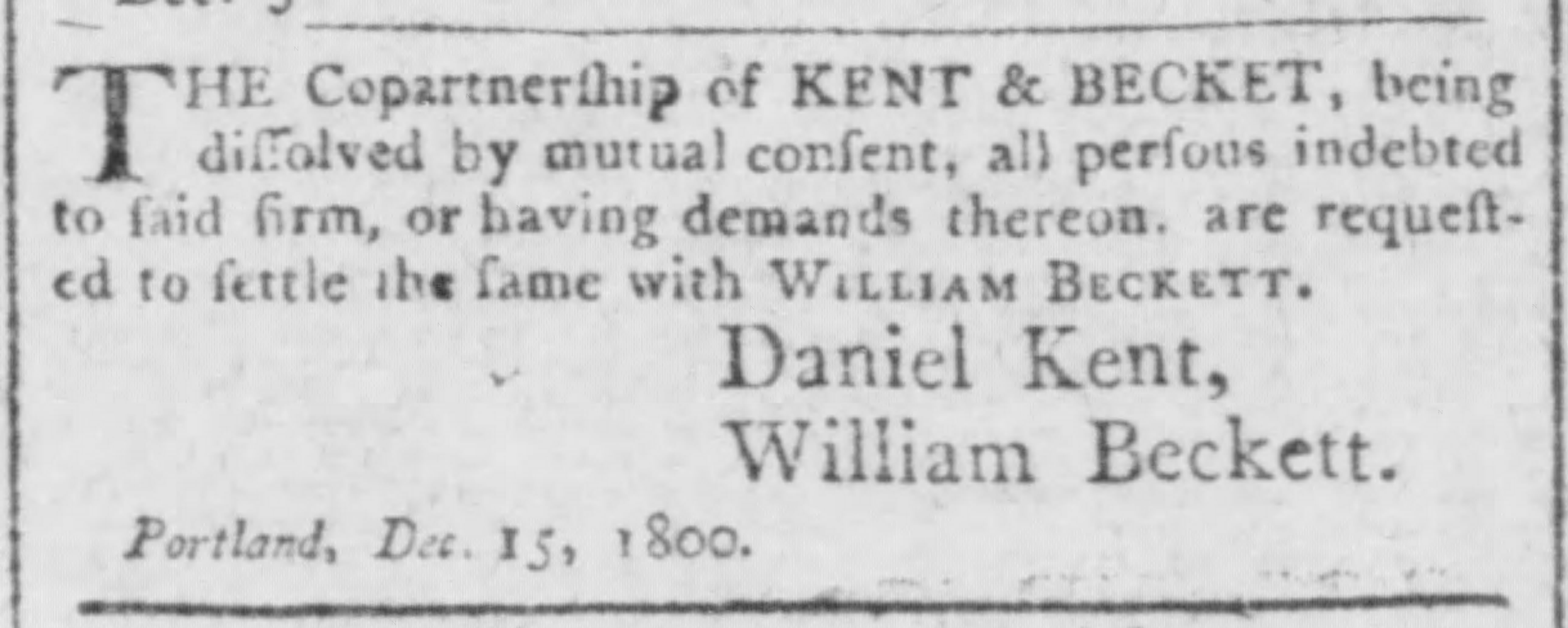
Jenk’s Portland Gazette Monday, December 29, 1800. Newspapers.Com
Grace Beckett gave her surname, “Blackmore”, to her son. Sylvester was the penultimate of 12 children. He grew up on Federal Street about where Lincoln Park is today. He attended Portland schools, never went to college, but did pass the bar exam and became an attorney around 1845. His main trade was that of a printer. He travelled extensively in his younger days and spent an extended period in Alabama. His obituary noted he had been ‘shipwrecked’ on a voyage to the East Indies. One of his earliest endeavors was with Daniel Colesworthy editing The Bulletin for John Edwards from 1842 to 1846 or so. He served on the city council in 1851.
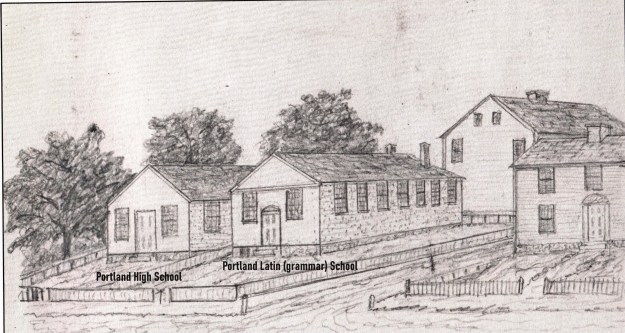
Portland Latin & High Schools in the 1840s. They stood on the corner of Spring and Oak Streets. Mr. Goodhue Remembers

Familysearch.org
1842 was also the year that Sylvester married. His bride was Louisa(e) M Davis, 20, of Portland. I cannot find anything about her early days. There were several different families with the surname of Davis in Portland in 1820s. There is not enough information to determine who her parents were. In 1843, the Beckett’s first child, Augusta, was born. George followed in 1845. In 1849, George Beckett died. The cause of death was listed as “inflammation of the lungs”. In 1852, Elizabeth, Lizzie, Grace was born.


In 1846, Sylvester Beckett purchased the right side of a newly built double-house on the corner of St Lawrence and what is now Sherbrooke Street from Samuel Dam, a yeoman, or farmer, from Lowell Maine. He paid $800 for the home. The images above show the house it is stands today at 3 Sherbrooke Street. 131 Park Street, although down on its luck, is from the same period and presents something of an idea what the Beckett’s new home may have looked like.
University of Southern Maine. Osher Map Collection
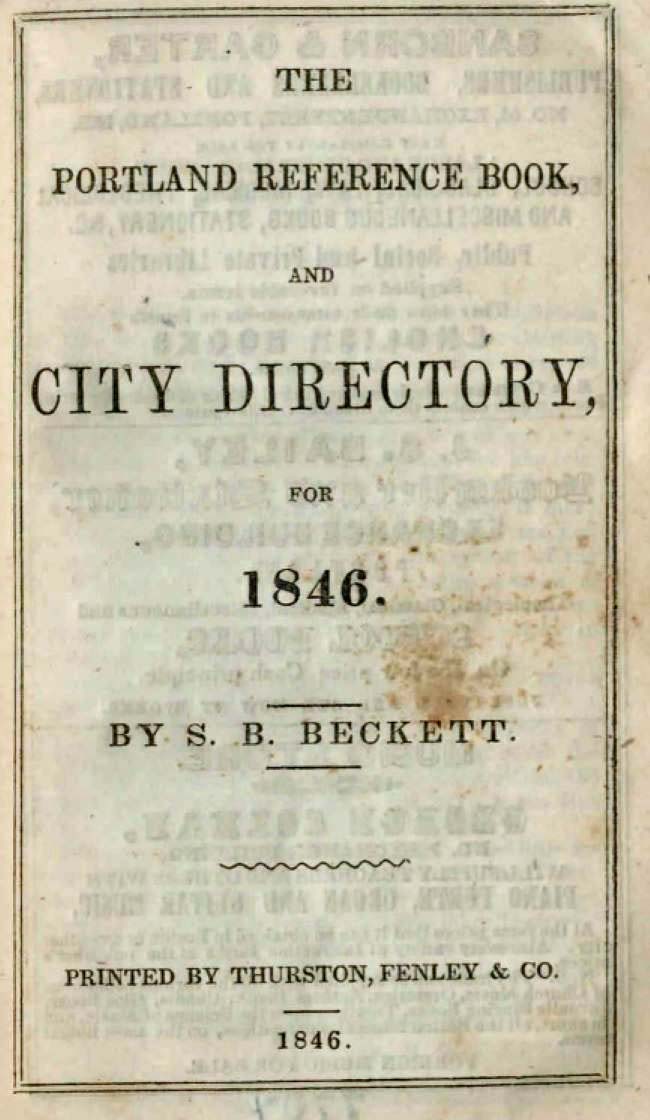
1846 saw Sylvester Beckett make his first foray into publishing a directory for the city of Portland. There had been directories in the past. Nathaniel Jewett & James Adams Jr published in the 1820s. Arthur Shirley did so in 1834 and Harlowe Harris in 1844. Beckett’s effort had a good basis as he had served as assistant assessor for the city since the time of his marriage. So, he had something of an idea of the extent of the work involved. But, his preface noted:
we had no adequate conception of the great labor and pains necessary to bring a work of
the kind to maturity. But, once under way, we determined to spare neither time nor money in
making it as complete as practicable .
Sylvester Beckett continued to publish his city directory annually until 1881 when he sold it to W. A. Greenough of Boston. They were a publisher who produced a range of city directories and maps.
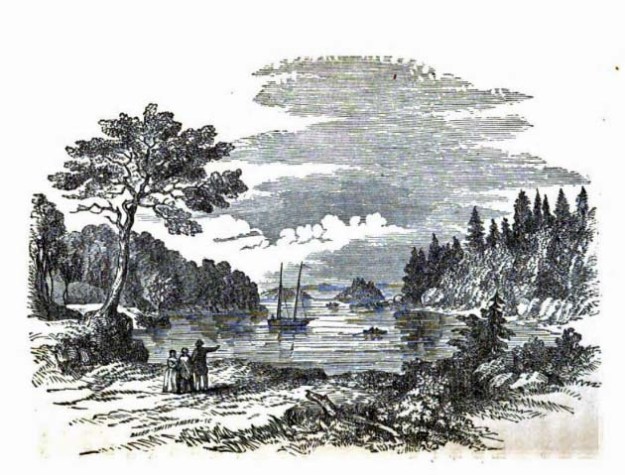
Diamond Cove by Charles Beckett. 1853 Guidebook to the St Lawrence and Atlantic. Google Books
The 1840s and 50s was a period of great growth in Portland. Much of which was driven by the railroads and Portland’s location as a hub and the winter port for Canadian imports/exports. The naming of Atlantic and St Lawrence Streets on the ‘Hill’ is no coincidence as the eponymous railway had it’s base at the foot of the hill. The Portland Company, created to make rail and rolling stock for the Atlantic & St Lawrence, was at the foot of the hill as well. In 1853, the Sylvester Beckett authored a guidebook to the route of the line to Montreal. This included a
“Full Description Of All The Interesting Features of the White Mountains” and etchings by Charles Beckett who I believe was Sylvester’s nephew. Charles was an apothecary by trade and was a very fine painter.

Portland Society for Natural History building, ca. 1862 Maine Memory Network
Sylvester Beckett was a founding member and long-time recording secretary of the Portland Society for Natural History. This organization started in 1843 and had a museum and club house on Elm Street that was destroyed by fire twice and rebuilt. Among its notable members were Commodore Robert E. Peary of North Pole fame and the poet Henry Wadsworth Longfellow along with much of Portland’s establishment for the period. The Portland Society for Natural History survived until the early 1970s when it was absorbed into the Maine Audubon Society.

1857 Library of Congress
Evergreen Cemetery was created in the early 1850s to alleviate increasing crowding in the cemeteries on the peninsula. An added benefit was to create a more park like atmosphere which was becoming more popular in the period. Beckett was very active in the creation Evergreen. He was involved in selection and laying out of the original section of the cemetery. His obituary noted that he felt he never got enough credit for his work on the project. The Beckett family is buried in Evergreen Cemetery.
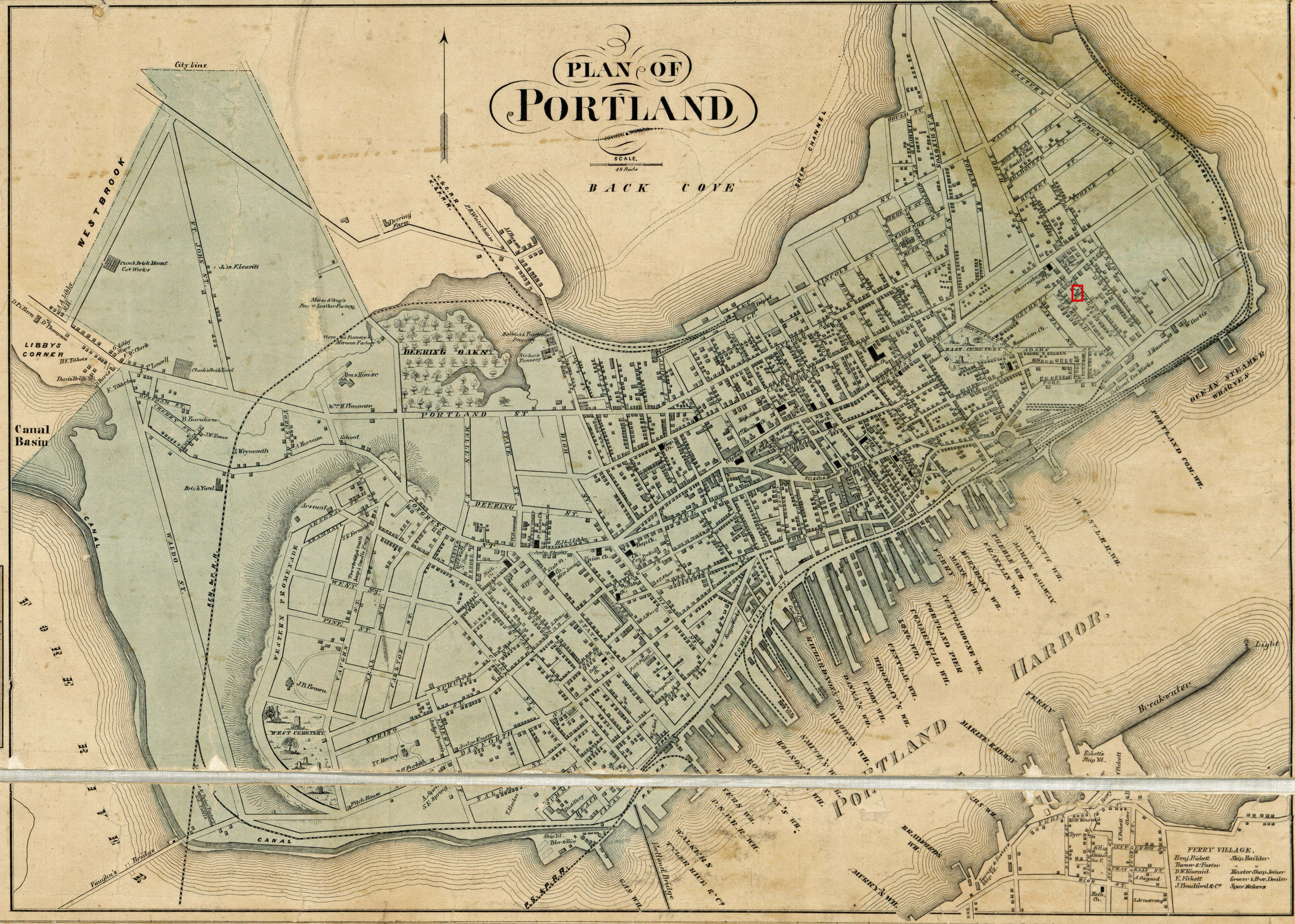
1857 Library of Congress
Louisa Beckett became ill in 1857 with what was tragically an all too common malady of the day, consumption. After what was described as a “long and severe illness” she died on May 30 of that year. She was 35 years old. Unlike many widowers with young children of his day, Sylvester Beckett never remarried.
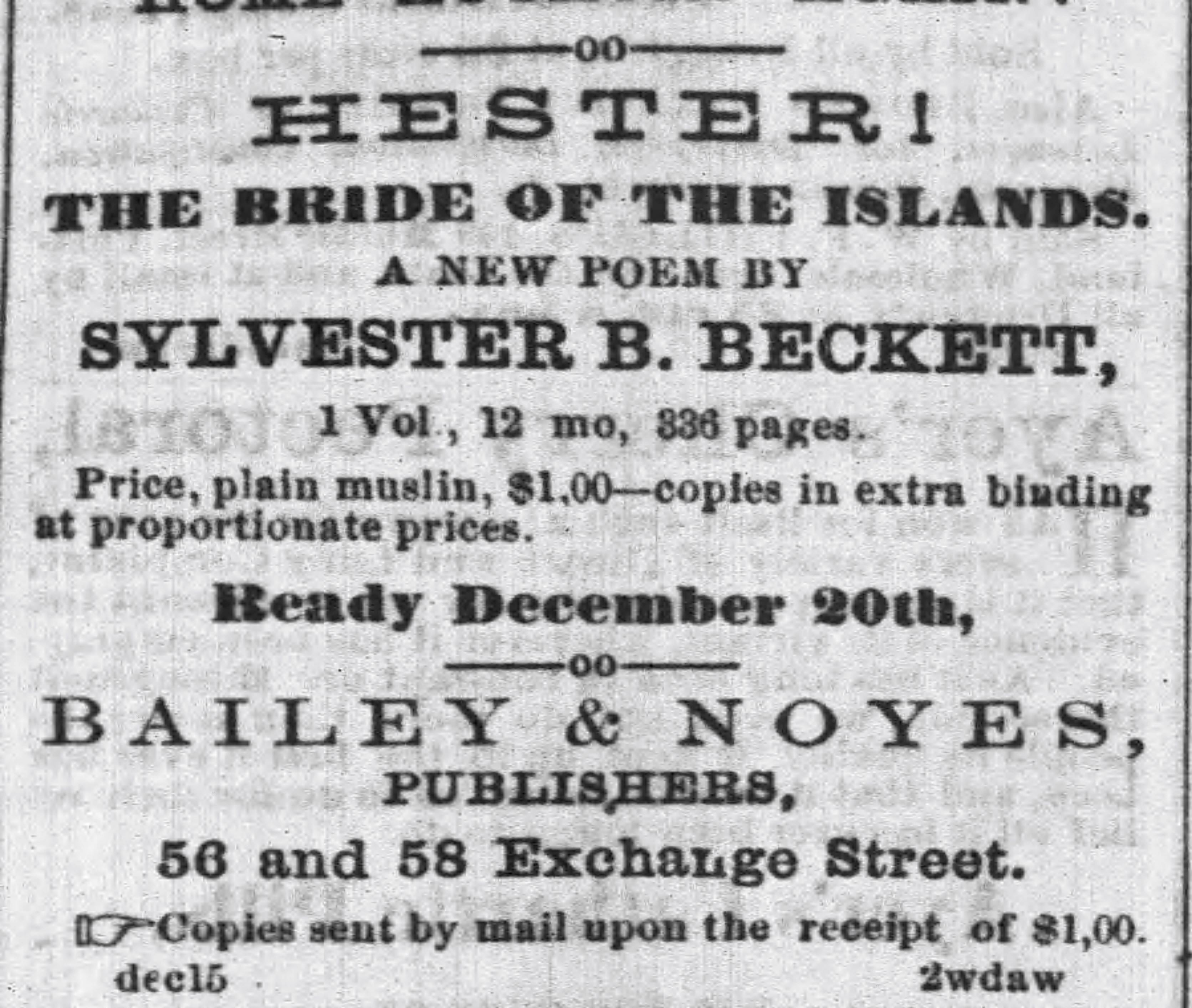
Eastern Argus. December 15, 1859. Newspapers.Com
Perhaps he was driven by grief. Maybe he was enamored by the works of Sir Walter Scott. what ever the reason, Sylvester Beckett published something of a magnum opus. A ‘poem’ titled
“Hester! The Bride of the Islands.”
At 336 pages, it was big. It was also, as was Sylvester’s tendency, wordy.
‘Twas deemed he sought to cloak his mind,
So little did he seem inclined
To speech – while not the evening wind
In its soft utterances more mild !
And with the Indians he was styled ,
Sententiously , The Silent Tongue !
Yet when occasion called , so clear
And keen his accents stung the ear ,
They seemed electrical ;
And
Whence did they come ? In what far land
Was fashioned by the builder’s hand
The stately vessel they bedecked ?
In what strange quarter was she wrecked ?
Was it beneath the sweeping wave
That lashed some bleak and dreary coast
Of arctic wilds , long tempest tost ,
Her wildered sailors found their grave-
Where mankind shun to make a home ,
Her timbers strewed the breakers ‘ foam ?
Or was it on the southern main
A review in the June, 1860 issue of the Atlantic, called Hester! Bride of the Islands.
“a very silly book.”
Hester! Bride of the Islands. is available through Google Books and some digital archives.

Eastern Argus. April 17, 1860. newspapers.com
The 1860 census found Sylvester Beckett living on Sherbrooke Street with Augusta, Lizzie, and Sylvester’s niece, Octavia. Also living with the Beckett’s was a 29 year old Nova Scotia native named Hannah McCollum who worked as a domestic. In 1865, tragedy again struck when Lizzie died of consumption on January 18th at the age of 12. This event, and Augusta’s marriage in 1867, would compel Sylvester Beckett to make great changes in his life.

15 Gray Street in 1924. Maine Memory Network
In 1862, Sylvester Beckett had purchased the end townhouse of the thee units built on Gray Street in 1835 by the Park Street Proprietary. The purchase would seem to have been an investment at the time as he was still residing on Sherbrooke Street. After Lizzie’s death, it would be understandable that there was too much grief in the ‘house on the hill’. Sylvester and Augusta moved to Gray Street in 1865. He retained ownership of the Sherbrooke house until his death but resided on Gray Street for that period. Augusta married George Verrill, an attorney and Civil War veteran, in 1867 and they moved into Gray Street as well. Their first child, Lizzie, was born in 1969.

Gray Street today
1869 saw Sylvester Beckett embark on his own “Grand Tour”. In September, he took the train to Quebec where be boarded the steamship Austin for Londonderry. He travelled through Ireland, Scotland, and England before crossing the Channel to France. He sent a brief note while staying at the St James Hotel in Paris before setting off for the Mediterranean which he crossed landing in Alexandria. His intention? To witness the opening of the Suez Canal.
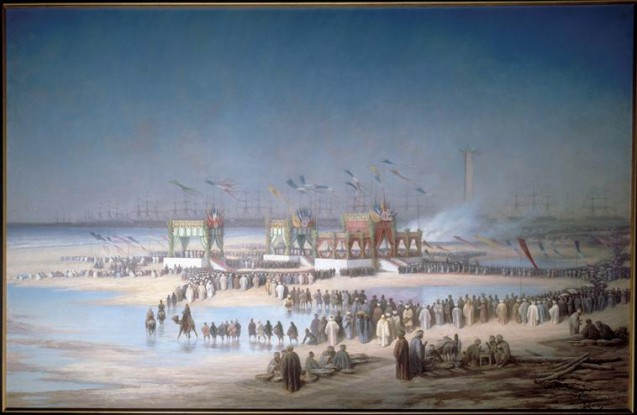
Inauguration Ceremony of the Suez Canal at Port-Said on 17 November, 1869 Edouard Riou (1833-1900) napoleon.org
Witness the opening he did. He then sailed down the Nile back to Alexandria where he boarded a steamer for Italy. He sent a couple of letters to the Portland Daily Press while in Naples describing the journey on the Nile and crossing the Mediterranean. His description of the Nile included much on the land and it’s inhabitants but said nothing about pyramids or temples etc. He also described crossing Italy from Brindisi to Naples by train. Beckett departed Liverpool on February 10 on the immigrant ship ‘Peruvian’, arriving in Portland on February 20 of 1870.
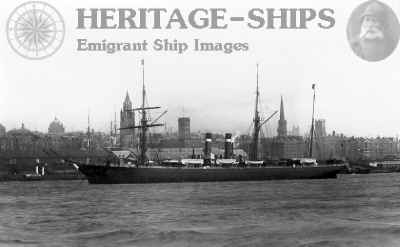
Allan Line steamship ‘Peruvian’ in Montreal. Norwayhertiage.com
1870 and 71 would see Sylvester Beckett undertake a project that would cement his place in local history even to this day. He had purchased 15 acres of land in Cape Elizabeth for $400 in 1867. The seller was Henry Goddard whose son, John, had built a palatial mansion, now in ruins, near Portland Headlight. Beckett’s lot was about a half-mile south of the light on the Cape Shore. After returning from his trip, and no doubt inspired by buildings seen on his sojourn through England, Sylvester Beckett built a ‘small’ cottage that would become known as ‘Beckett’s Castle’.

It is thought that the sitters were Sylvester Beckett and Augusta Beckett Verrill. Maine Memory Network
Built from materials found on site, Sylvester Beckett’s cottage was the physical manifestation of the man. Rugged, quirky, self-made, and overflowing with style, it was a statement of his own self. After completion, Beckett held a grand celebration with his friends and family. His close friend, Edward Elwell, wrote and read an epic poem for the event. Beckett’s Castle is still there although much enlarged. Several articles have been written about it. There’s even a Wikipedia page for it.
-

- 1882 Moulton revaluation map. Portland Public Library Digital Commons
-

- 1882 Moulton revaluation map. Portland Public Library Digital Commons

The second half of the 1870s saw Sylvester Beckett slow his activities as his health issues and age became greater concerns. He withdrew from most of his work but still served on committees and in various roles for the many groups and organizations of which he was a member. As noted, he sold his interest in the Portland City Directory in 1881 when he retired from all business and civic activities.
Sylvester Blackmore Beckett died on December 2, 1882 after a prolonged illness. All of his properties, and they were many, were inherited by Augusta and George Verrill. George died in 1908 and Augusta in 1910. The properties then passed to their children, George and Cora. They sold them in the 20s and 30s.


 Portland House Stories