
Built by Levi Morrill/Morrell. When is not clear.

A fascinating late Federal in the Morrills Corner neighborhood
A glimpse into the early days of the eponymous corner and a look at one of Portland’s earliest, and most contentious, railroad lines.
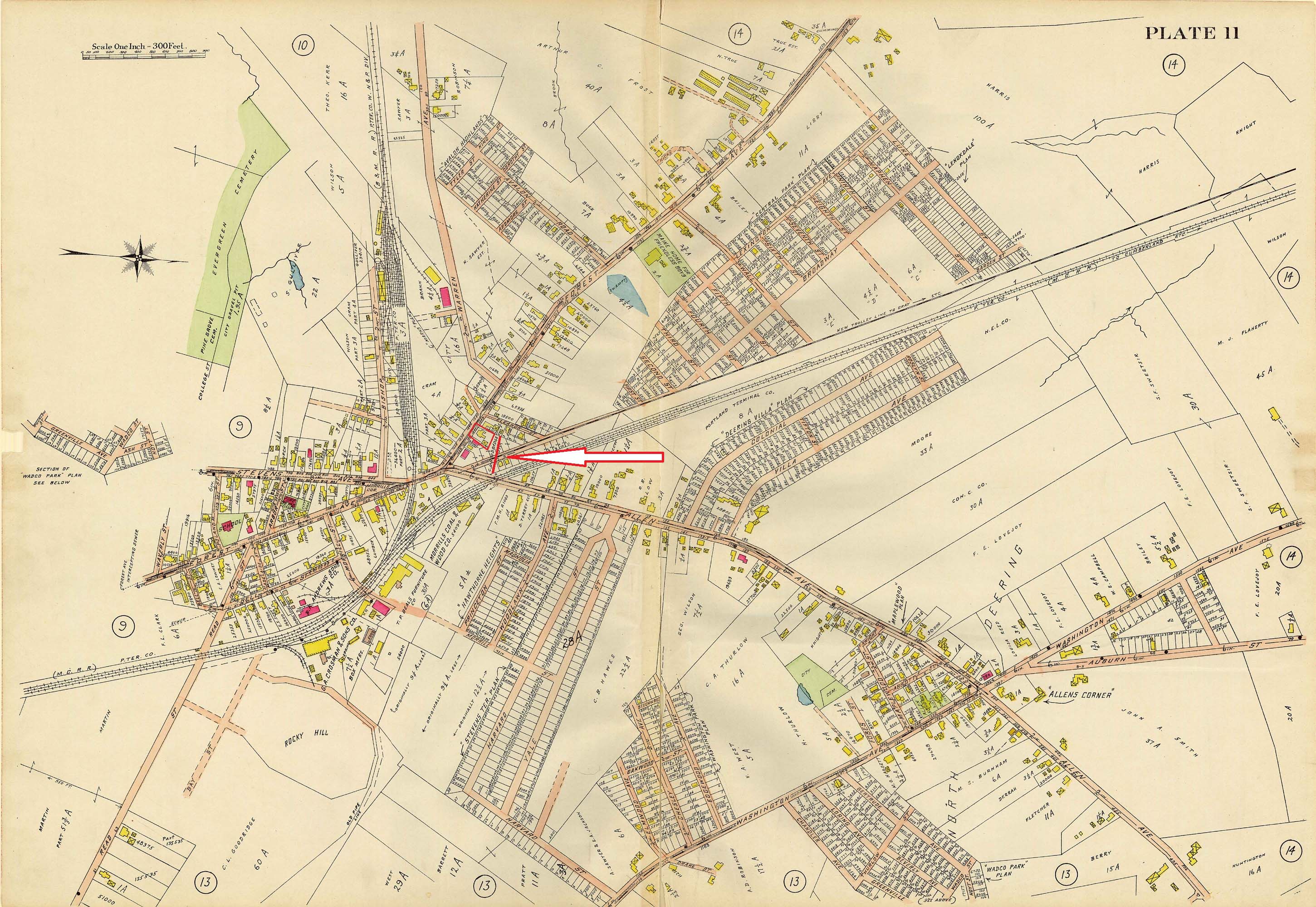
It was Bishop’s Corner in the old days. George Bishop was a trader who lived where Bishop Street now exits the square. He sold some land to Levi Morrill in 1830 that mentions Levi’s “house lot” which, I think, is the land for our subject but, as landmarks have changed so much, I cannot be sure of this. Levi’s first purchases in the area were in 1825, so it could be as early as that. Various deeds after 1830 speak of the property, but I can find nothing prior that is clear confirmation of Levi’s purchase of the land.
Levi Morrill was born in Portland in 1802. His parents were Enoch and Thankful Wilson. He married Harriet Quimby of Stroudwater around 1838. Levi & Harriet had 3 children, Nancy, who died in childhood, Harriet & Charles.

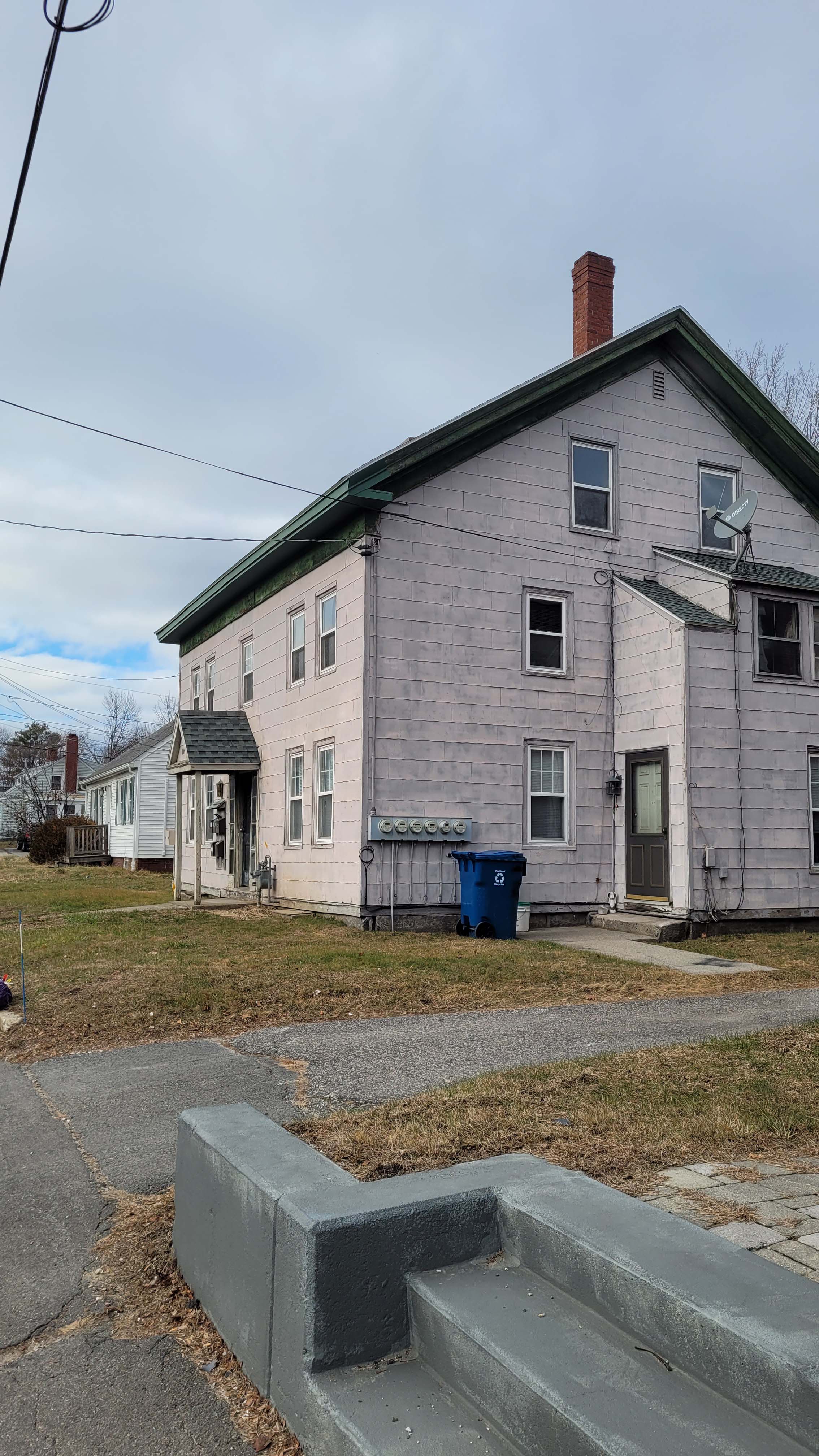
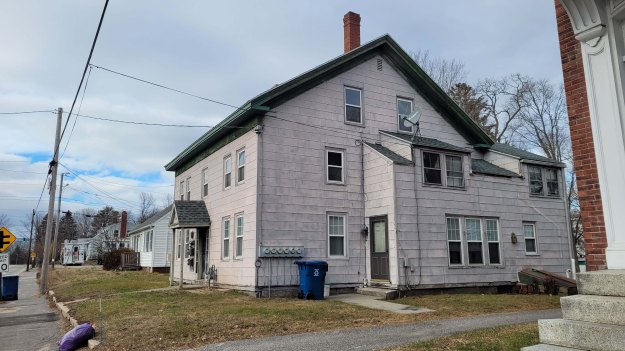
The house measure 34′ on the street and is 31′ deep. It is 2 full stories with a third in the garret. An oddly shaped ell on the northwest side, measuring 13′ wide at the front and 17′ wide at the back, runs 16′ forward from the rear wall. A 5′ wide and 20′ deep ell is on the southeast side. Very little, if any, of the exterior details are original.


Levi Morrill served in the Maine Legislature in the 1830s. He was active in the Democratic party and was a delegate to various state and national conventions.
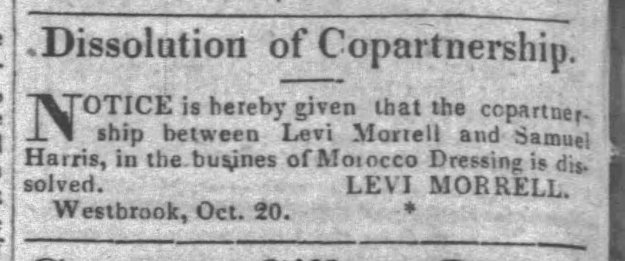
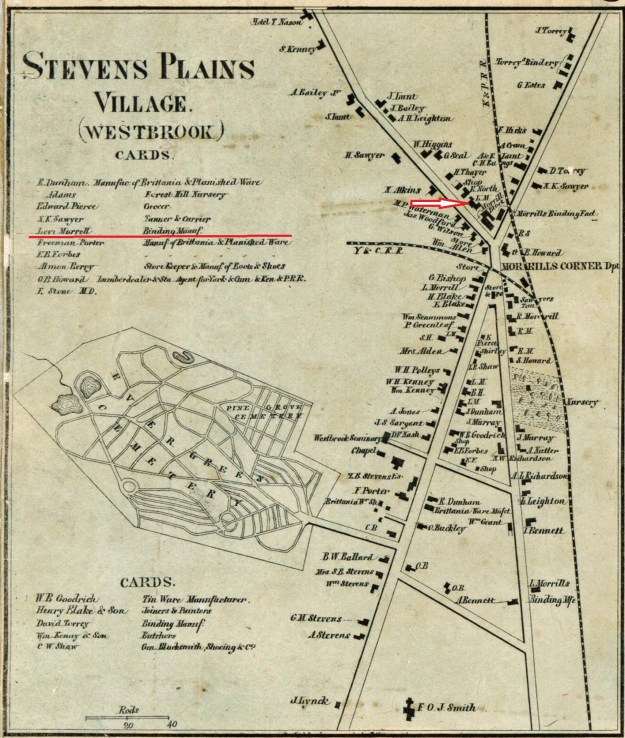
He was also an entrepreneurial type. He had been involved in manufacturing Morocco products from the mid 1820s and would continue to do so for the rest of his life. This was primarily tanning and dying of hides. In the later years, this production focused more on shoe bindings and Levi would end up with 2 production locations. One was on what is now Allen Avenue, just off the corner, about where Goodridge Avenue starts. The second location was on Forest Ave approximately where the Drum Shop now sits.

Along with his manufacturing pursuits, Levi Morrill was also involved in other business activities. He was a director of several banks during the 1830s and 40s. Perhaps his biggest, and most fraught, investments were in railroads with one in particular, worth looking at.

The York and Cumberland County Railroad was of John Poor’s ideas. Poor was a Bangor native who caught railroad fever in the 1830s. He had seen the Granite Railway in Quincy of 1826, the Bangor, Old Town & Milford Railroad of 1834/35, and the Boston and Providence Railroad of 1835. He conceived the idea of the Atlantic & St Lawrence Railroad and the Portland Company, which supplied rails and cars for many railroads of the period.
The ‘Y&CC’ Railroad, like many of railroads the 1840s and 50s, was a good idea in a time of many good ideas and little capital to implement them. Conceived around 1846 as a connector to lines further south, the Y&CC was going to run from Portland’s Back Cove area, which had been the sight of land reclamation since the mid-1820s, west through Westbrook and Gorham to Buxton. At Buxton, the line would cross the Saco River and turn south passing through Waterboro, Alfred and Berwick. There it would cross the Salmon Falls River into Somersworth New Hampshire where it would link to other lines coming north from Boston.
The line suffered from a lack of capital from the start. Even with the backing of some of the areas wealthiest people including our Levi Morrill, John Anderson, the Clapp brothers, John Poor, Francis OJ Smith (all of whom deserve to have their stories told), and others, there wasn’t nearly enough money to pay the costs of building the line. The directors of the line chose, as many did in a period of no financial regulation, to issue bonds to fund the work. Many of these went to the contractor hired to build the line. This led to charges of inflated invoices and payments and caused almost all of the original directors resigning and the corporation gaining a new charter from the state. There would be lawsuits involving Levi Morrill right up to the time of his death in 1868. The line was built and became part of the Portland & Rochester. Appropriately, it passed through Morrill’s Corner and does still today where it runs west behind the McDonalds.

Levi Morrill died on the last day of 1868. Harriet continued to live here until her death in 1889. The property passed, and business, passed to Charles. Charles had married Adelaide Morrill, relationship unclear, in 1871. They had a son, Levi, in 1872. The Morrills moved to Boston after Levi’s birth as Charles had moved the business there.

Charles E Morrill died of a cerebral hemorrhage in Rochester New York on February 6 of 1891. He was 50 years old. Levi inherited all of the properties in Portland. He sold our subject to Charles Goodridge in 1902. Levi Morrill died under unusual circumstances in 1904. He was on his honeymoon in New Jersey when he died suddenly, apparently of a morphine overdose. Some press stated he took his own life while others state it was a fatal error in dosage.

Charles Goodridge never lived in our subject. He lived in the bungalow at 1231 Forest Ave. As noted in the newspaper clipping above, he immediately converted our subject into a 2 family tenement. It is most likely this renovation that removed the original portal and windows and gave the house a more ‘modern’ feel to fit the era. The 1924 tax photo shows the house during Goodridge’s ownership and with the 1902 changes intact. The chimneys seemed to have stayed in their original locations although they look to have been rebuilt on a smaller scale. The barn was still the but looking a bit worse for wear.

1245-47 Forest has primarily been a tenement since 1902. As such, we will look at a few of the residents before closing.
- Frank & Alice Davis were the first tenants of 1247. Frank was born in 1849 and Alice in 1855. They married in 1872 and had 11 children. Frank worked in the repairs shops of the Maine Central Railroad and became a supervisor. Alice died of cancer in 1906. Frank and some of his children lived here until 1932, one year after Frank’s death.
- John & Bertha Berry. Born in 1879 & 78 respectively, the Berry’s had married in 1900 and had 3 children. John was a ladder-man for the Portland Fire Department. He may have been stationed on Arbor Street. The Berry’s were here from 1910 through 1912.
- George & Ethel Brown. George was born in Carthage ME in 1901 and Ethel in South Portland in 1910. They married in 1931 and moved into 1247 in 1932. George was a welder. He worked for various companies and built Liberty Ships during the war. The Browns had no children and lived here until 1949.
- Linwood & Priscilla Taylor. Linwood was born in Starks Me in 1910 and Priscilla on Prince Edward Island in the same year. They married in 1936. It’s not clear if they had children. Linwood worked for Cumberland Cold Storage on Commercial Street before signing on at the South Portland Shipyards during the war. The Taylors live in 1247 from 1940 through 1945.
- Ernest 7 Ida Platt. The Platts were married in 1916. He was born in Portland in 1888 & Ida in Lewiston in 1891. Ernest was a machinist at the Portland Company. They lived from 1920 through 1922.
1245-47 Forest Avenue is a 5 family residence. The condition is very poor.


Eastern Argus, November 21, 1825. Newspapers.Com 

Eastern Argus. August 16, 1844. Newspapers.Com 
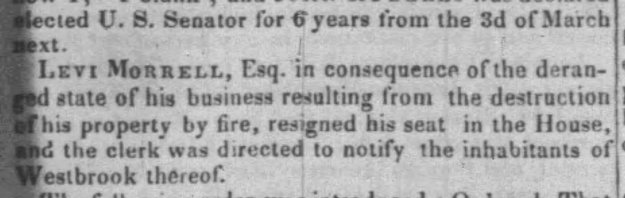
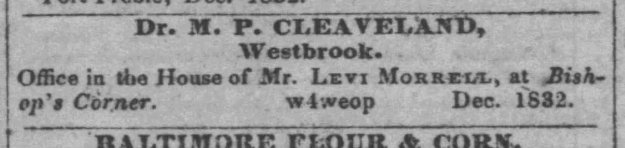
Eastern Argus, December 28, 1832. Newspapers.Com 
Deering bird’s eye of 1886. Maine Memory Network 
Eastern Argus, March 8, 1860. Newspapers.Com 
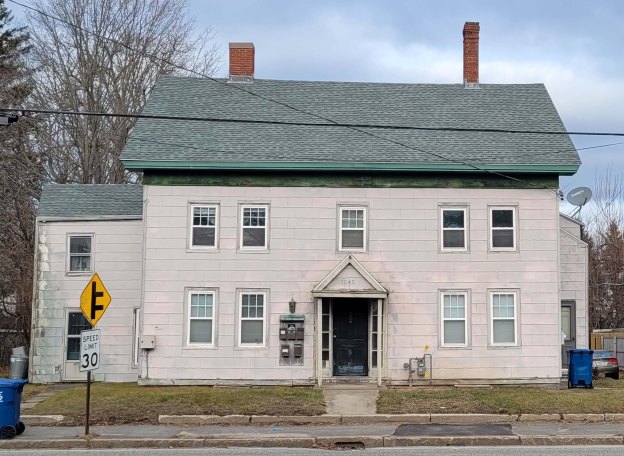
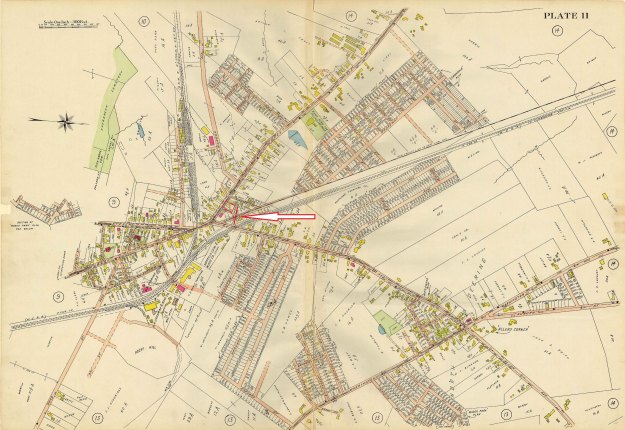
1914. Portland Public Library Digital Commons 
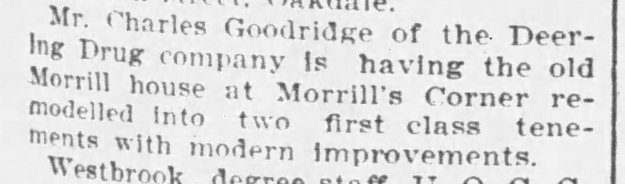
Portland Evening Express. April 14, 1902. Newspapers.Com
 Portland House Stories
The 1924 photo shows a double front door, as if it were a duplex. The contemporary photo has a single door, but the same style of glass along either side.
LikeLiked by 1 person
Hi Rob
Charles Goodridge remodeled the house into a duplex in 1902. Sometime after 1924 but prior to 1950 the current entry and facade was installed.
LikeLike
Greetings!
I’m enjoying your blog after reading about it in the February 26th, 2025 Forecaster. One detail in this article caught my eye. John Poor, the railroad developer, was a native of Andover, Maine. He was also brother to Henry Varnum Poor (the Poor of Standard and Poor’s), not sure if you know of that.
They are my great great great uncles.
Keep up the good work!
LikeLiked by 1 person
Thanks!
I was aware of the connection to Henry Varnum Poor. Henry was also involved in the Skowhegan School of Art.
LikeLike