
Built ca: 1825 by James Parker.
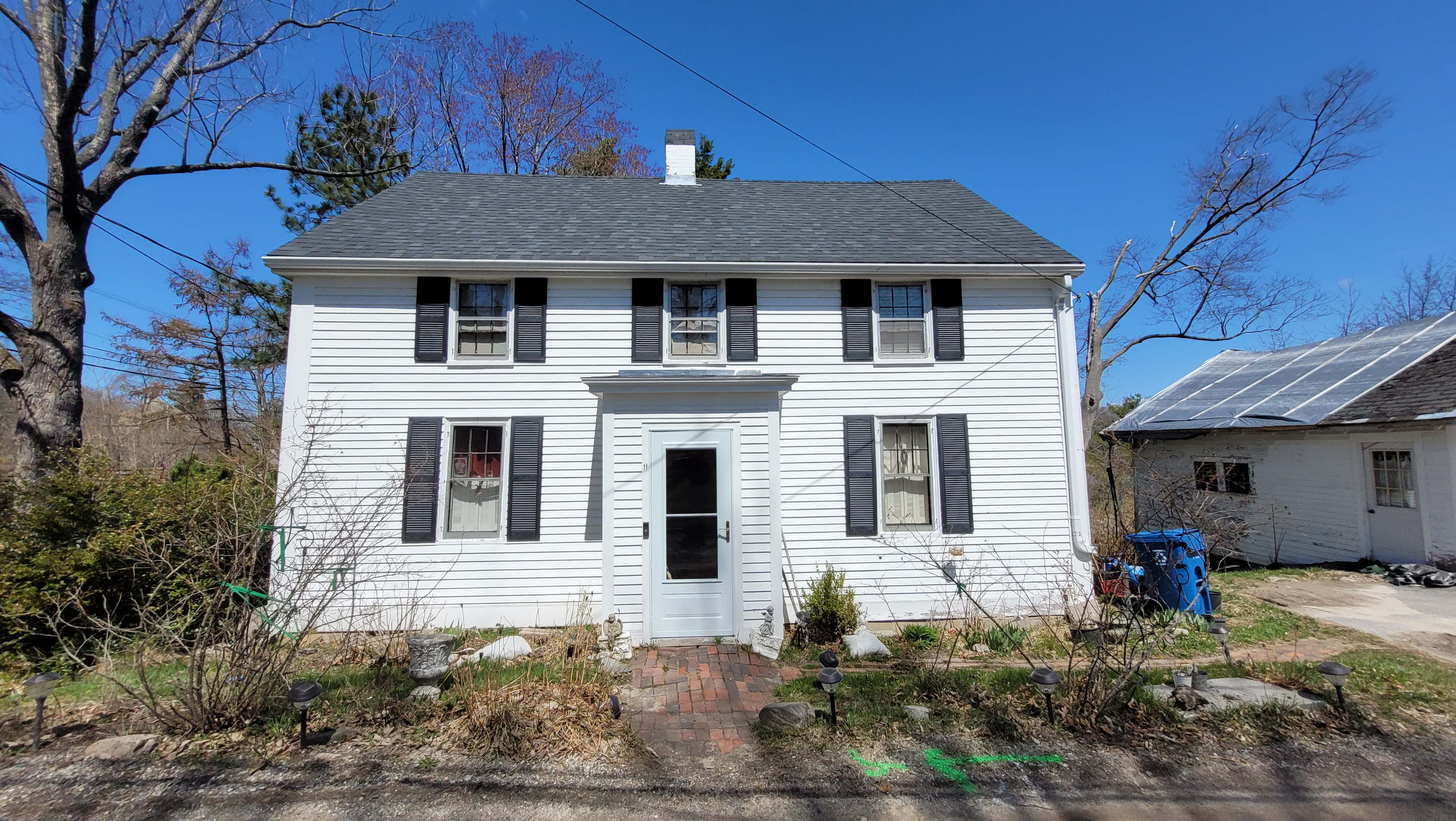
A modest Colonial/Federal in the Stroudwater neighborhood.
They called it ‘Shipyard Point’
When James Parker, a joiner, sold 11 Garrison Street Extension to a Portland merchant named Henry Poor in 1828, the deed could not have been less forthcoming. The entire description on the property reads:
“a certain lot of land Situated in said Westbrook at the South easterly end of the short bridge in Stroudwater together with the house thereon standing being the same formerly occupied by Joseph Chamberlain and now occupied by me”
That’s it. No mention is made of how or when Parker acquired the right to sell. No ‘metes and bounds’. Nada.
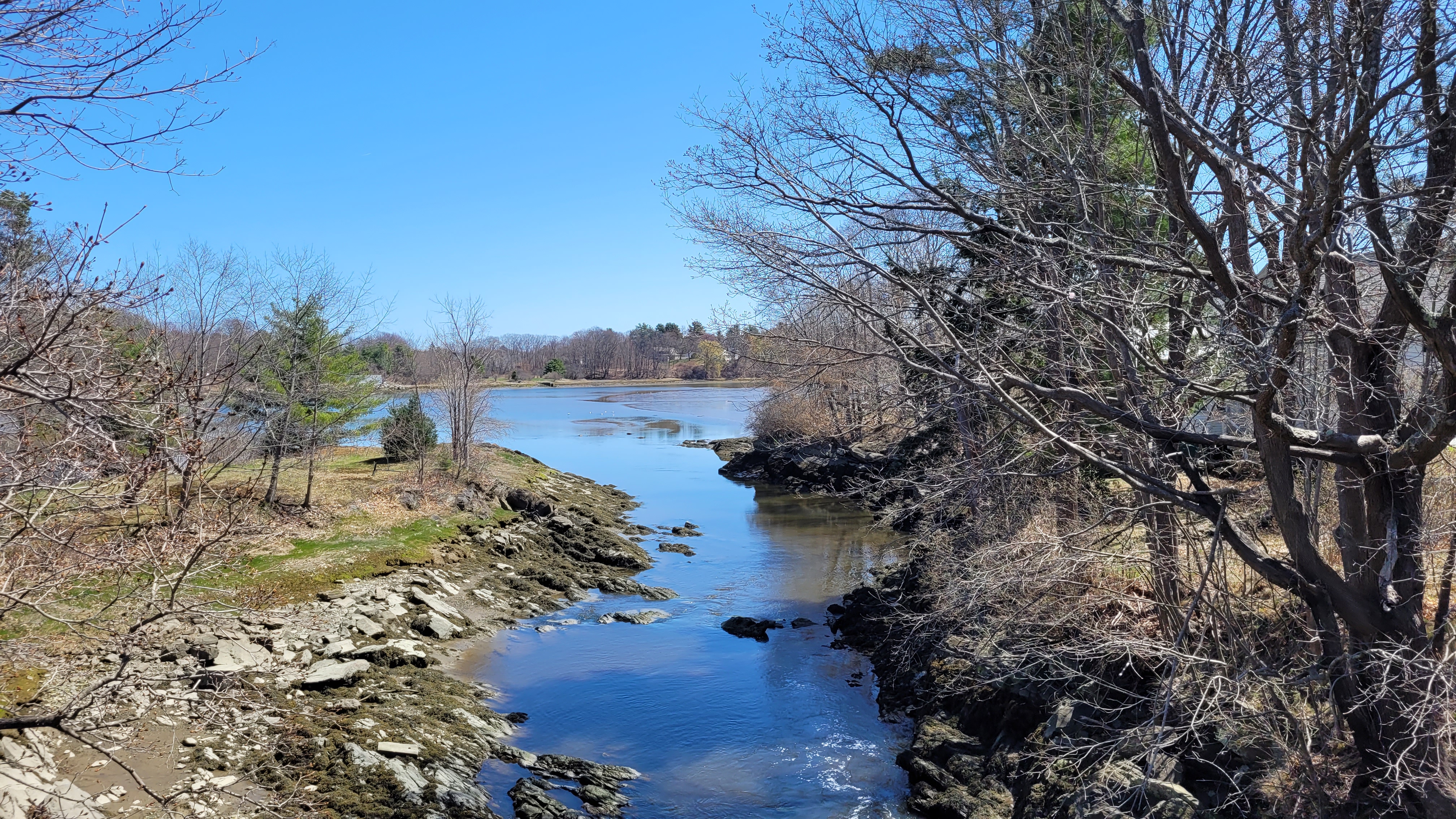
Joseph Chamberlain was a shipwright. He grew up here in Stroudwater but seems to have worked on the waterfront of Portland and, perhaps, in what is now East Deering. By 1815, Joseph had returned to Stroudwater. We know Chamberlain was here in 1815 as he launched the ‘Abeona‘, a 214 ton 84’ long Brig. This is the only vessel built at Stroudwater that can be definitively attributed to Joseph Chamberlain.

Myrtle Lovejoy places Joseph’s house next to our subject on the corner of Westbrook and Garrison Street Extension, which causes a little confusion. Parker’s deed states that the house was “formerly occupied by Joseph Chamberlain.” He died in 1821. Lovejoy says our subject was built by Parker. Did he take down the first house and build this one? In his 1906 book ‘The Waterhouse and Other Families of Stroudwater Village’ Leonard Bond Chapman states that Parker “midway the Landing [sic], in a house fashioned by himself and family, now in good repair.” This, of course, doesn’t answer the issue of the deed language but does confirm our subject is the Parker homestead.

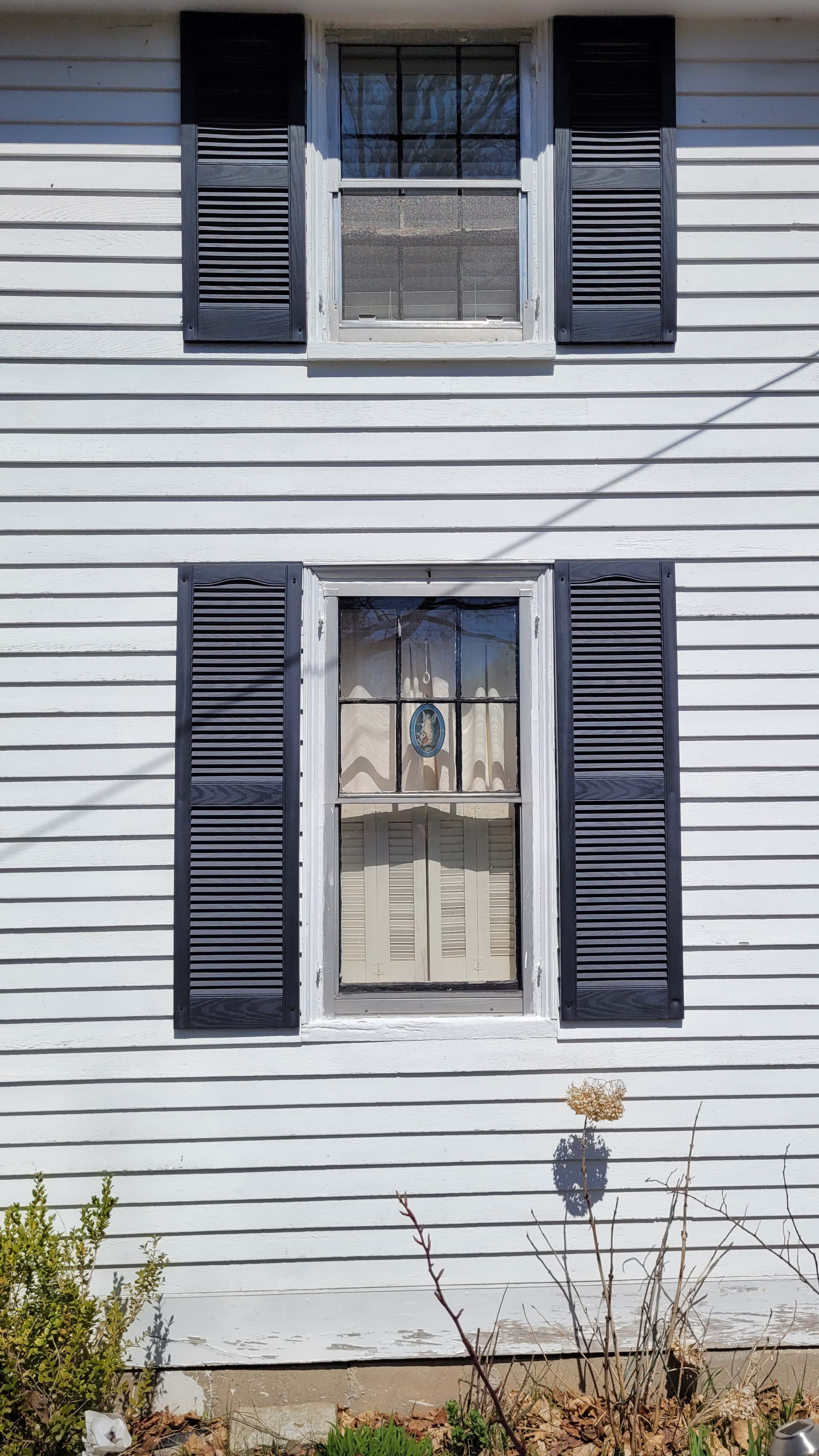
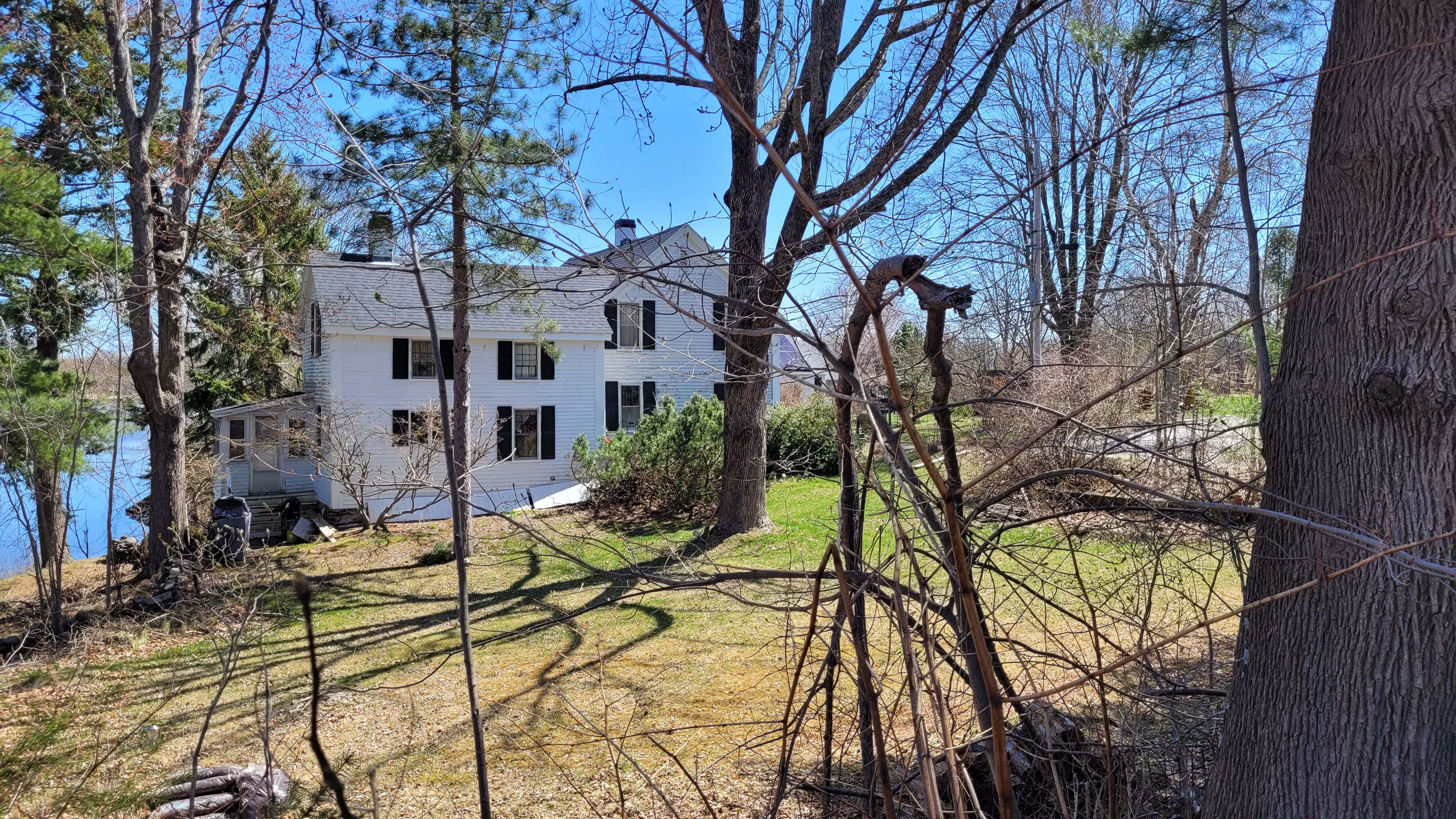
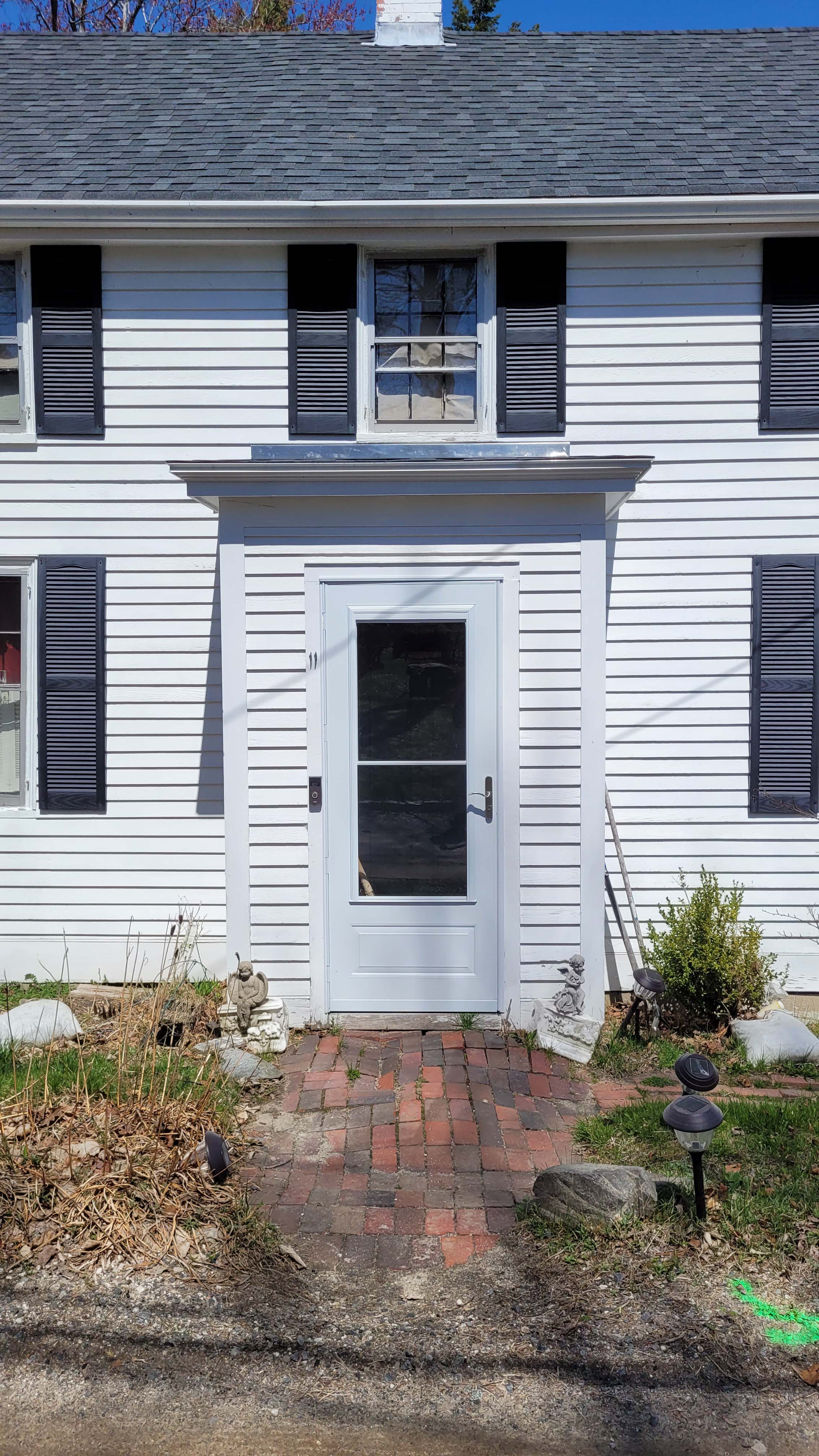
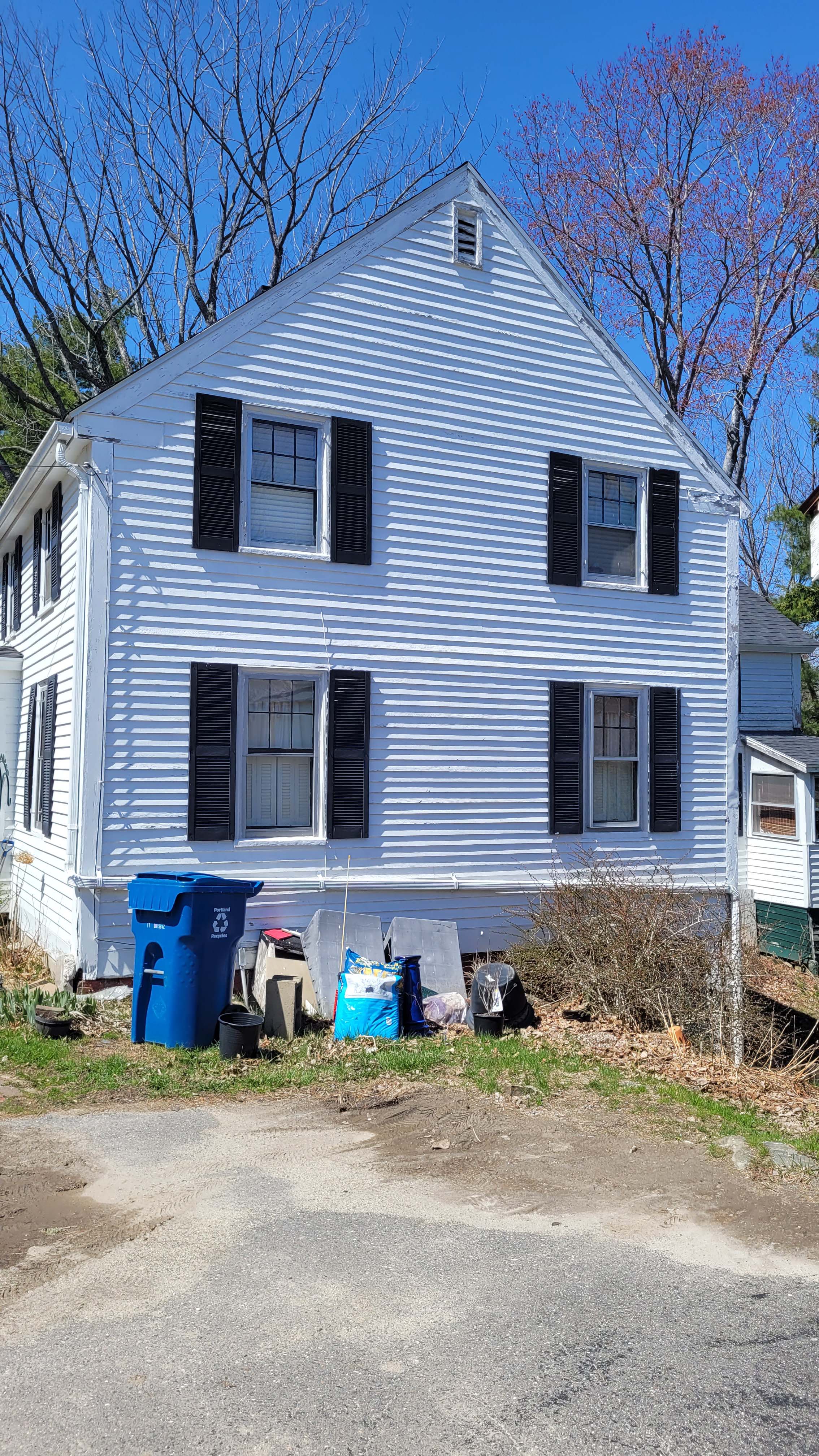
11 Garrison Street Extension measures 30′ on the street and is 20′ deep. It is 2 stories with the second pushed into the garret. A 15′ x 22′ ell extends of the rear towards the river. The windows are simple openings with, as seen today, minimal trim. The second story windows on the front facade are smaller than their counterparts on the gable ends and are pushed up under to upper plates hinting at the remnant Colonial influences. The center chimney, although replaced with a smaller version, is another Colonial device. Most of the exterior trim is gone, having been removed when vinyl siding was installed. Thankfully, and oddly, when said siding was installed, the west gable of the main block was left alone. This gives a look at the previous siding that, while not original, is certainly from the 19th century.

James Parker was born in Lovell in 1801 and came to Stroudwater around 1818. He worked in the shipyards until that work had declined in the late1820s when he worked in house building. James married Abigail Chamberlain in 1825. Abigail was the middle child of Joseph and Abigail Jordan Chamberlain. Myrtle Lovejoy, in ‘This was Stroudwater’, states that Abigail Chamberlain was the ‘belle of the neighborhood’ at the time of her marriage. She was said to have spread flowers ahead of Lafayette’s carriage when he came to Portland in 1825. The Parkers had 10 children.
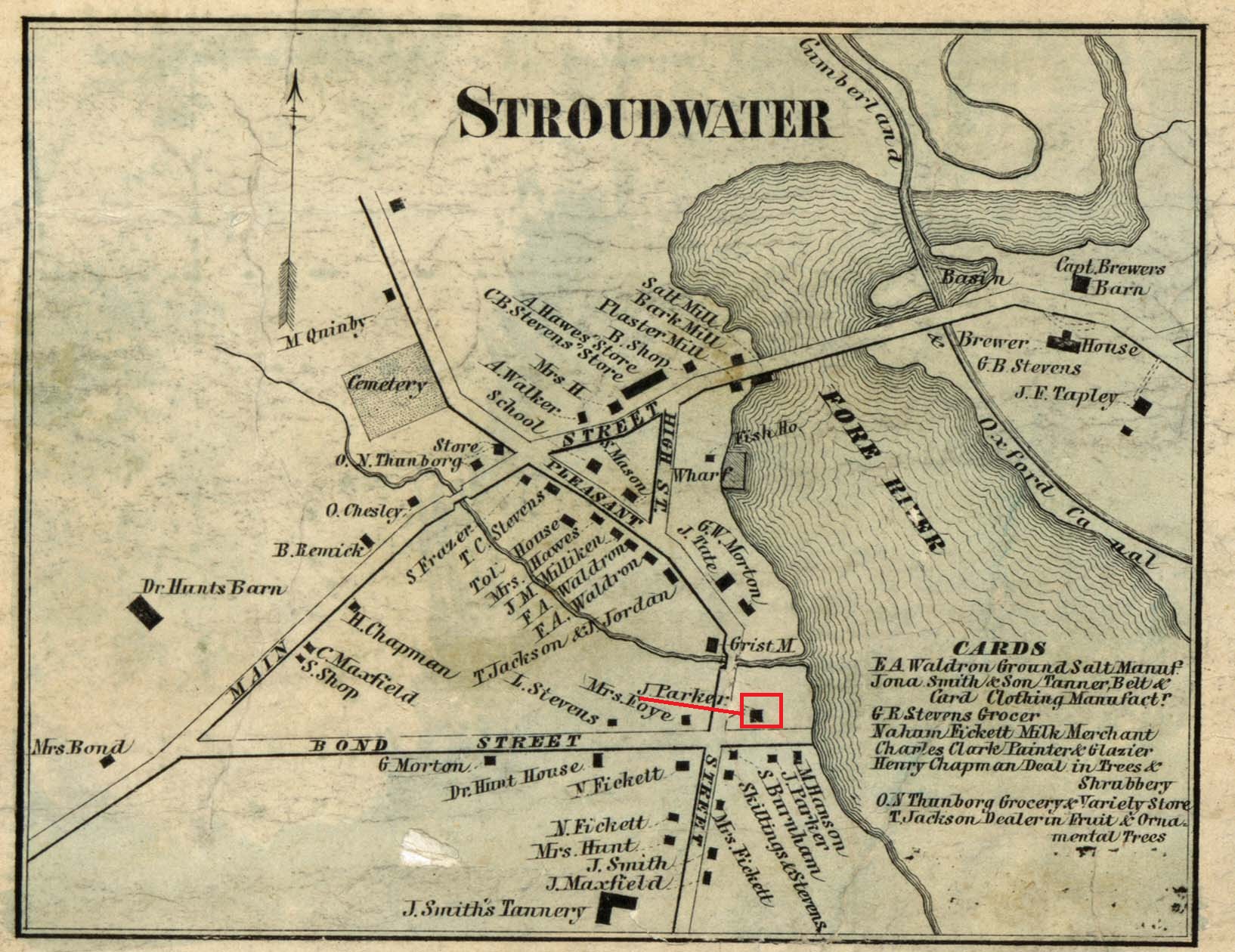
Although James Parker sold our subject in 1828, he and his family stayed here at 11 Garrison Street Extension. The 1857 map above shows ‘J Parker’ here. A look at the owners between 1828 and 1855, when Edwin Parker purchased the property indicates that they were ‘absentees’, who lived elsewhere.
- Henry Poor, 1828 – 1830. Poor was a dry goods merchant with a store on Middle Street. Per the 1827 city directory, he lived on Hampshire Street.
- George Burnham. 1830 -1847. Burnham was a brickmaker. He lived in Libbytown . Burnham Street in that neighborhood is named for his family.
- Joshua Richardson. 1847 – 1853. Richardson was the president of the Manufacturers & Traders Bank. He lived on Free Street. George Burnham had taken a mortgage from Richardson for $250.00 in 1833. It is not clear if this note was ever paid.
- Nahum Fickett. 1853 – 1855. Fickett was a Stroudwater native having grown up on Westbrook Street. He was a ship carpenter who was living nearby when he sold our subject to Edwin Parker.
Edwin Parker was the 4th child of James & Abigail Parker and was born in 1832. Edwin worked as a shipwright before becoming a clerk in various ship chandleries in Portland. He was living in Portland in 1858 and married Sarah Marden in 1860. Sarah was born in New Hampshire in 1838. The couple had no children. In 1871, Edwin transferred 11 Garrison Street Extension to his the eldest child of James and Abigail, Horace Parker. By this time, Abigail Parker was dead, having passed in 1868. James Parker died in late December of 1885. Horace Parker died in 1890 after which the youngest surviving child, Lavina/Lavinia, inherited the house. Other children of James & Abigail Parker lived here during their lifetimes. Chapman listed the following:
- Joseph, born in 1827. Joseph was a miller who ran the grist mill just above the ‘short bridge’. He married a widow, Julia Tate, with whom he had 6 children. Joseph died in 1897 and Julia in 1917.
- Martha, born in 1830. Martha died in 1864.
- Mary, born in 1837. Mary died in 1885.
- Leander, born in 1843. He married Georgiana Mason of Portland prior to 1869 when their only child, Frederick, was born. Georgiana died in 1885 and Leander in 1925.
- Lavinia, born in 1846. Lavinia never married. She was sometimes referred to as Lavina. I have not been able to determine when she died.

In 1922, almost a century after he father built it, Lavinia Parker sold 11 Garrison Street Extension to Ernest Haskell. Less than 3 months after purchasing the property, Haskell sold it to Priscilla Hopkinson.

Priscilla Hamilton grew up in Cumberland having been born there in 1887. In 1918, she married Ralph Hopkinson at her parents home. Ralph was born in Saco in 1889. According to the wedding announcement in the May 20, 1918 Evening Express, he was an electrical engineer working for the government. For the 1920 Census, Ralph stated he was working on “harbor defenses”. The couple were living here in Stroudwater in 1920. In a house, since demolished, that stood at the intersection of Congress and Westbrook Streets where the driveway entrance can still be seen.
Ralph Hopkinson worked as an electrical engineer for various companies before joining with George Mountford & William Linnell in an electrical contracting firm in 1929. By this time, Priscilla had given birth to 3 sons. The family spent summers on the Cumberland Foreside in a cottage inherited from her parents. Priscilla & Ralph were very active in social clubs and were members of the Stroudwater Baptist Church where both served on various committees. Priscilla Hopkinson sold 11 Garrison Street Extension to Doris Farrington in May of 1945.


11 Garrison Street Extension is listed as a single-family residence. The condition is good.


 Portland House Stories