
Built in 1891 for Harry Butler. Design by John Calvin Stevens
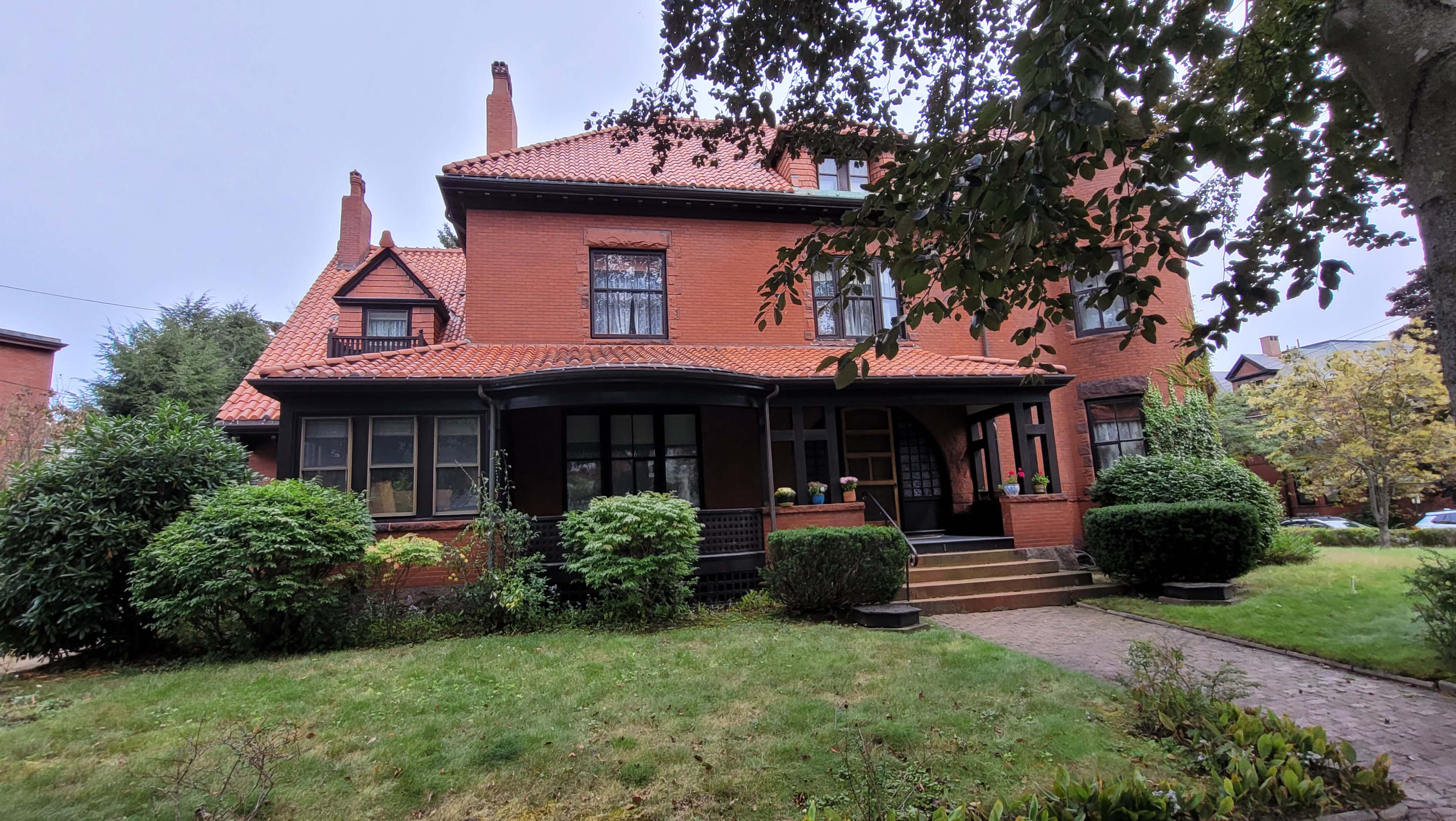
An iconic Romanesque in the West End Historic District
A revisit of one of the earliest articles.
Our first look at 1 Thomas Street was in February of 2015. Short on information and showing some very ‘low-res’ imagery, it was a start but, viewed in today’s eyes, it wasn’t much more than that.

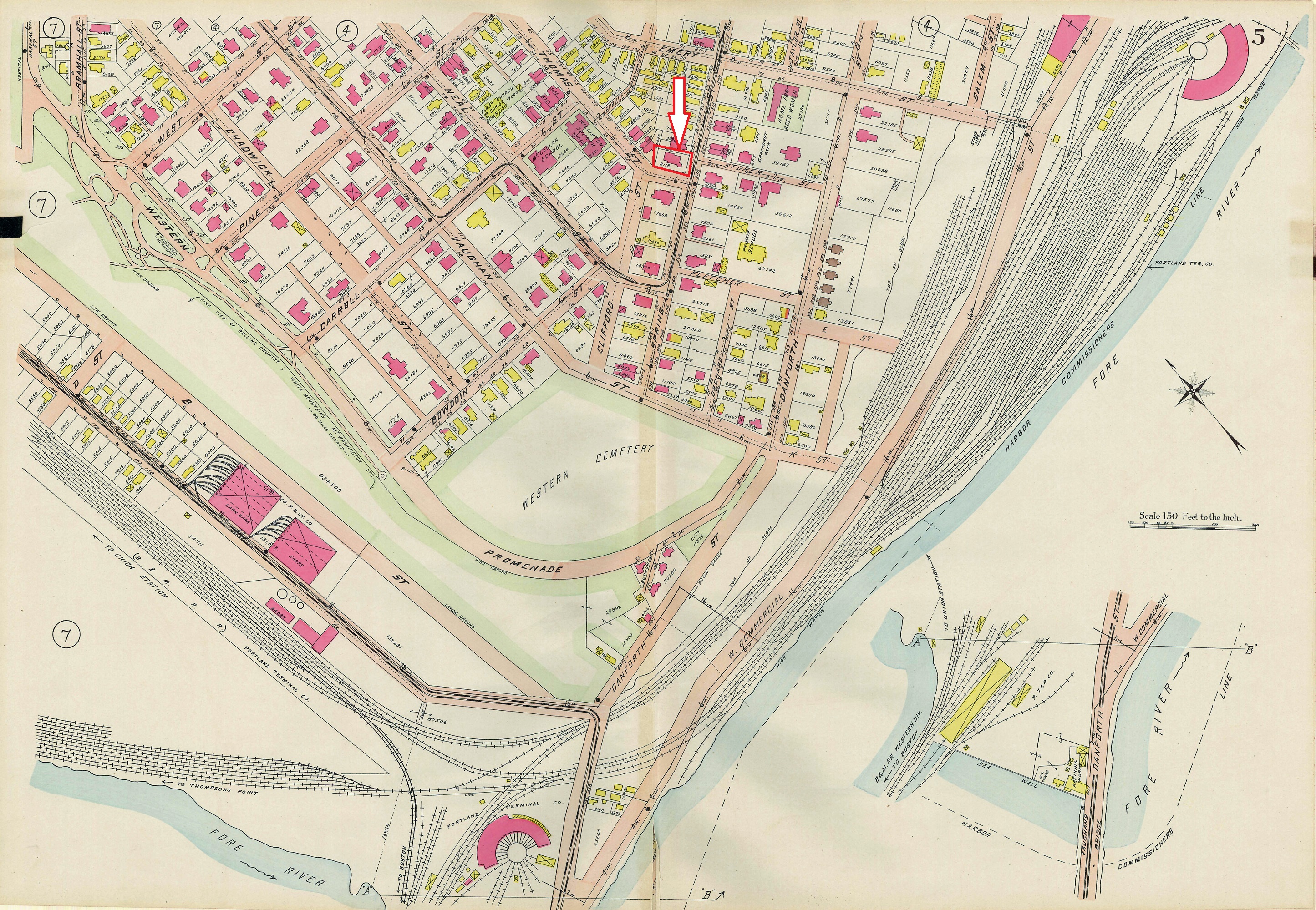
The land for 1 Thomas Street was purchased from John Bundy Brown by a merchant named George Hunt in 1865 as part of a larger parcel. The 1876 birds’ eye view would indicate there was something on the lot, but it seems to be gone by 1882. Maybe it was removed. Maybe it never existed.

Henry “Harry” & Julia Butler had been married less than a year when they purchased the land in April of 1891. By July, ground was being broken in preparation of construction. To modern standards, 3 months is a short time to have a plan and be ready to build. In the period, building rules were limited, and there were few, if any, codes in place. It is also possible that the Butlers had already met with John Calvin Stevens and had a basic ‘program’ in place. That being said, the house was definitely designed for the location. Construction took around 10 months with the couple moving in in early April of 1892.


Harry Butler was born in Portland in 1858. His father, Moses, was a lawyer. He was the second of 4 children of which he and his sister Grace were the only to survive into adulthood. The family lived on Pine Street, just off State. He went Portland High, then Philips Exeter Academy before earning a degree in law from Harvard University. He never practiced law. In 1882, he was hired as a clerk at the First National Bank of Portland which was, at the time, on the corner of Plum and Middle Streets, abutting the Falmouth Hotel. In 1884, a new building for the bank was constructed on the corner of Exchange Street.

Julia Libby Butler was born in Portland in 1849. Her father, Frank, was a dry goods merchant. She was the penultimate of 6 children. She grew up on Free Street. In 1875, Julia married Rollin Ives in Portland. Ives was from Orange County New York and was a junior officer in the US Army stationed at Fort Preble. In 1877, Julia gave birth to a son, Howard. Rollin Ives died of typhoid fever in October of 1881.

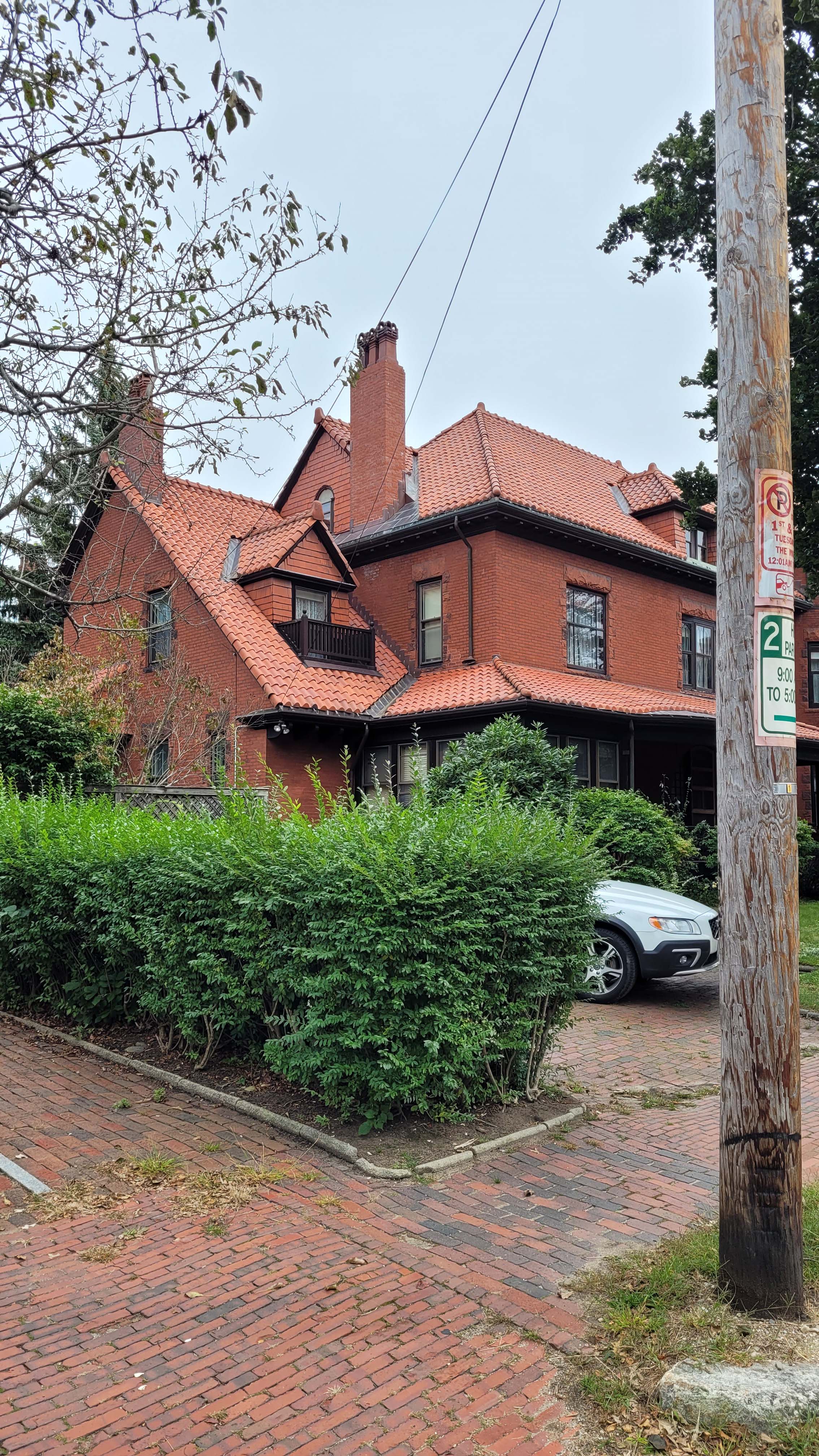
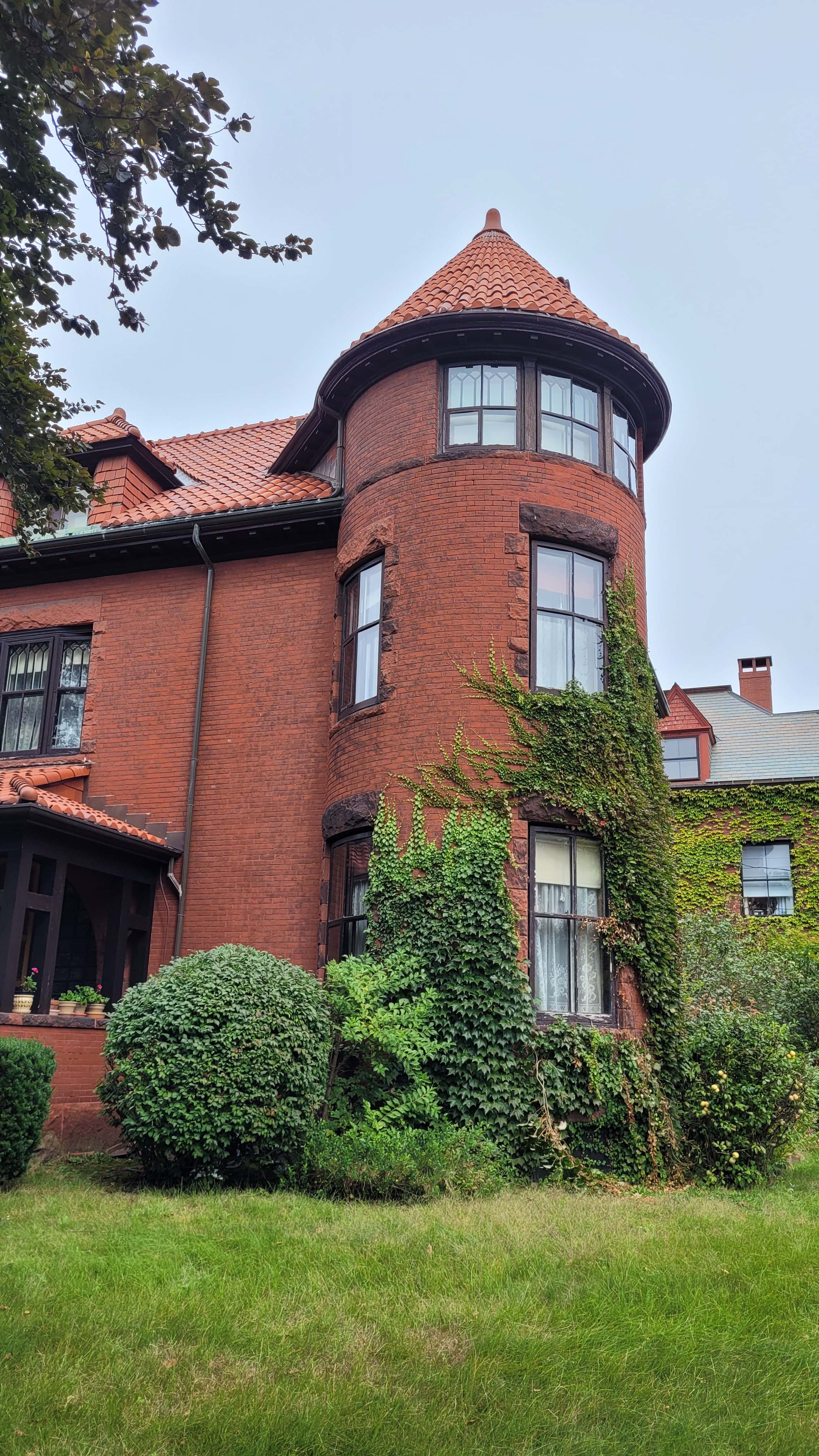
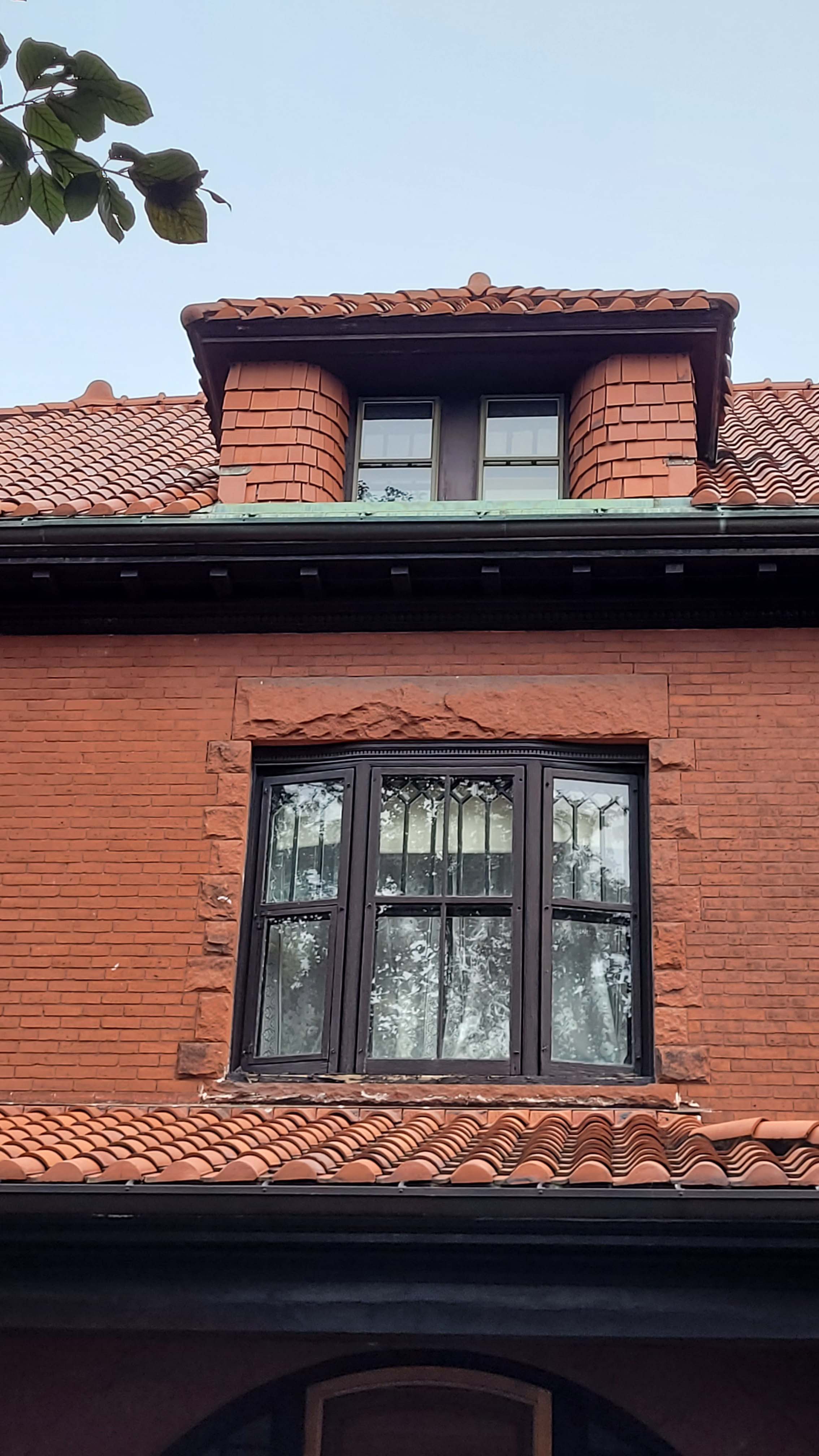
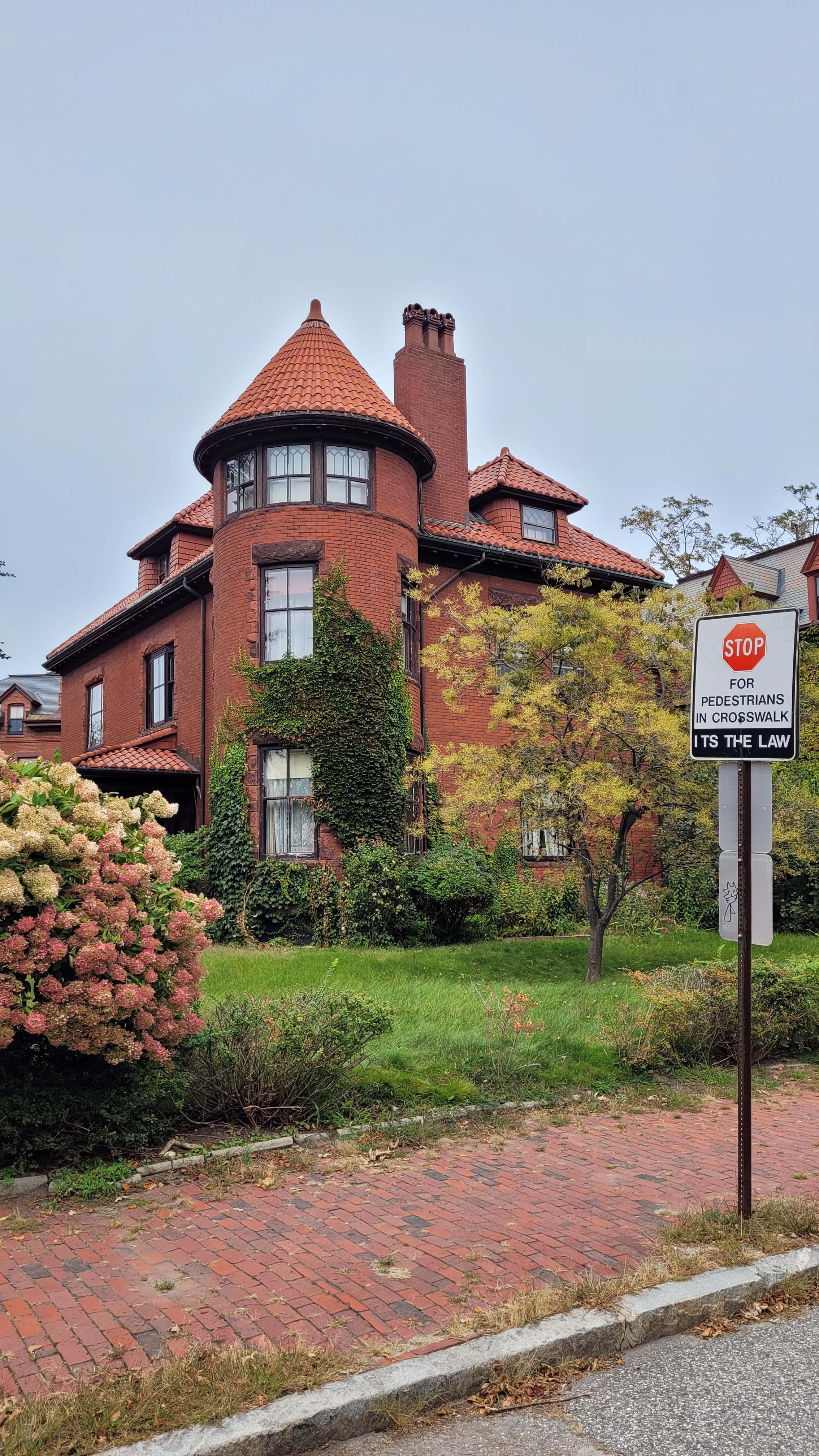
1 Thomas Street is peak Romanesque/Queen Anne for John Calvin Stevens. Built of common brick with a color matched mortar, the walls are planar surfaces only broken by window openings and a thin course of brownstone on the tower at the line of the cornice on the main block. The window openings are surrounded with brownstone. All of the walls and trim have been painted at some point in the past. The paint on the Thomas Street facade is still mostly there but the Spring Street facade, and turret, are blotchy. The windows, many of which appear to be original, are mostly common single-hung sash units. The windows in the upper level of the tower, the dormers, and the triple above the entry, have an arts-and-crafts motif in the upper panes. Then there’s the roof.
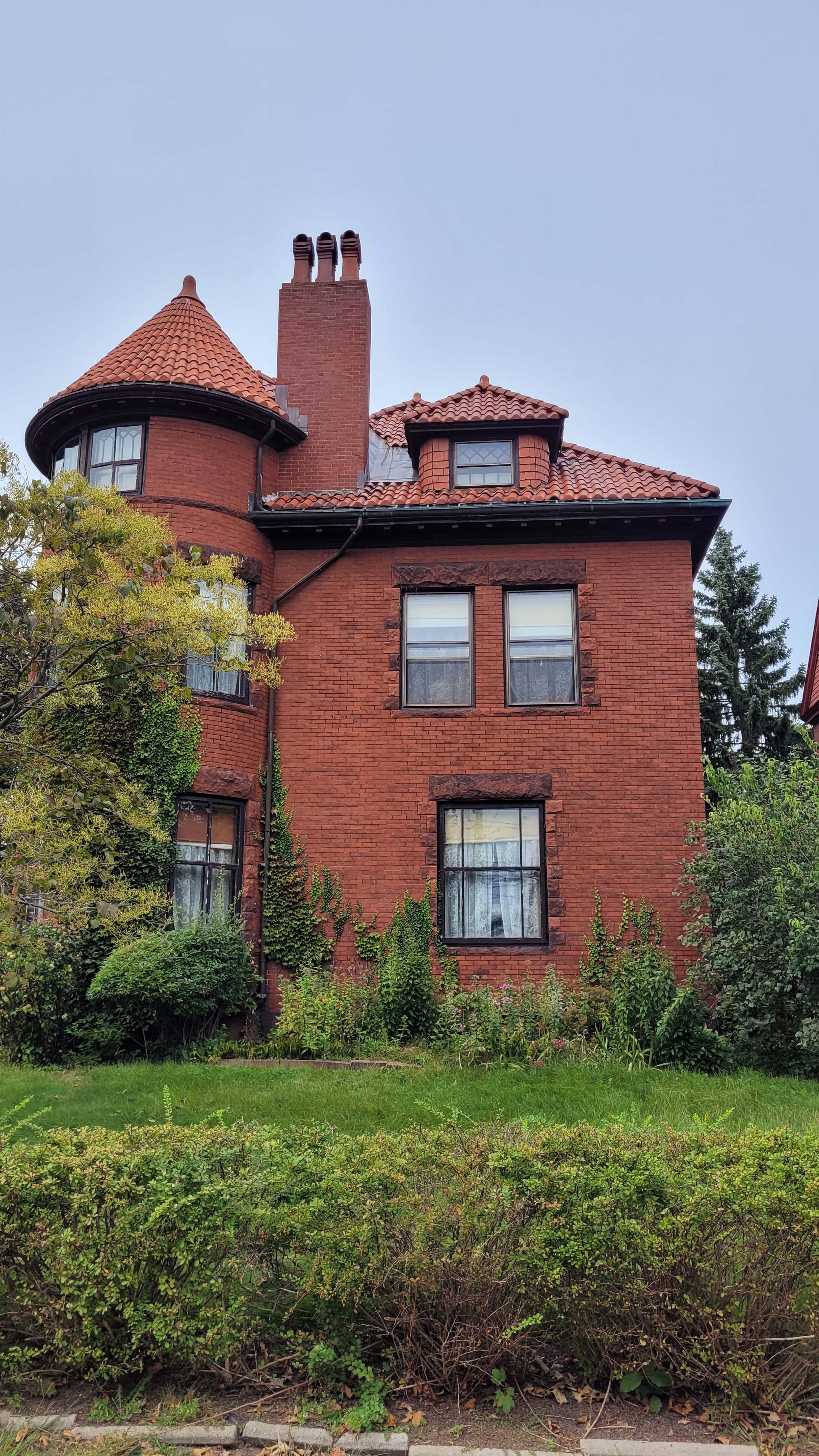
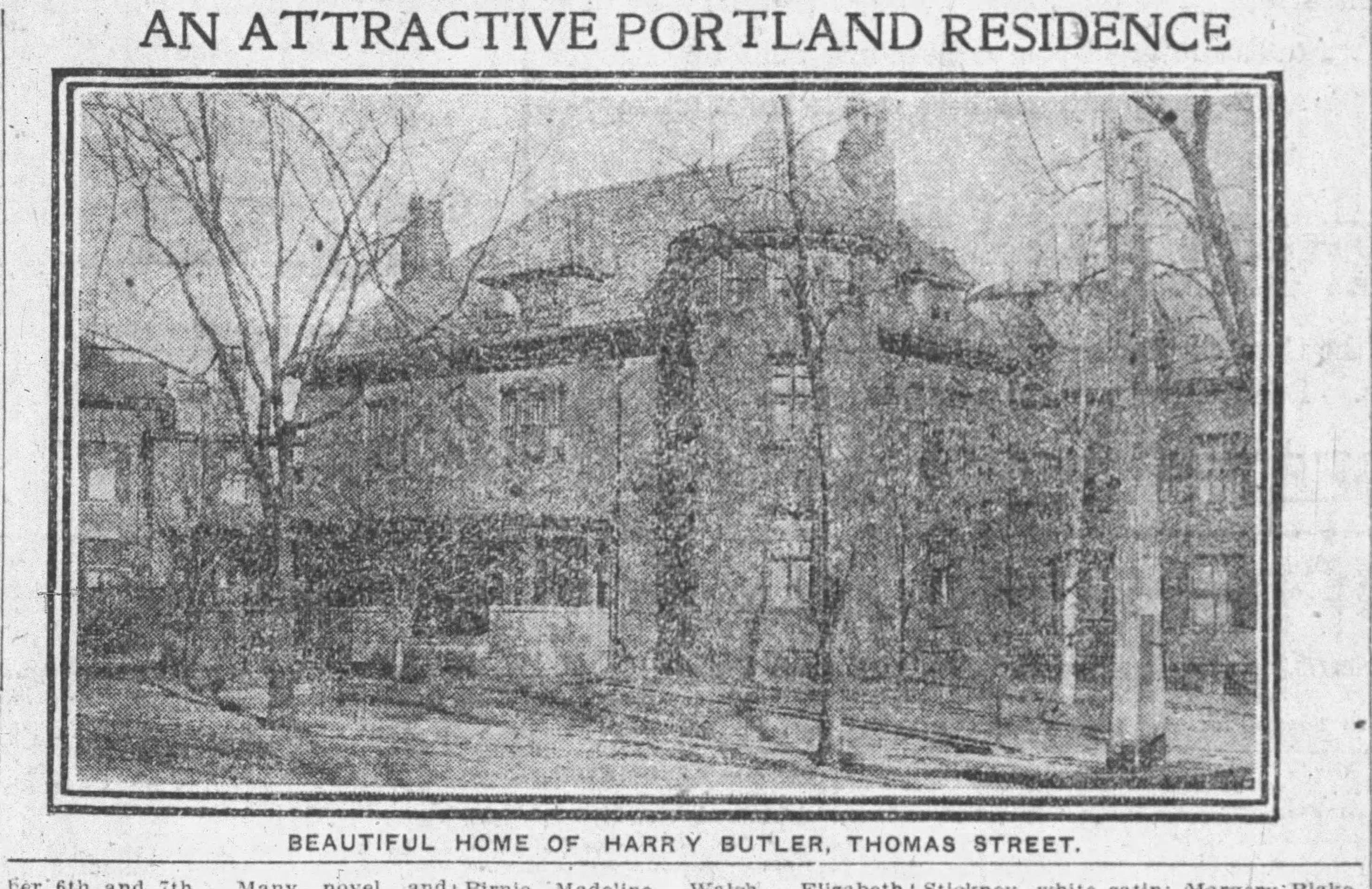
This is not the first time we have seen terra-cotta tiles on a roof. Stevens did a cottage in Old Orchard for Robert Hazzard, owner of various shoe shops, in 1926, which used terra-cotta, but I know of no other residential works. Most interestingly, they aren’t original. A photo from 1904, below, shows a shingle roof. Slate was used in areas where ice dams may form, thus giving a smoother surface to resist the ice. The chimneys are capped with wonderful terra-cotta pots.

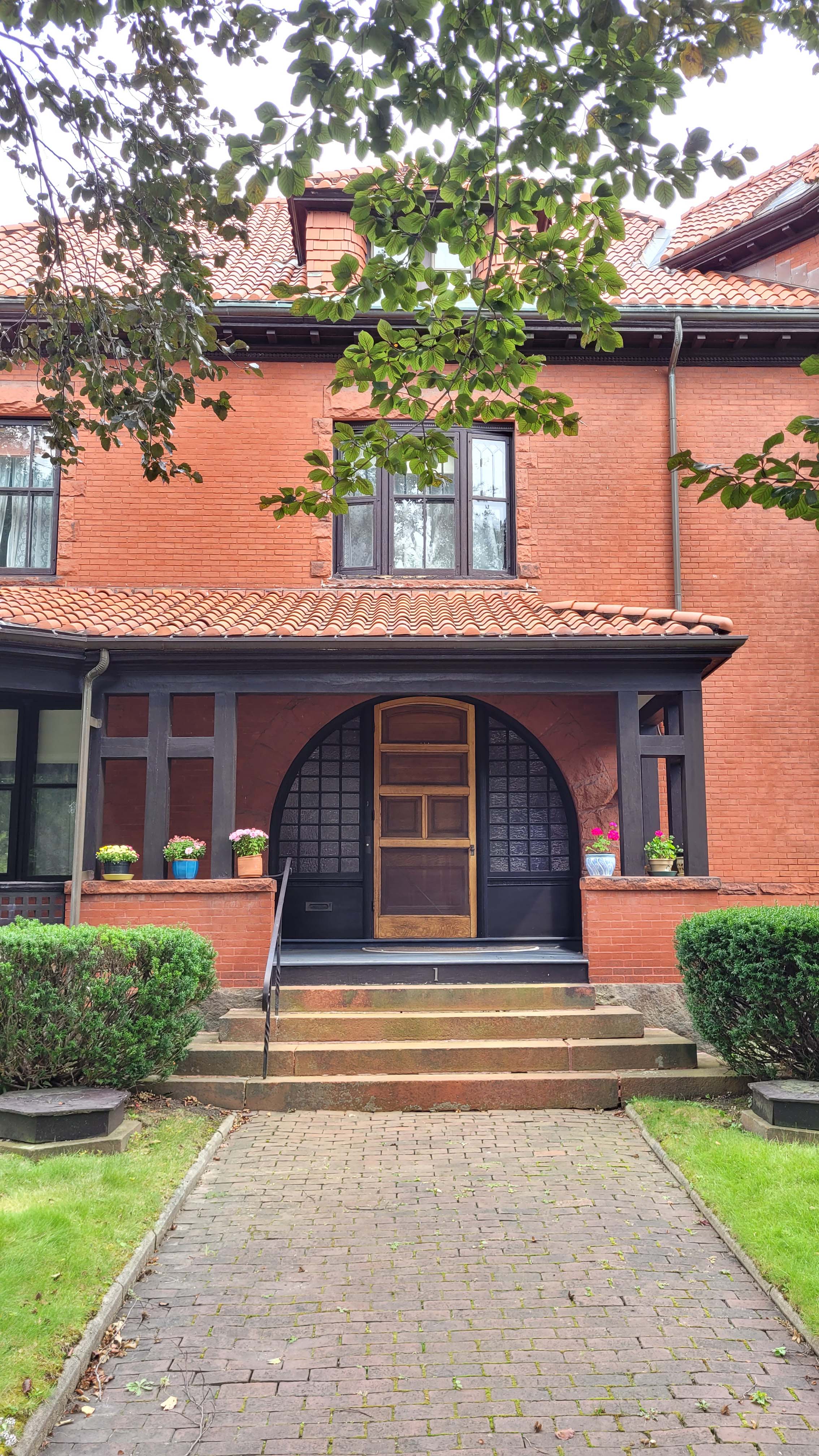
The original elevation for 1 Thomas Street is at the Maine Memory Network and it does not show what the intended roofing was to be although the ‘hash marks’ might imply shingles. Another item of note from the elevation is the far left bay of the porch on the main facade was open but has been enclosed. A very grainy image in the November 27, 1910 issue of the Portland Sunday Telegram shows the tiles in place so we can say sometime in the first decade of the 20th century, 1 Thomas Street had it’s original roof replaced.

1884 was when Harry Butler joined up with several local notables, including William G Davis, William Gould & Philip H Brown, to form the Portland Trust Company. By 1885, the firm was managing almost a quarter million dollars in assets, and that figure grew into the millions by the turn of the century. Harry worked for the Portland Trust Company for 26 years.

The 1890s saw Harry & Julia Butler visit the White City in October of 1893. The visited New York City & Boston both together and separately on many occasions during the 1890s and 1900s. A September 6 1895 article in the Portland Evening Express noted Harry was an avid cyclist, a fad taking hold in many parts of the nation. The article noted that John Calvin Stevens and Fred Thomson were cyclists with Stevens being a bicyclist “from way back” and that he got a new cycle “as often as is necessary to keep up with the newest & best“. The Butlers advertised regularly looking for various household workers including a cook and a ‘second girl’.
In the Spring of 1896, Harry Butler & Perez Griffin spent about 6 weeks in Europe. In April of 1899, Harry & Julia sailed to Europe on the SS Auguste Victoria. There they met up with Julia’s son Howard and returned to Portland in late-May. This was the start of many years of traveling for Harry and Julia.
By 1903, Harry Butler was president of the Portland Trust Company. Julia was hosting lavish teas at 1 Thomas Street, and the Butlers were traveling over much of the US. Things went along this way until early 1905, when the papers reported that Julia was confined to home with an illness. She seemed to have recovered as the papers noted her traveling and hosting/attending events. In October, it was reported that her friends were “concerned to learn of her illness.” Julia Payson died of heart disease on January 23 of 1906. She was 56 years old. In April of 1906, Howard Ives, Julia’s son, married in Portland.

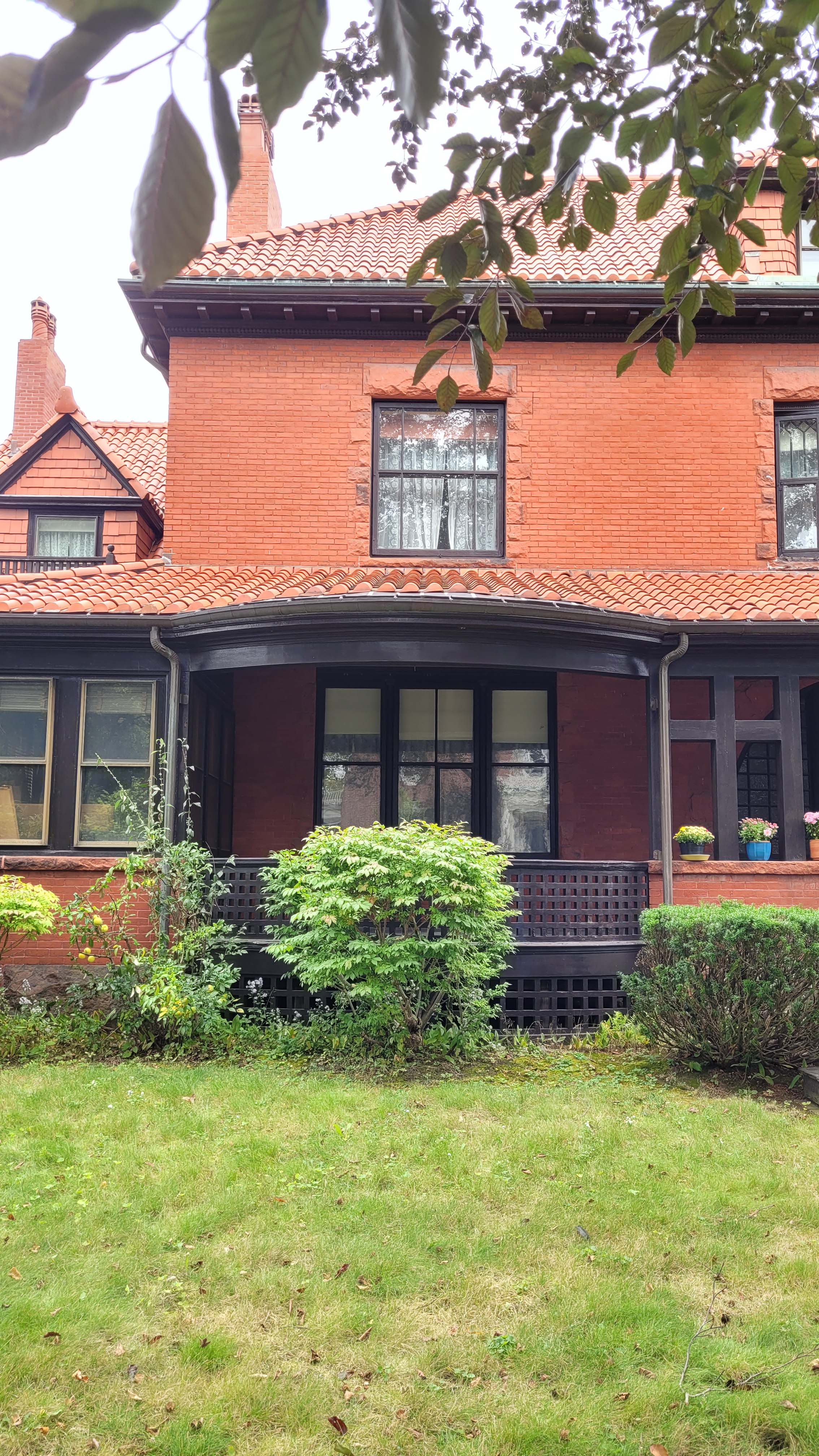
As we saw on State Street, John Calvin Stevens made great use of arched entries during this period. The Harry Butler house is one of his masterpieces. Blending Romanesque with Arts and Crafts forms, it is harmonious and understated. Here we also see Stevens creating vertical movement through the arch, 3-part window of the second floor and into the deeply sunken dormer above. The frosted glass surrounding the door appears to be original.

Harry Butler married Elizabeth Stetson on February 16 of 1907. We have met Elizabeth before. Born in Portland in 1875, she grew up on Franklin Street. Her father was a cobbler. How she met Harry is not clear but, she purchased 91 Lincoln Street from Perez Griffin days before marrying Harry. We have already seen that Harry and Perez travelled together and, it would seem, were close. Did Perez play matchmaker?

Harry Butler retired from the Portland Trust Company in 1910 although he ‘kept a desk’ at the company. With his retirement, the Portland Trust Company ceased existence to be replaced by the Fidelity Trust Company. After this, Harry & Elizabeth traveled the world. Japan, Paris, Egypt, Rome and Scotland, the Butlers saw all these and more. They also started spending the winter in warmer climates. They were noted for owning various luxury motor cars including Peerless and Pierce-Arrow.
In 1919, the Butlers purchased a home in Miami, Florida as their winter residence. Newspapers in Maine & Florida had noted they had been spending time in the Miami area. They had stayed at the Royal Palm Hotel and the Halcyon Hotel. Harry was heavily invested in railroad stock so, it is possible he was an associate of Henry Flagler or at least knew of his development of South Florida as just the type of getaway area the Butlers were looking for. The Royal Palm was a Flagler property but the Halcyon was not.

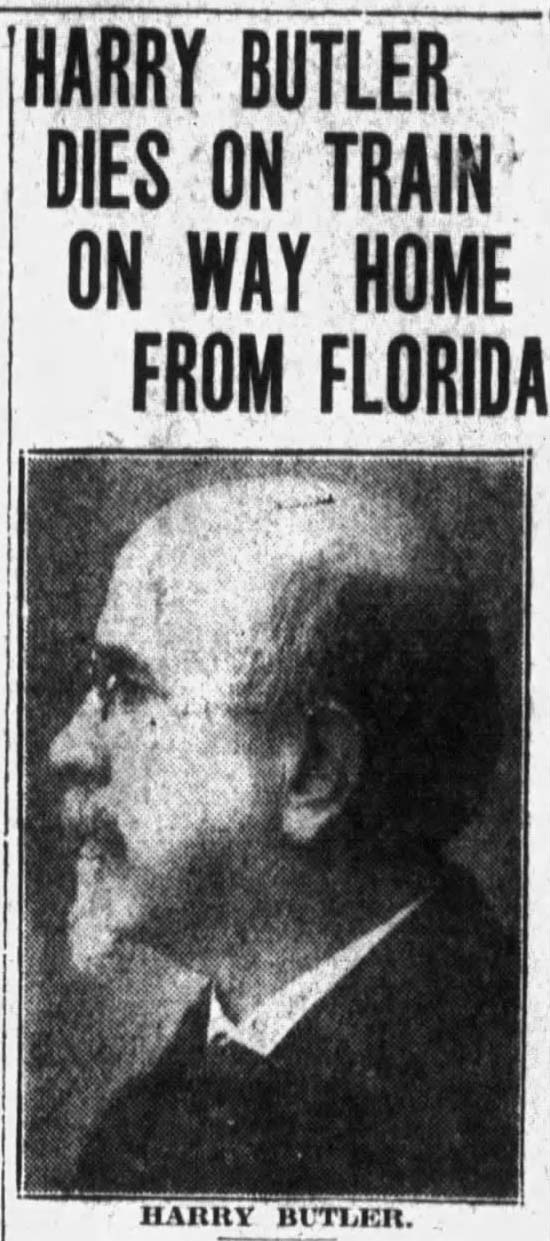
The Portland Sunday Telegram for November 26, 1922 noted the Harry & Elizabeth Butler had delayed leaving for Florida due to Harrys illness and the March 15 edition of the Miami Herald noted he was ‘critically ill’ and the street on which the Butler’s lived, SW 14th Street in Point View, was closed near the house as a result. A few days later, the Herald noted that he had recovered. His recovery was short-lived. Harry Butler died suddenly on June 8, 1923 while returning to Portland from Florida. He was 65 years old. His will left almost a million dollars in bequests to various organizations with a quarter million going to the Red Cross for a fund in his mother’s name. Title to 1 Thomas Street was passed to Elizabeth on June 15.
Harry’s bequests saw regular note in the press. One to the Portland Public Library allowed for $5000 a year for book purchases. An article in 1925 called him the reader’s ‘fairy god-father’. By 1958, the income from this fund was down to $2500.00 a year and it was being split with the school libraries. It was up to $6500.00 in 1963. Another bequest, the ‘Clean Air Fund’, made grants to allow inner-city kids to attend summer camps.
After Harry’s death, Elizabeth did not slow down. She continued to winter in Florida while traveling with her sister and nieces. The Portland press noted that she and her niece were traveling to Europe in early 1926 and they appear on a manifest for the RMS Mauretania when it sailed from Cherbourg to New York in May of that year. She and various family members ‘motored’ to Boston and Cape Cod regularly. She hosted national figures. At some point prior to 1946, she relocated to North Bay Road on Miami Beach overlooking Biscayne Bay. Elizabeth’s sister, Angeline Phenix, moved in with her after her husbands death in 1931. Angeline died in 1953. Oddly, Elizabeth seems to have disappeared from the census after 1920. She died in Portland on February 6, 1970.

In October of 1970, The Canal Bank, acting as the executor of Elizabeth Butler’s estate, sold 1 Thomas Street to Juris & Mara Ubans. Juris was an artist & professor of art at The University of Southern Maine. He was Latvian refugee whose story is far too fascinating and in-depth to be told here but it is certainly worth a read. He retired in 2009 & died in 2021. Mara Ubans still owns and resides at 1 Thomas Street.
1 Thomas Street is listed as a single family residence. The condition is very good.





 Portland House Stories