Built in 1893 for Captain John W Deering.

Design by John Calvin Stevens.

After the turn of the century, the West End became increasingly popular and increasingly filled with an eclectic mix of styles. Our subject is a rare example of the Tudor Revival style.

Stripped down Palladian in brick

Update 6.24.16: Having found a new resource on architects practicing in Portland, I can now state the architect of this house was James P Thomas. Thomas was a grandson of the noted William Widgery Thomas and a graduate of Harvard University. Thomas played a big role in public and residential architecture in Portland during the turn of the 19th/20th centuries.
Having highlighted the entry in the first Portals post, I think it’s time to take a closer look at this house. A product of a booming era, the home has some wonderful architectural details combined with a bit of interesting history.
The Winter Street neighborhood characterized by brick Federal buildings such as the Danforth Inn along with Victorian-era single and multi-family homes. The biggest neighbors are Mercy Hospital and The Irish Heritage Center in the former St Dominic’s Church. Nestled among these buildings is 15-17 Winter Street also known as 52-54 Gray Street. A rather small wooden home that shows an incredible amount of preservation both in the building and the lot on which it stands.
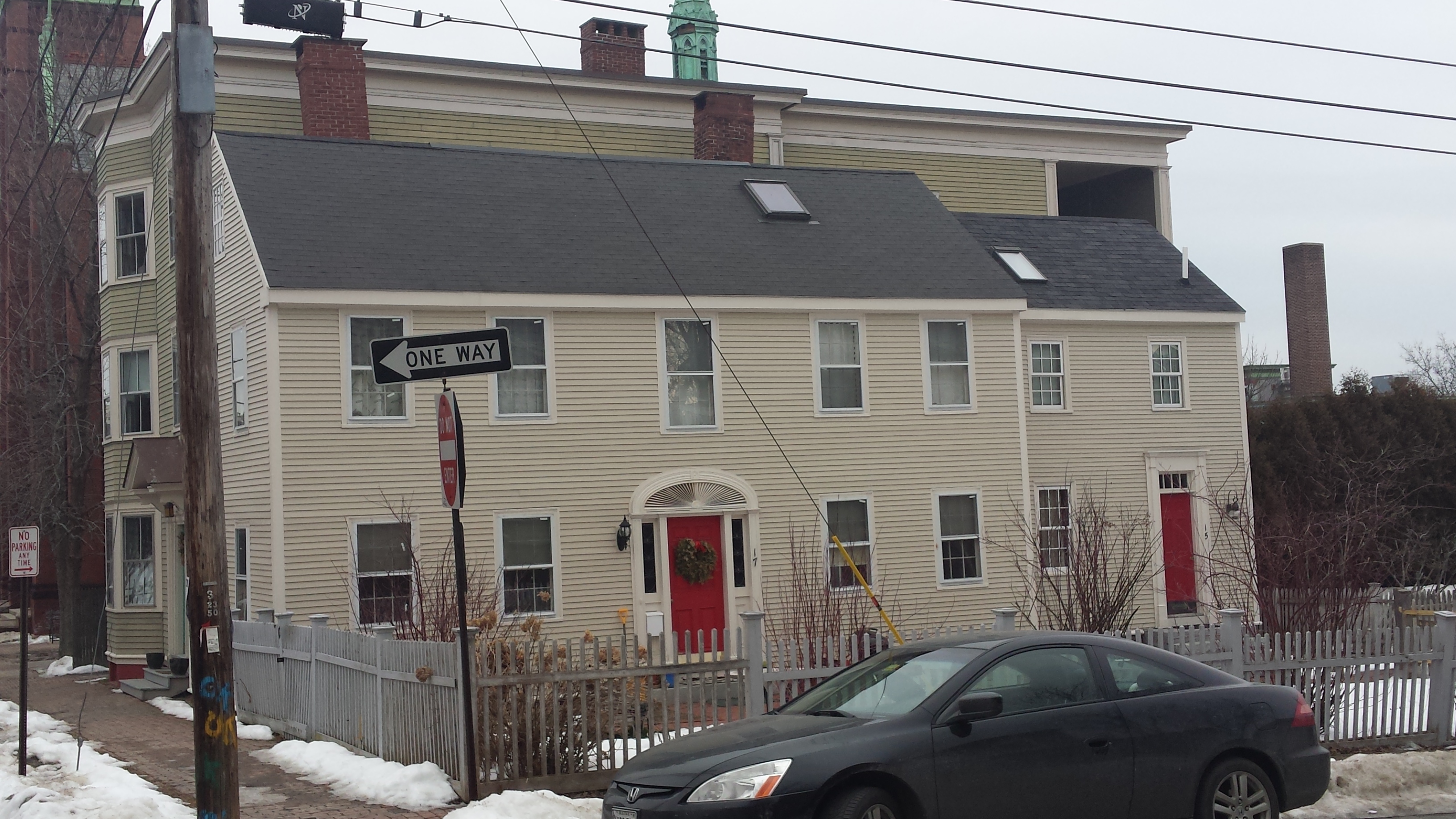
Do red doors still mean the mortgage is paid?
94 Pine Street & 137 Emery Street


A wonderful pair of Queen Anne homes tucked into the corner of Pine & Emery Streets. These are some of the unsung heroes of the West End

This is not a ‘pretty’ house.
 Nestled on a tree-lined lot at the far western end of Spring Street, this little gem is a voice from a much earlier time. Continue reading


387 Danforth Street. The William Vaughan house. This is from a much earlier era than it’s neighbors. The tighter, symmetrical, massing along with matched chimneys, first-floor windows that are much taller than the second floor, and the strongly detailed entryway with arched window above place it squarely in the Federal Style. Continue reading
 Portland House Stories