
Built ca: 1828 for Joseph Ilsley Jr.
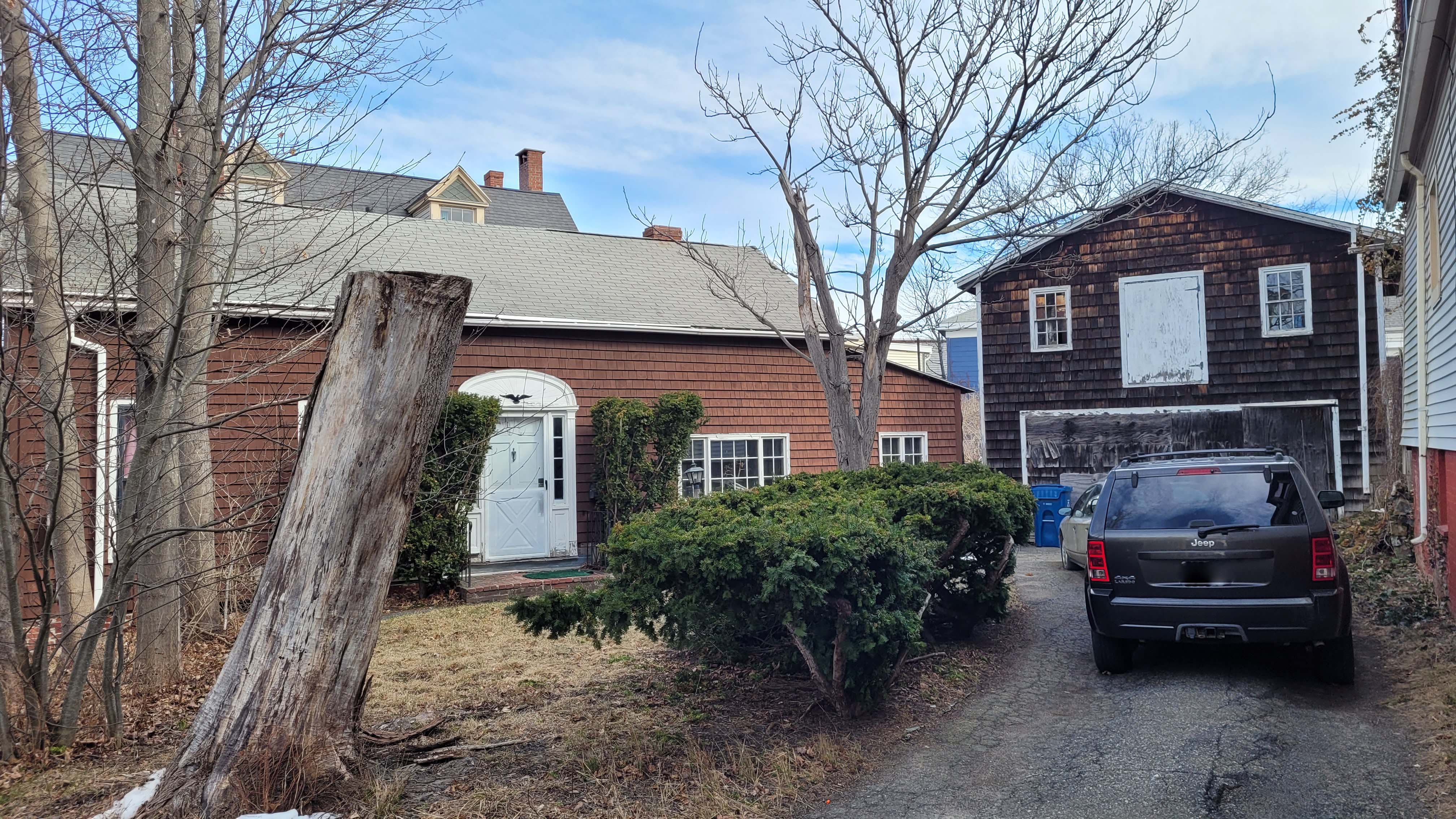
A small Federal in the West End neighborhood
A little house with a whole lot of history.
Joseph Ilsley Jr was soon to be married when he bought the lot near the corner of Dow & Bracket Streets from Eli Webb for $200 in January of 1827. This deed was not recorded until January of 1829 when Joseph sold the property, with “buildings thereon” to his paternal uncle Parker for $400 dollars. Webb’s deed did not record when he bought it nor the book/page reference. All that was noted was that it was bought from “Jonathan Dow”. Webb had, in fact, purchased it in 1825.
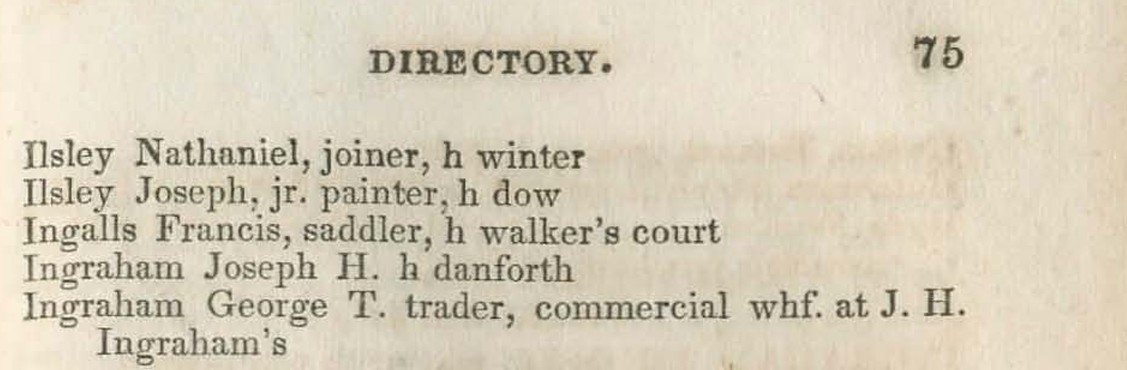
In 1832, Parker Ilsley sold our subject back to joseph for $400. Parker was a surveyor of lumber for the town of Portland. He lived on High Street while Joseph and his growing family lived here on Dow Street until 1834. That was the year Joseph & Rebecca Ilsley sold 30 Dow Street to William & Tristram Mitchell.

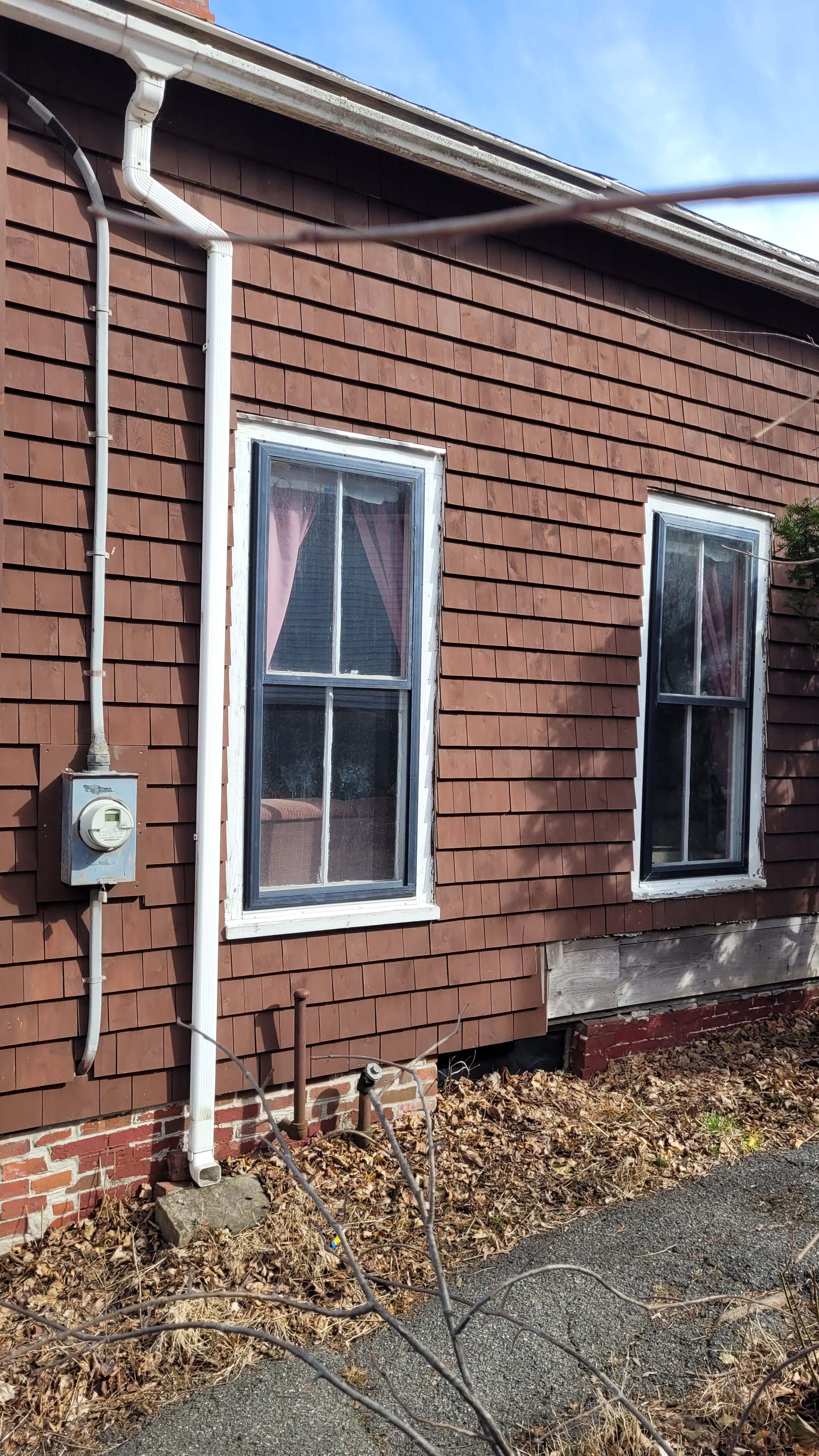
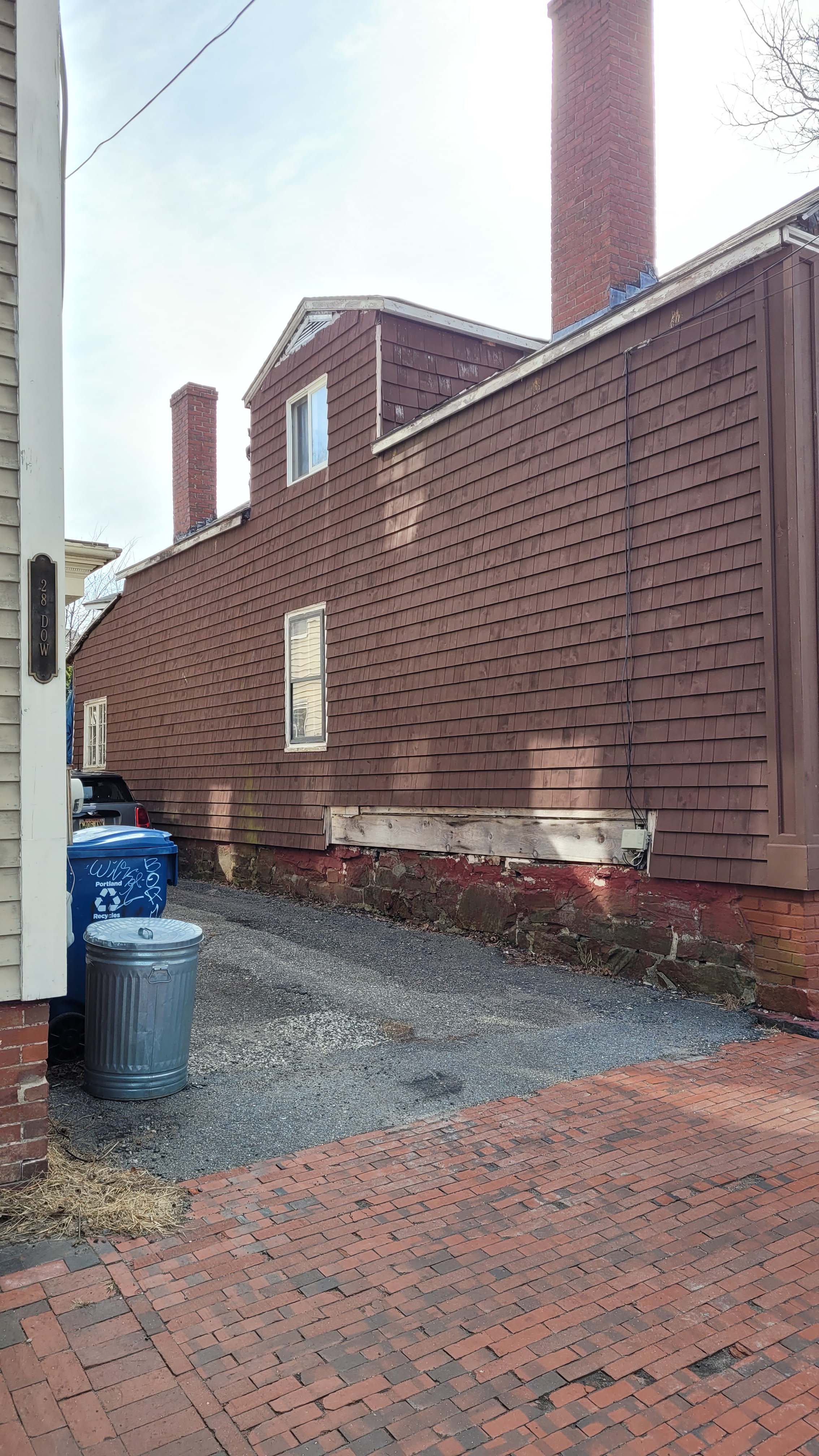
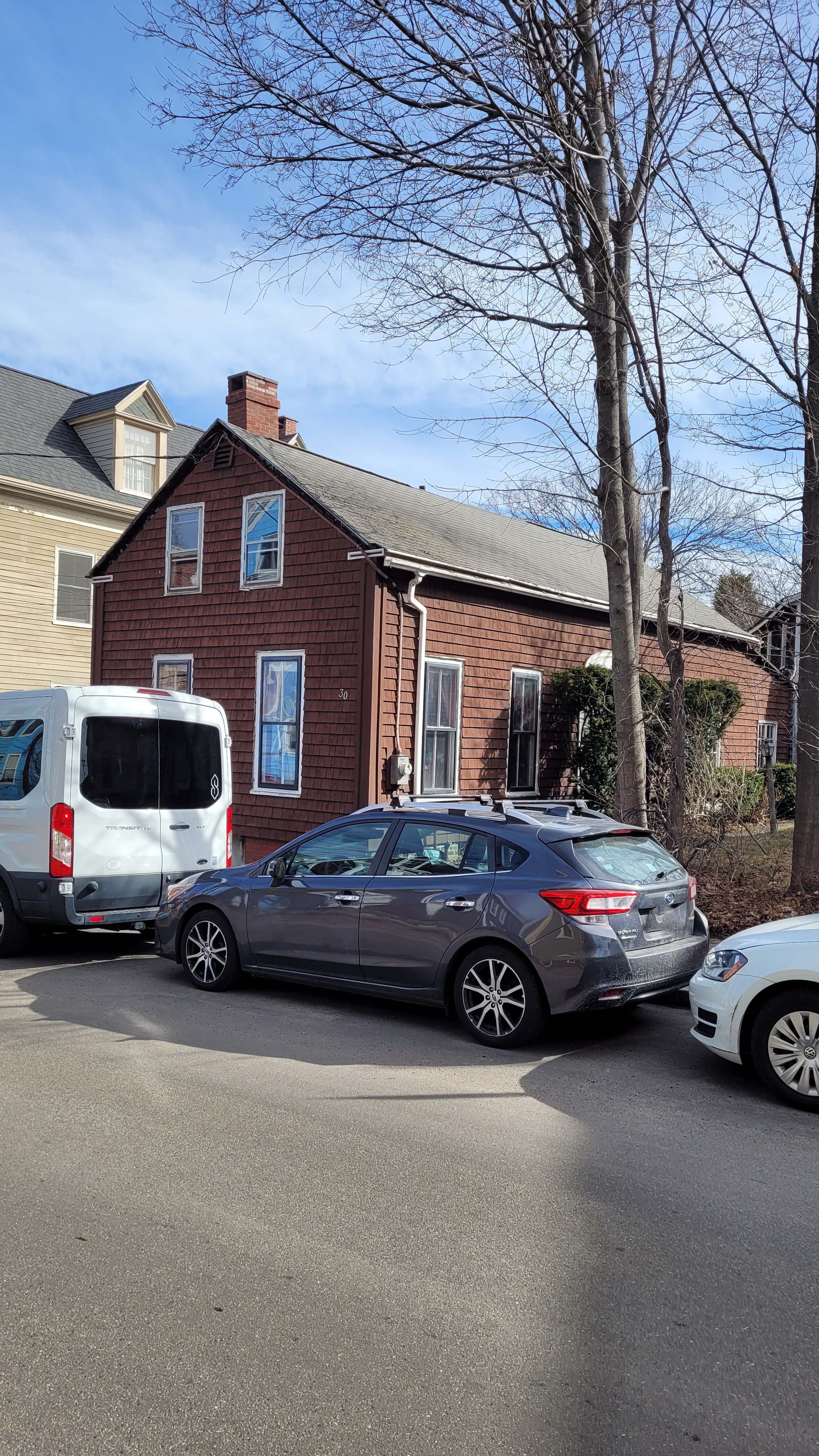
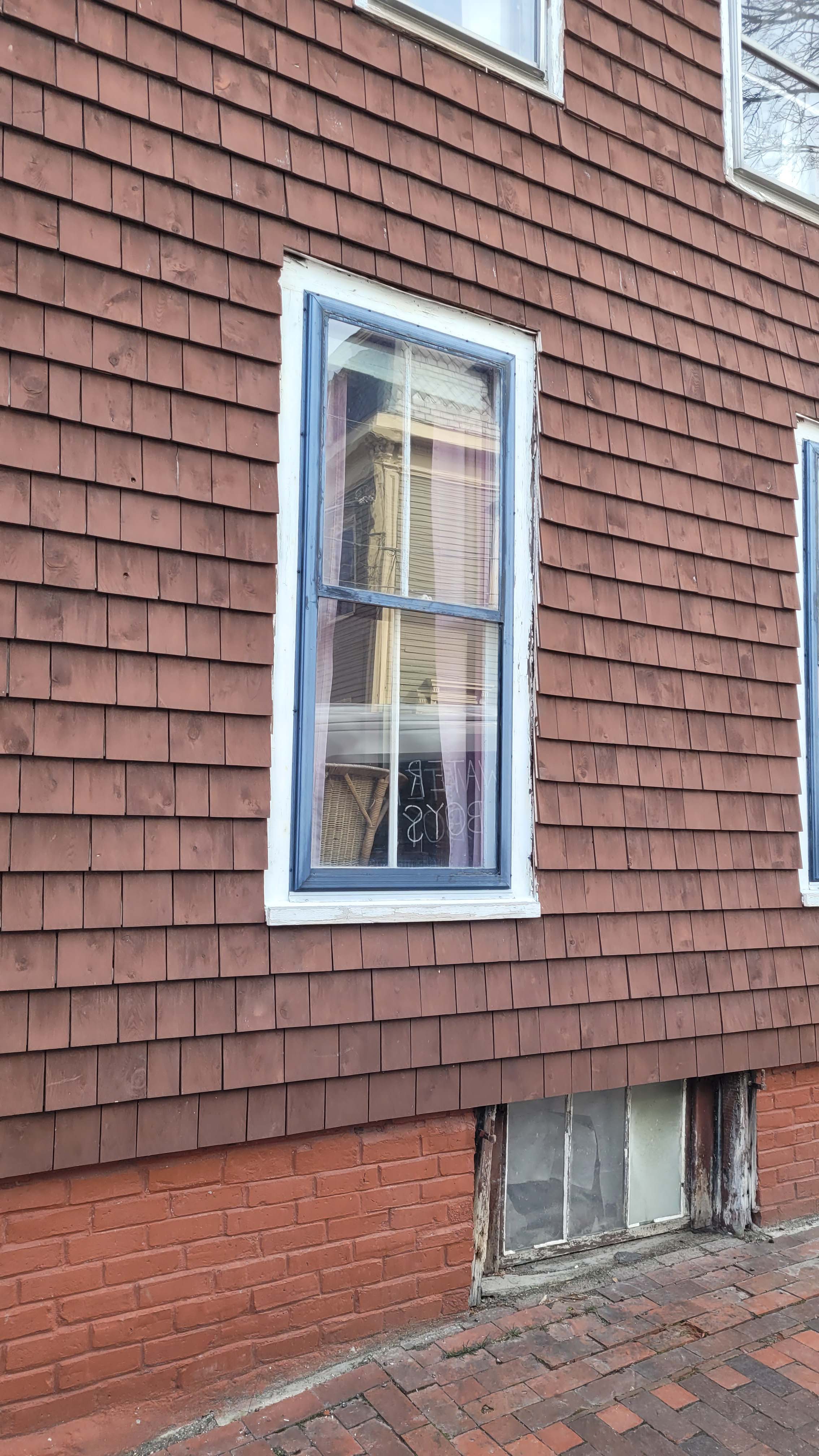
30 Dow Street is 19′ wide at the street and runs some 46′ deep. Fairly common proportions for these narrow but deep lots. Our subject gains a larger yard and more sun from it’s position on the corner of Dow & Brackett Streets. The city lists it as one story but the second floor windows and dormer bely this. The windows on the first floor are quite deep, an unusual feature for a modest home of this period. The current shingle siding has replaced the clapboards seen in the 1924 tax photo. Clapboards would likely been the original siding type.

The entry portal but for the fan is, as best I can determine, not original. The 1924 photo would seem to show sidelights running all the way down to small plinth blocks. The current sidelights stop about 2′ from the base with a panel filling the gap. The storm and entry door are modern. It can also bee seen that the windows to the right of the door have been replaced with a casement/picture window combination. The small extension at the end seems to have been incorporated into the main body of the house and the former door has been filled and a pair of casement windows installed.

William & Tristram Mitchell owned 30 Dow Street for 16 months from August of 1834 to early May of 1836. Neither lived here. William lived on Pearl Street and Tristram on Plum. They sold our subject to Curtis & Olive Lunt Merservey. Curtis was from Barrington, NH, and Olive was from Portland. Curtis oversaw the alms house and was named constable while living here on Dow Street, The family had lived on Oxford Street prior to moving here. Olive gave birth to 10 children between 1819 & 1831. Only 3 lived 20 years, and only 1, Olive, lived beyond 40.


The foundation of 30 Dow Street is striking and not least for its color. The material used above ground, fieldstone, is very uncommon find in Portland today. Interestingly, the house across the street at #27, of the same period, has a more substantial fieldstone foundation. At the street end, brick has been substituted for stone. I suspect this was when the sewers & sidewalks were installed in the 1860s. The owners of our subject seemed to have had no desire, or need, to replace the remaining stone with brick as happened many times in the city.
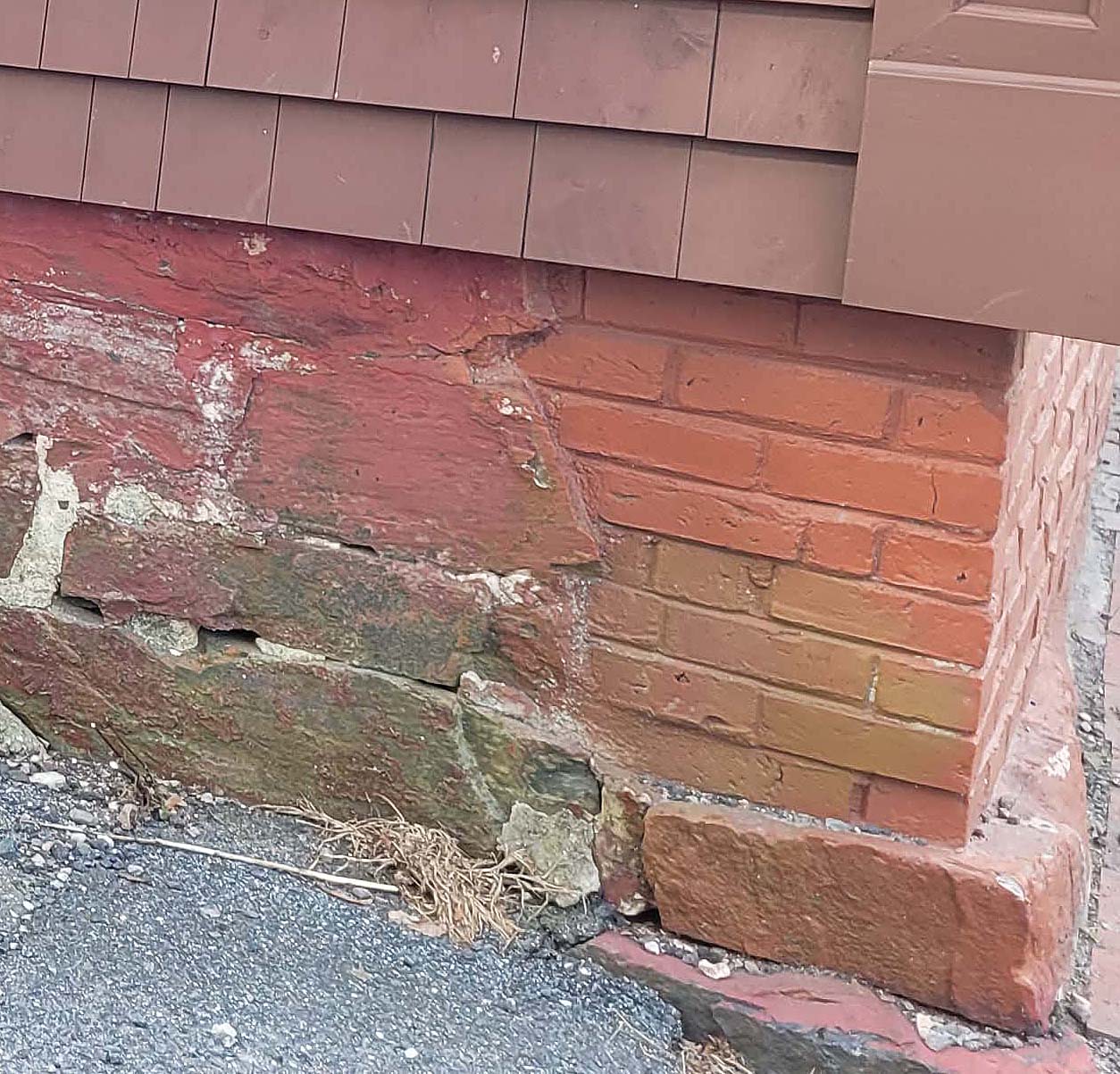
The area above the foundation where the shingles have been removed shows at least 4, maybe 5, layers of shingles on the first 3 courses. Normally the first course has an extra layer to give better weather protection but this is extreme. It may have been done to make up for a wonky sill as what is showing is a piece of modern, dimensional, lumber and it is not plumb Above this we see some pieces of lumber bodged in to fill gaps. Seems worthy of a remuddling badge.

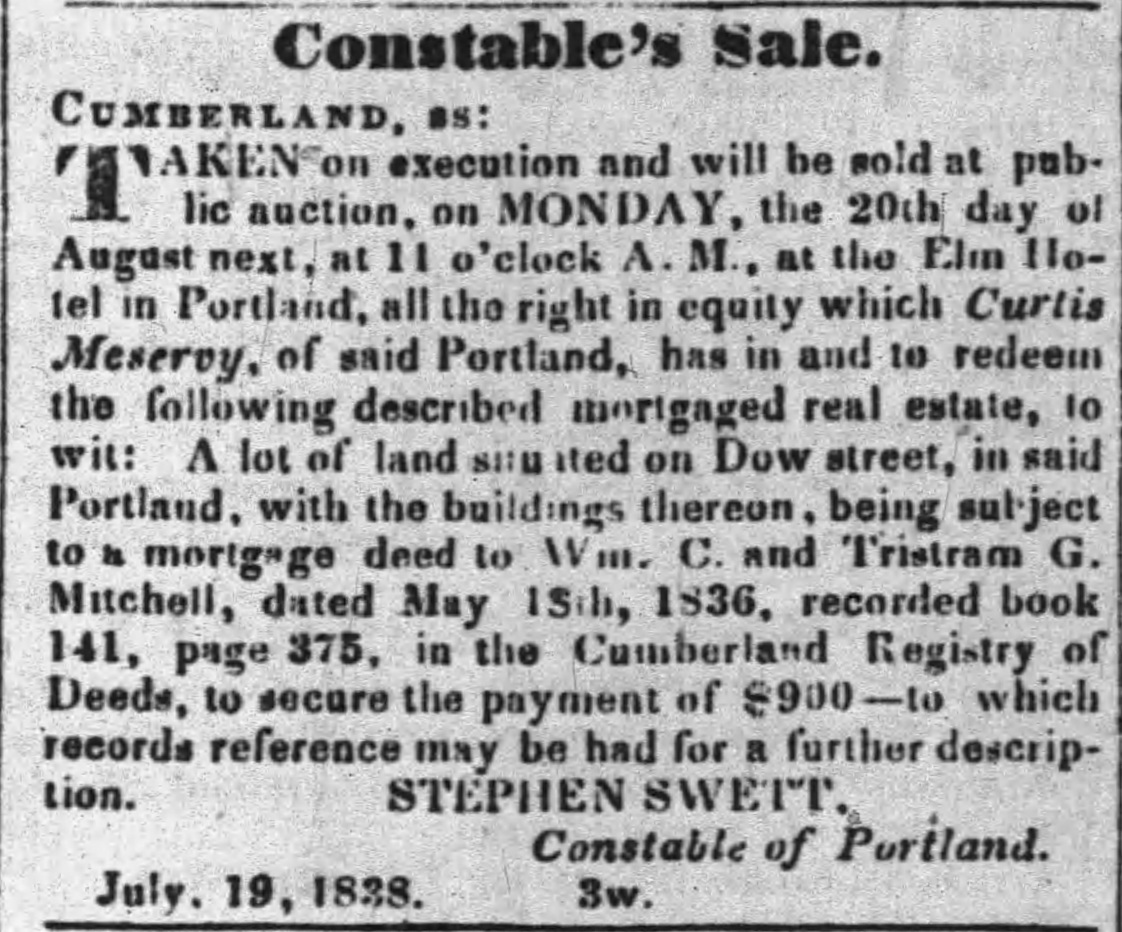
Curtis & Olive Merservey took a mortgage from the Mitchell brothers and, by 1838, had failed to meet the conditions of the note. Although it was scheduled for auction in July of 1838, the Merseveys held on until September of 1840 when they sold to a pair of merchants from Boston named William Delano & William Whitney. The 1841 city directory noted the family here on Dow Street but that may have just been ‘lag’ in confirming & compiling the data. By 1844, the Meserveys were living on Church Street. 1844 was the year that 30 Dow Street was sold to a ‘Master Mariner’ from Portland named Nathaniel Blake. Blake owned the property for 7 weeks before selling it to another ‘Master Mariner’ named John Caleb.

John O Caleb was born in Massachusetts in 1814. He married Lydia Walker, 6 years older than himself, in Portland in 1834. I suspect Lydia was born into the Walker family that would congregate around the nearby eponymous street but I have no proof thereof. Things were ‘normal’ for the family for 15 years or so. They had 6 children with 3 dying young. John was often listed on the Marine News pages as either departing from or returning to Portland on the brig Orb. The Orb seems to have been running the Portland to Matanzas Cuba route carrying lumber & barrel supplies south and molasses, in the assembled barrels, north.

Things went wrong in 1849. First John, who was born in 1839, started acting up. At the age of 10, his father published a notice in the Eastern Argus, seen below, stating that he would not pay any debts his son should ‘contract’. If John the younger went back to Dow Street is not noted. John Caleb Jr died in Havana in early July of 1858.
Charles Caleb seems to have followed his brother as his father posted the same type of notice in 1855 when Charles was around 14. Charles Caleb’s fate is unrecorded. In the summer of 1863, Julia filed for divorce charging John with being a “notorious drunkard” and stating that he had left her in 1858 and had neither contacted nor provided support for Julia or their son, George. Divorce was granted in October of 1863 with the Eastern Argus noting that John O Caleb had never appeared. Lydia Walker Caleb died of consumption in January of 1868. She was buried in Western Cemetery. John O Caleb died in early February of 1879 and was buried in Sailors Snug Harbor, Staten Island, New York.


By the time of the divorce, 30 Dow Street had passed out of the Caleb’s ownership to Edward Gould. John Caleb had taken a mortgage from for $1,000 from Gould in 1855. Not surprisingly, Caleb did not make good on this note and Gould took ownership of the property in 1861. Gould sold the property in 1863. Perhaps he allowed Lydia Caleb to remain here until the divorce was finalized. The purchaser was Levi Drake. Drake was a partner with Amos Davis in a meat and provisions business on Congress Street. Drake lived on Pine Street directly across from Winter. He sold our subject to Henry G Timnons in late 1866.
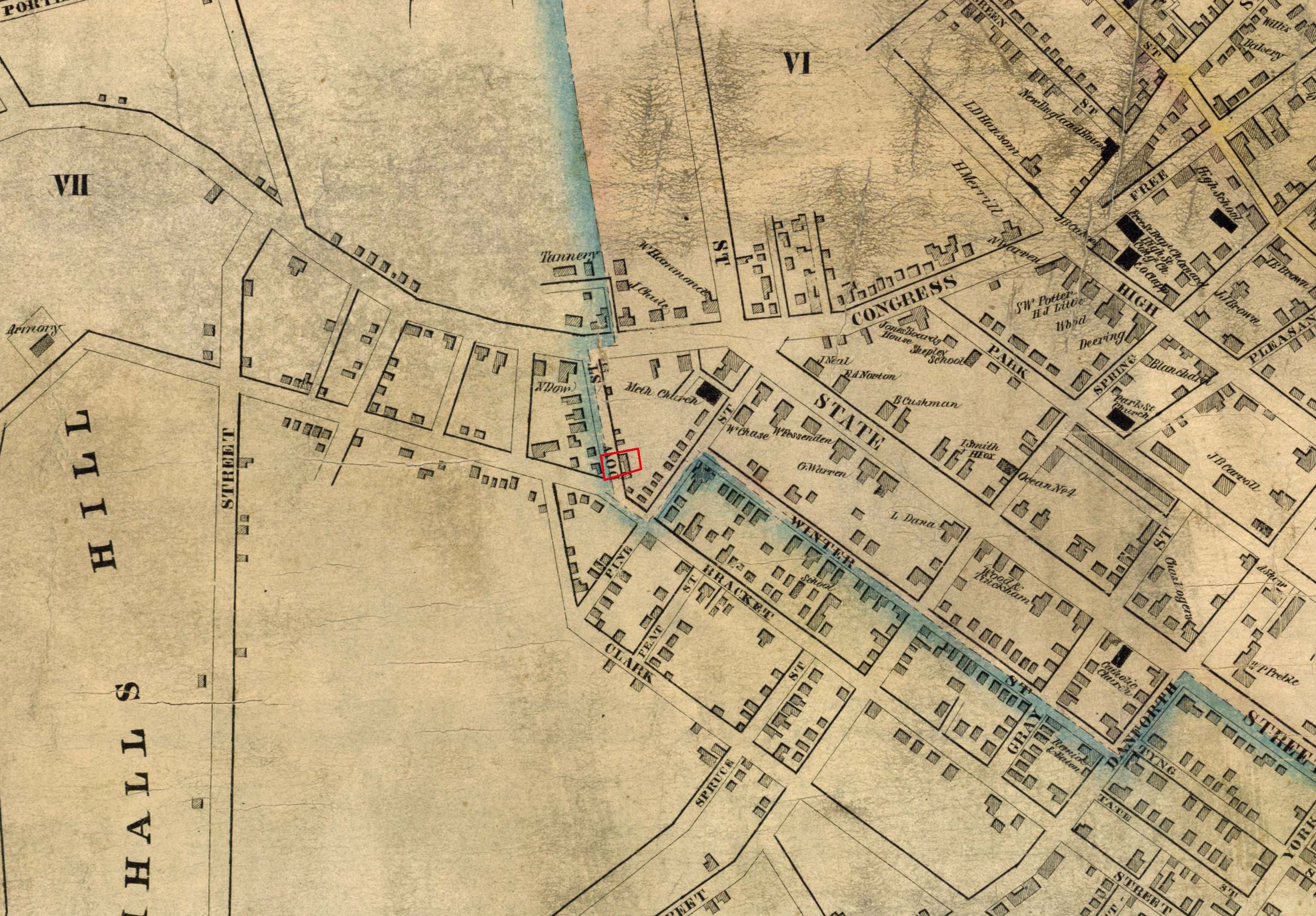
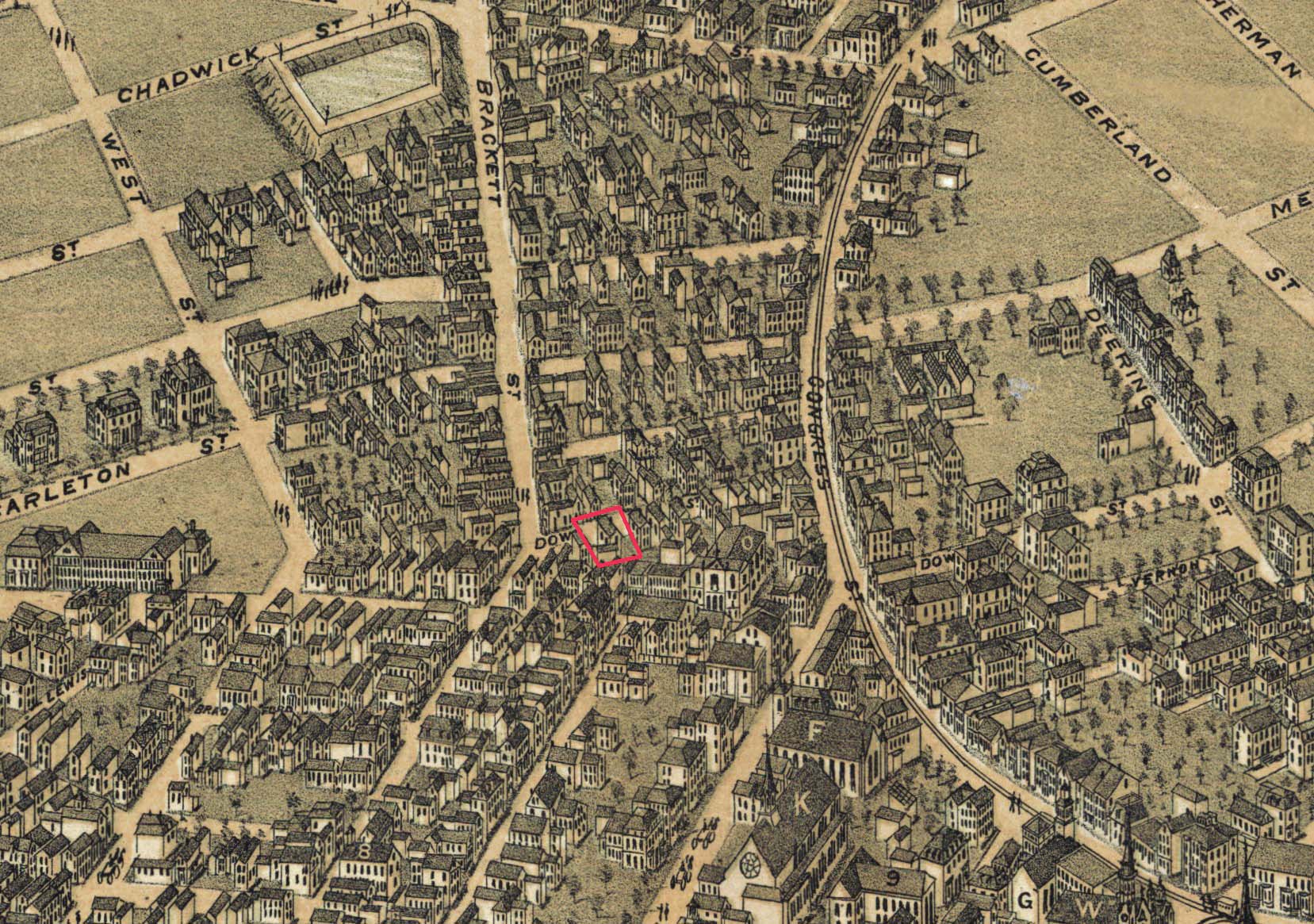
Henry G Timmons was born in Portland in 1835. His father, also named Henry, was a native of Holland who first appeared in Portland in the early 1830’s. His mother, Mary, was a Portland native. The Timmons had married in Boston in 1832. Henry the elder was at various times a store keeper, a laborer, and a seaman. Henry was the first of 7 children 5 of whom lived to adulthood. They lived on Federal, then Spring, then Danforth Streets.

Henry G Timmons and Anna Maria Horr married in Portland in 1854. Anna was born in Portland in 1836. Her parents, William & Hannah, lived on Bracket near Danforth for many years with William being classified as a laborer in various directories and census records. Anna was the 4th of 7 children. Henry and Anna’s first daughter, Ella, was born 1854 but she died young. In 1863, Nellie Gertrude was born. 1863 was the year Henry bought an oyster stand on Market Square. Henry had worked as a teamster prior to these events. Where he got the knowledge, or money, for such an undertaking is a mystery.

Henry Timmons’ move into oysters wasn’t without warrant. The second half of the 19th century saw craze on the mollusks due several factors including unregulated harvesting and railroad cars cooled with ice. Portland had several oyster ‘stands’ or ‘saloons’ in the 1860’s and 70’s. Allen Freeman, who sold the stand to Henry, was part of an family heavily involved in the trade. The 1863/64 city directory lists 6 members of the Freeman family as oyster dealers. Henry’s stand was lost in the Great Fire and afterwards he partnered with Alfred Hawes to open a new stand in the old location and one on Commercial Street. Both locations prospered into the 1870s. We are fortunate to have an image of the Market Square stand from around 1870. I have circled a face that I think may be Henry Timmons.


In November of 1864, Henry Timmons signed a document published in the local papers wherein ship owners and masters pledged that they would not pay for lighter services in Cuba as they were “prone to pilferage”. What vessel Henry owned in any form is another of his mysteries.
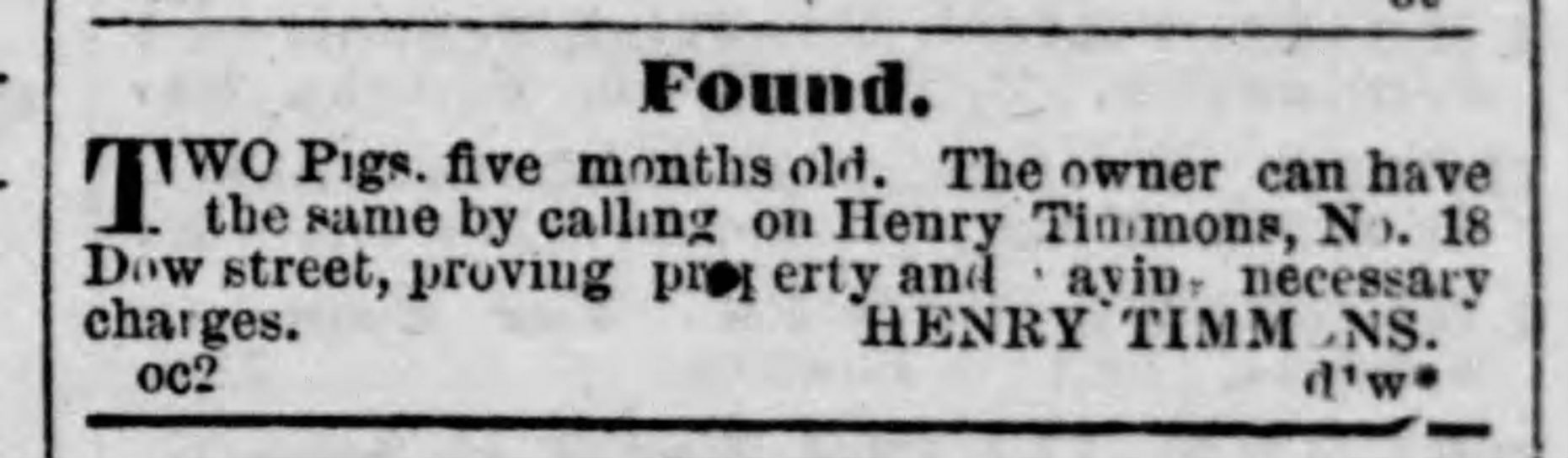
Henry Timmons seems to have pushed the limits of Maine’s well known liquor laws of the era. Several newspaper articles of the 1860s and 70s note he was found guilty of ‘search and seizure’ which, usually, meant selling or possessing contraband alcohol. He normally paid a fine of around $50 and went on his way. In March of 1878, he was involved in a much discussed case involving the sale of ‘hop lager’, which it seems was a highly hopped beer that skirted the liquor laws by virtue of a very low abv. Henry and several others admitted to selling the beer. While it’s not clear if this was the cause, Henry was for selling beer in September of 1878.
Then, on November 22 of the same year, the Portland daily Press ran a short note that Henry who had “taken sick a few weeks ago, is no better”. “His disease seems to be nervous derangement”. On December 5, it was reported in the Daily Press that the governor had pardoned Henry and couple of others. For Henry Timmons, it was too late, he died on December 15 of 1878. The official cause was ‘brain disease’.
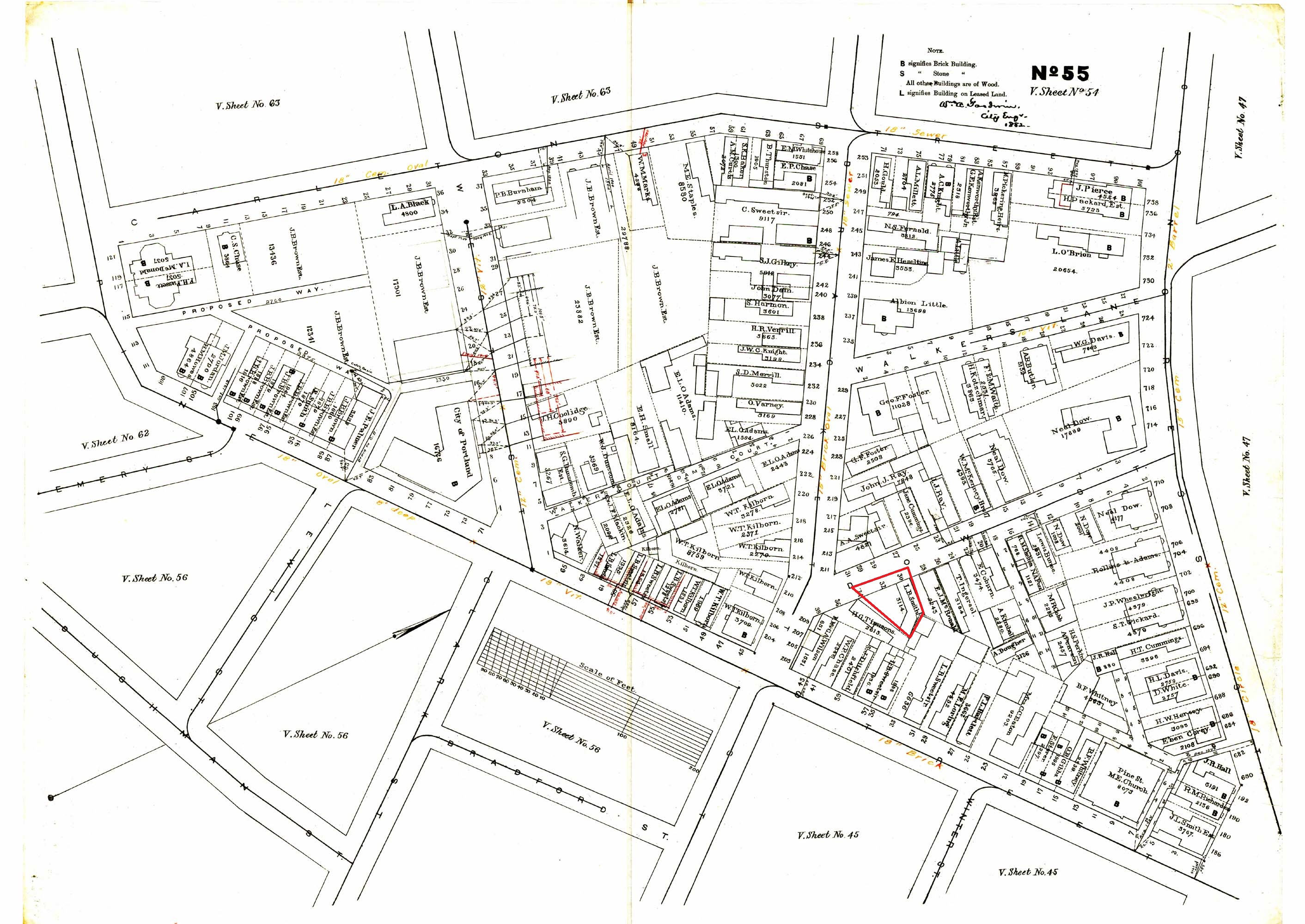
Anna and Nellie Timmons continued to live at 30 Dow Street until 1895 when it was sold to Emma Perkins. Anna died in 1918 at the age of 80. Emma Perkins lived on Pine Street with her husband John who was a traveling salesman. 30 Dow Street would be a rental until 1941. Among the people residing here were:
- George & Jennie Thayer in 1900. George worked as a yardmaster for the Maine Central Railroad.
- George, Mary E, & Mary S Ellis in 1912. George & Mary S were teachers, the directory noted Mary taught in Boston, while Mary E was listed as “widow of Thomas L Ellis”. Who Thomas L Ellis was is unclear.
- Wilfred C & Susanna H Coffee in 1926. Coffee was listed as a painter & decorator.
In 1916, Emma Perkins sold 30 Dow Street to Helen Payson along with William & Elias Thomas Jr. As these 3 were members of Portland’s wealthiest families of the time, we can be assured they did not live here. They sold our subject to Elmer Cobb Jr in 1941. Cobb was Thomas’ son-in-law, having married Beatrice Thomas in 1935. They had 2 children. Elmer worked as a salesman for a gas company and Beatrice was an elementary school teacher. They sold 30 Dow Street to Gladys Spencer in 1952. She sold it to Rita & Charles Spear in 1957. Members of the Spear family still owns it as of June of 2025.

30 Dow Street is listed as a single family home. The condition is good.




 Portland House Stories
Looking around on your site, came across a “family home,” 1 Cobb Avenue. My husband’s grandfather was Clement Leon Voyer, Sr. My father-in-law, Clement Leon Voyer, Jr., was born there. (Russell Smith was his half-brother.) The Voyers would already have had a daughter, Marlene, when they lived at 1 Cobb Ave. (Irony: Marlene Voyer would later marry David Cobb, Sr.!!) I’m curious about the house. The house seems small (granted, by my Midwestern experience). You mention a tavern, but that Thaddeus Broad and his 11 children helped run it. Were those two separate buildings? I’m trying to wrap my head around such a large family living there, while still having room for cooking/serving for clientele. Especially during cold Northeast winters! Possible tangent: Was the Broad Tavern different from the Elm? Any online resources that you could direct me toward concerning daily life, etc. during different eras at that house (or in that area)? For example: Did they have neighbors nearby with whom they had to share outdoor ‘facilities’? When was indoor plumbing installed? Was there an external building for horses/animals, carts, etc.? How far away was the nearest market/general store for supplies needed to keep a tavern running? Thanks for even reading my latest “rabbit hole” musings. Sincerely,Heather A. Voyer
Sent from AOL on Android
LikeLiked by 1 person
Hi Heather

Thanx for commenting.
The house at 1 Cobb Ave seems small but there is a large section missing. If you look at the image below, you will see the two story lean to ell at the rear is gone. Another factor to consider is that the idea of ‘personal space’ is a mostly modern concept and that living ‘cheek by jowel’ was common. The tavern section was, most likely, contained in the front first floor rooms only. I do not think there was a separate building anything other than horses and livestock etc.
I don’t think the tavern shared any ‘facilities’ with the neighbors as they were some distance away. More likely they had an outhouse on the property. I cannot say exactly when indoor plumbing was installed but the 1924 tax record, https://www.mainememory.net/record/84475, says there was 1 bath at that time so it was prior to then.
The Elm Tavern was in the Portland peninsula near the First Parish Church.
Several people kept ‘stores’ in Stroudwater village where most provisions could be purchased. These were sometimes in private homes and sometimes part of the warehouses and shops that once lined the waterfront of the Fore River. After the building of ‘Vaughan’s’ Bridge across the For River near Portland around 1805 large ships couldn’t reach Stroudwater and much of the waterfront warehouses and stores were closed. A few remained but many provisions would have been ordered from Portland and delivered on small boats or ‘gundalows’ which were flat-bottoms boats made for hauling freight in shallow waters.
As for resources for what was daily life like, there aren’t many online that I am aware of. Diaries and memoirs are always good. I read old newspapers allot as they can be a good view of some parts of daily life in a community.
Hope this deepens the rabbit hole.
DM
LikeLike