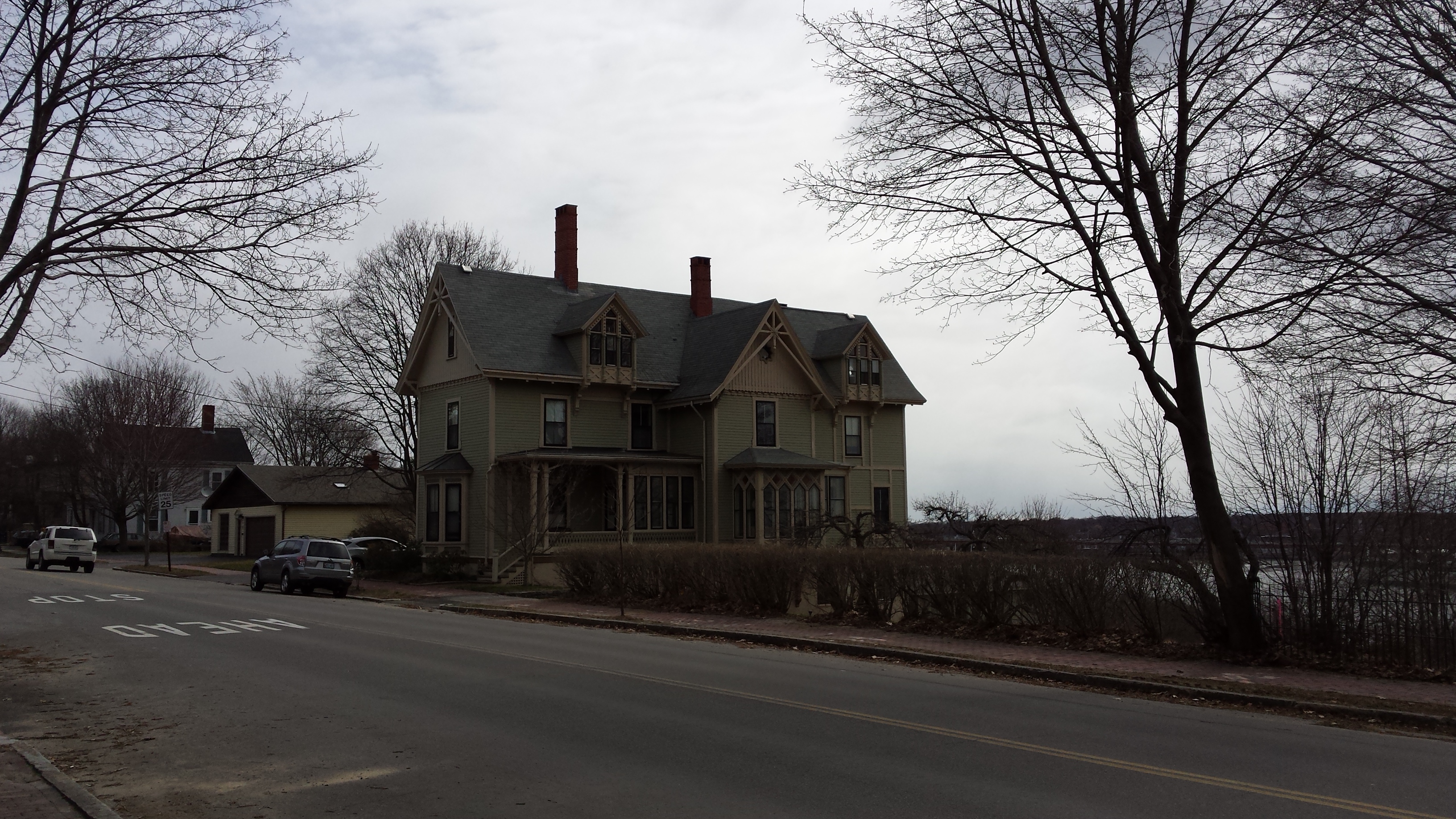
394 Danforth Street.
At the far west end of Danforth Street, just before it dives back down to the water, sit 2 of Portland’s best examples of Stick Style architecture. 394 Danforth is, without doubt, the most exuberant of the pair. Continue reading

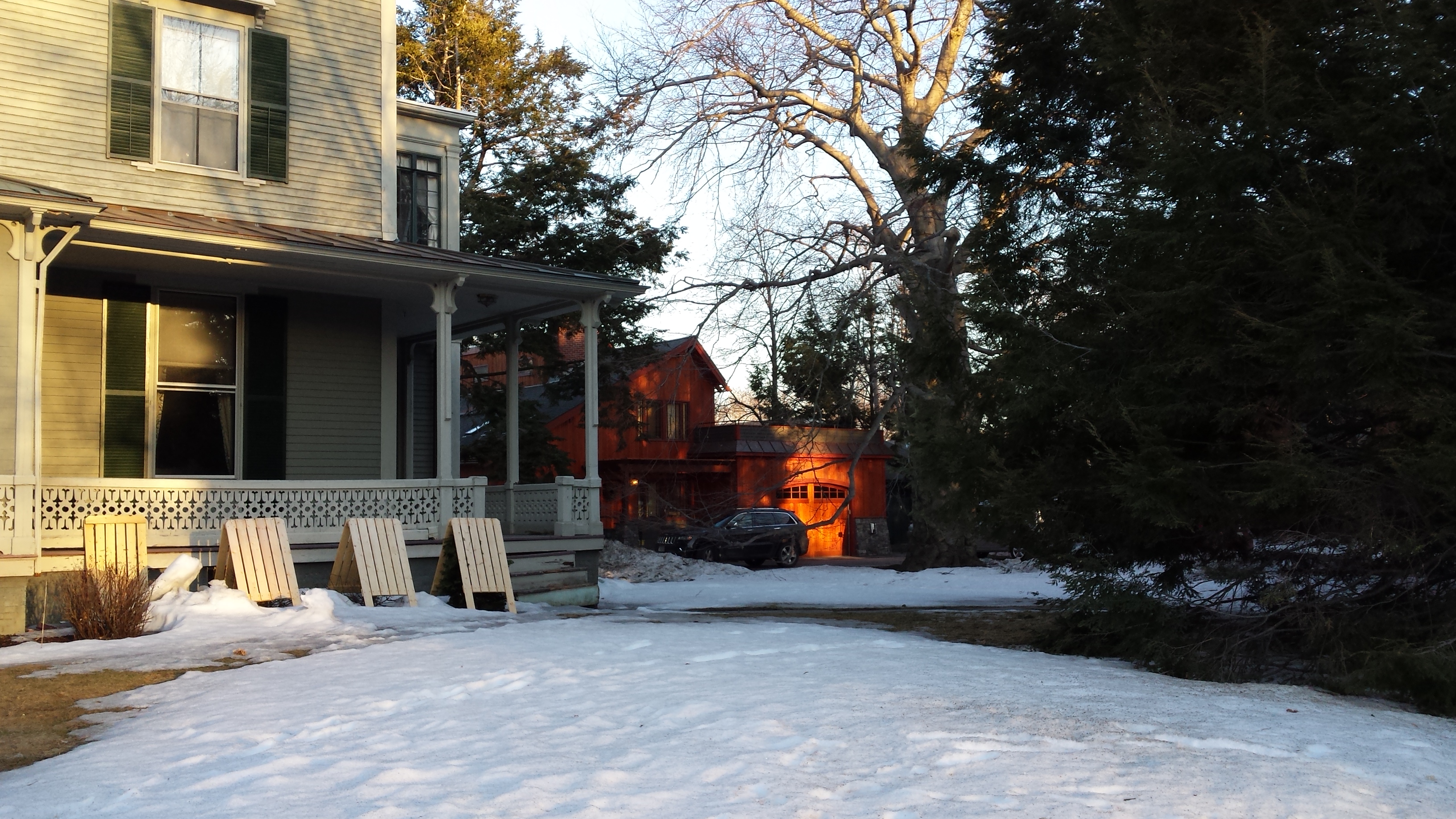
The name rings large in the 19th Century history of Portland. A noted sea and landscape painter who was born in Portland and died in London, his works are prized today. Bowdoin & Colby Colleges and the Portland Museum of Art all hold his paintings in their collections. Brown painted and taught on the far west end of Danforth Street. Continue reading
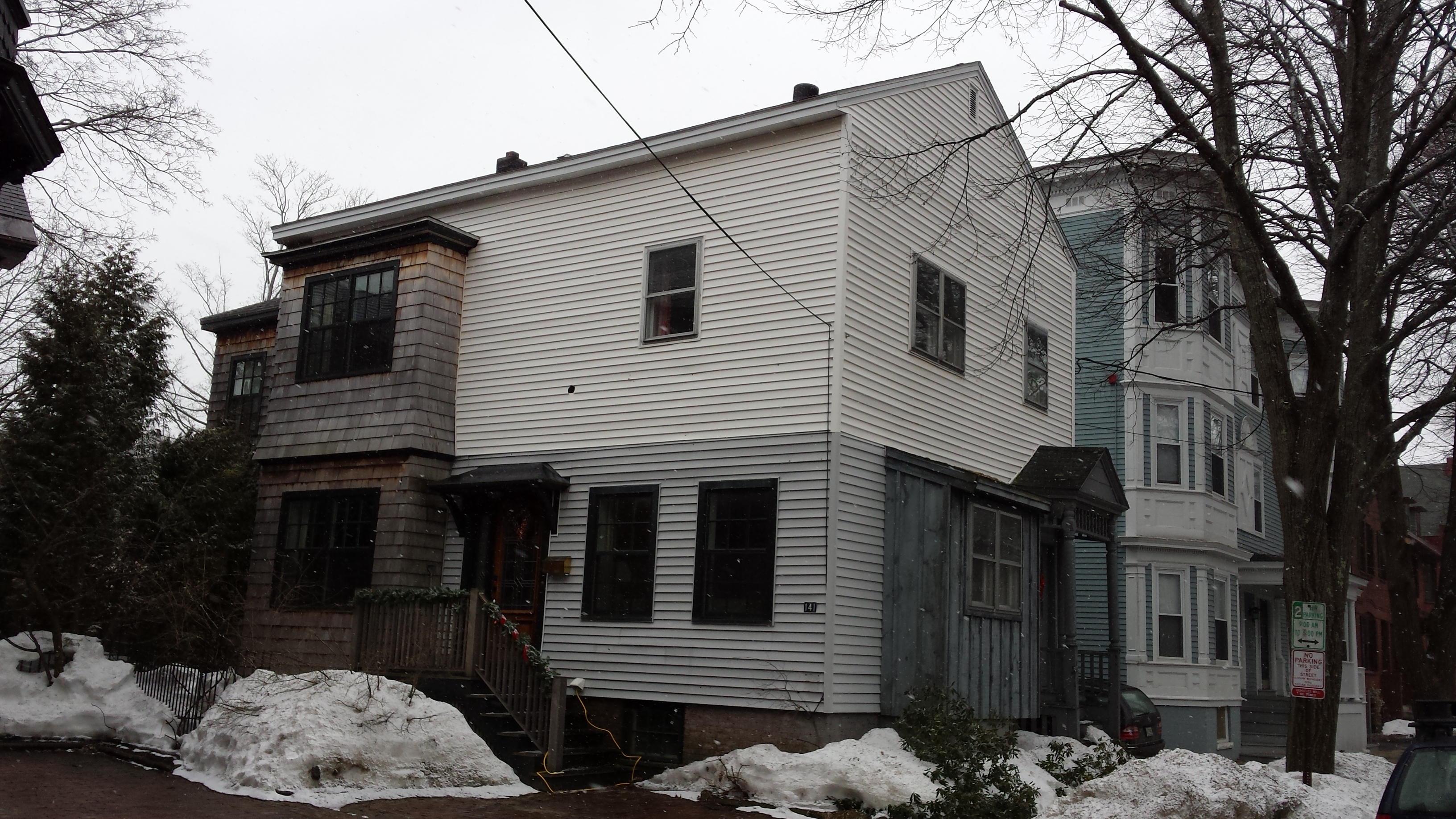
Another house I had failed to notice for 30 years. On my last stroll, I turned the corner of Carroll Street and Vaughan and headed south towards Bowdoin Street. From the corner of my eye, I saw the sight above.
This is just wrong. Whereas 171 Vaughan is notable for its size, this is just the opposite. Too small and lacking in any character what so ever. Continue reading
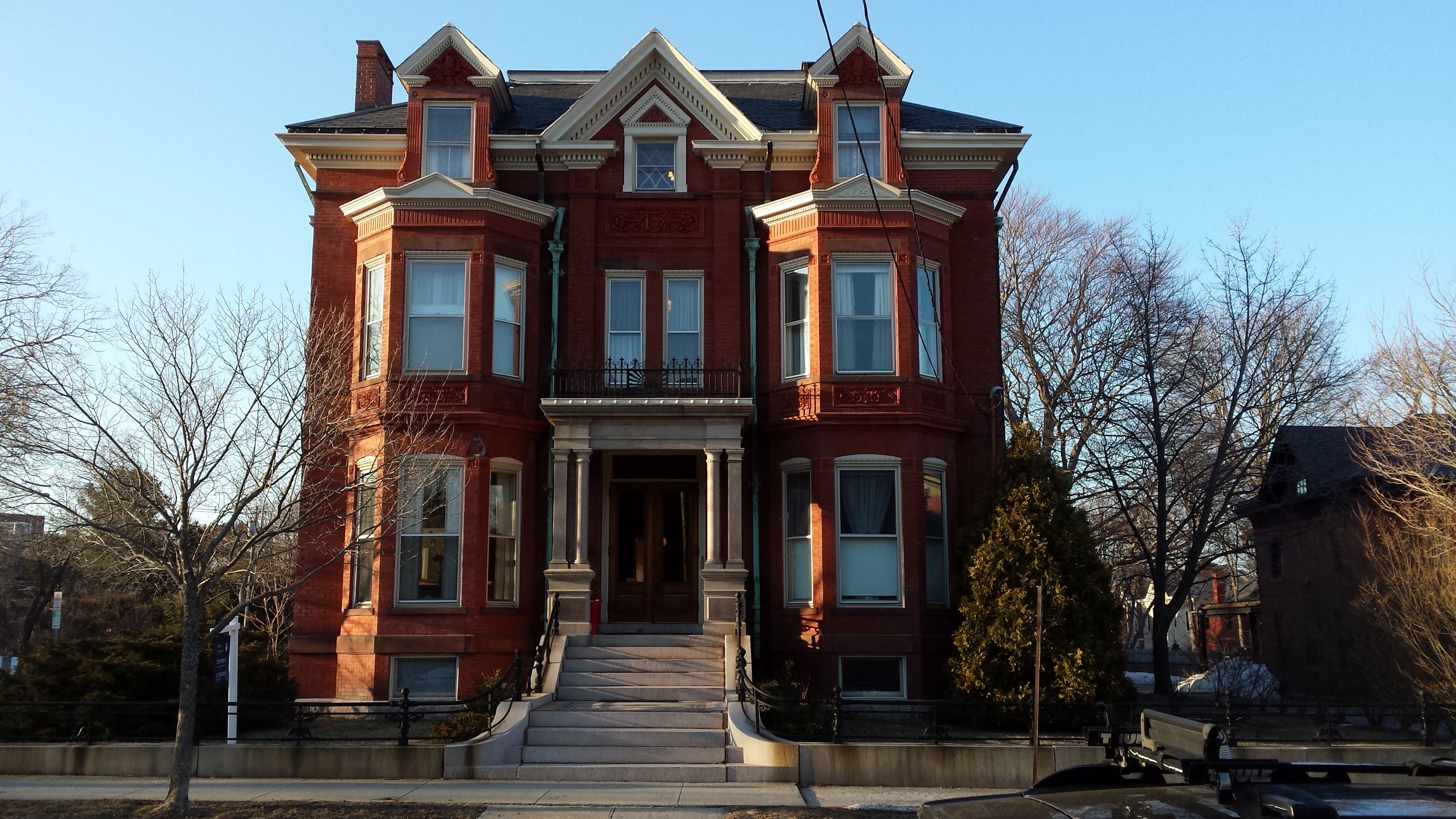
This home is from the office of Francis Fassett & John Calvin Stevens. Built in 1882 for Elizabeth M McDonald. This home was built at the same time and for the same person as 171 Vaughan Street. Continue reading
171 Vaughan Street.
In all my years of walking, biking, and driving around the West End, I had never paid this little gem much attention. That all changed about a week ago.
Seductively small but lavish, the Elizabeth M McDonald Cottage is an unexpected sight in a neighborhood of large mansions. At 1800 sq ft, it is downright tiny by today’s new home standards. Continue reading
Remuddle, v. (portmanteau from “remodel” and “muddle”), to remodel a building or room in a way that obscures or destroys key aspects of the original design.
Appears to be a single-family home on a pretty standard in town lot. The Portland Historic Resources Inventory (HRI) of 1976 lists it as being built for one Edwin A. Boothbay in 1891. The HRI states the style was Queen Anne.
Continue reading
Welcome to West End Walks.
From an architectural history standpoint, the West End of Portland is a fine place to see the various style that were popular in the late 19th and early 20th centuries. Mostly expressed in residential architecture for the professional, the building stock ranges from 3 story row houses built in the ‘brownstone’ style to high end mansions of incredible grandeur. Add in tree lined streets and mostly level terrain, it gives itself to some wonderful strolling for the lover of buildings
Let’s go for a stroll and see what we may encounter. Shall we? Continue reading